

A fragrance can sound sweet on paper yet feel much spicier, warmer or more unusual on skin. That contrast is central to any Casamorati Dolce Amalfi review: apple and quince meet cardamom, clove and incense, while a rich vanilla and tonka base rounds out the composition. The result is more layered than a simple fruit-and-sugar impression.
If you’re wondering what Dolce Amalfi actually smells like, or whether its sweetness and spice will suit your taste, a note list can only take you so far. Personal preference and skin chemistry matter, too. This guide looks at the fragrance’s character and progression, the impression its contrasting facets create, and the kinds of occasions and fragrance tastes it may suit. You’ll also find a practical way to reduce guesswork before choosing a bottle: sampling lets you experience a scent for yourself when a description can’t predict how it will feel on your skin.
Key Takeaways
- This Casamorati Dolce Amalfi review looks beyond the note pyramid to explain the fragrance’s balanced, contrasting character.
- Learn how to use top, heart and base notes as a guide without treating them as a strict on-skin timeline.
- Consider which scent preferences and occasions may align with Dolce Amalfi, and where personal taste could differ.
- Use a sample in a familiar setting to observe how the fragrance wears before deciding whether it suits you.
- Explore Maison Ephyr’s Casamorati selection and 1 ml fragrance samples as a thoughtful way to discover niche scents.
Casamorati Dolce Amalfi Review: What Does It Smell Like?
Dolce Amalfi is a warm, fruity-spiced fragrance with a noticeable shift in emphasis: crisp fruit and aromatic spice give way to a denser, resinous sweetness. It isn’t simply a fresh apple scent or a straightforward vanilla gourmand. Its character comes from the contrast between a brighter opening and a darker, softer base.
Dolce Amalfi’s signature contrast is bright fruit set against warm spice, incense and a smooth, sweet base.
Casamorati is a historic Italian perfume house revived under Xerjoff; the Xerjoff Wikipedia page provides background on the company and the revival. For scent analysis, the listed notes are a useful map, not a promise that every ingredient will smell distinct to every wearer.
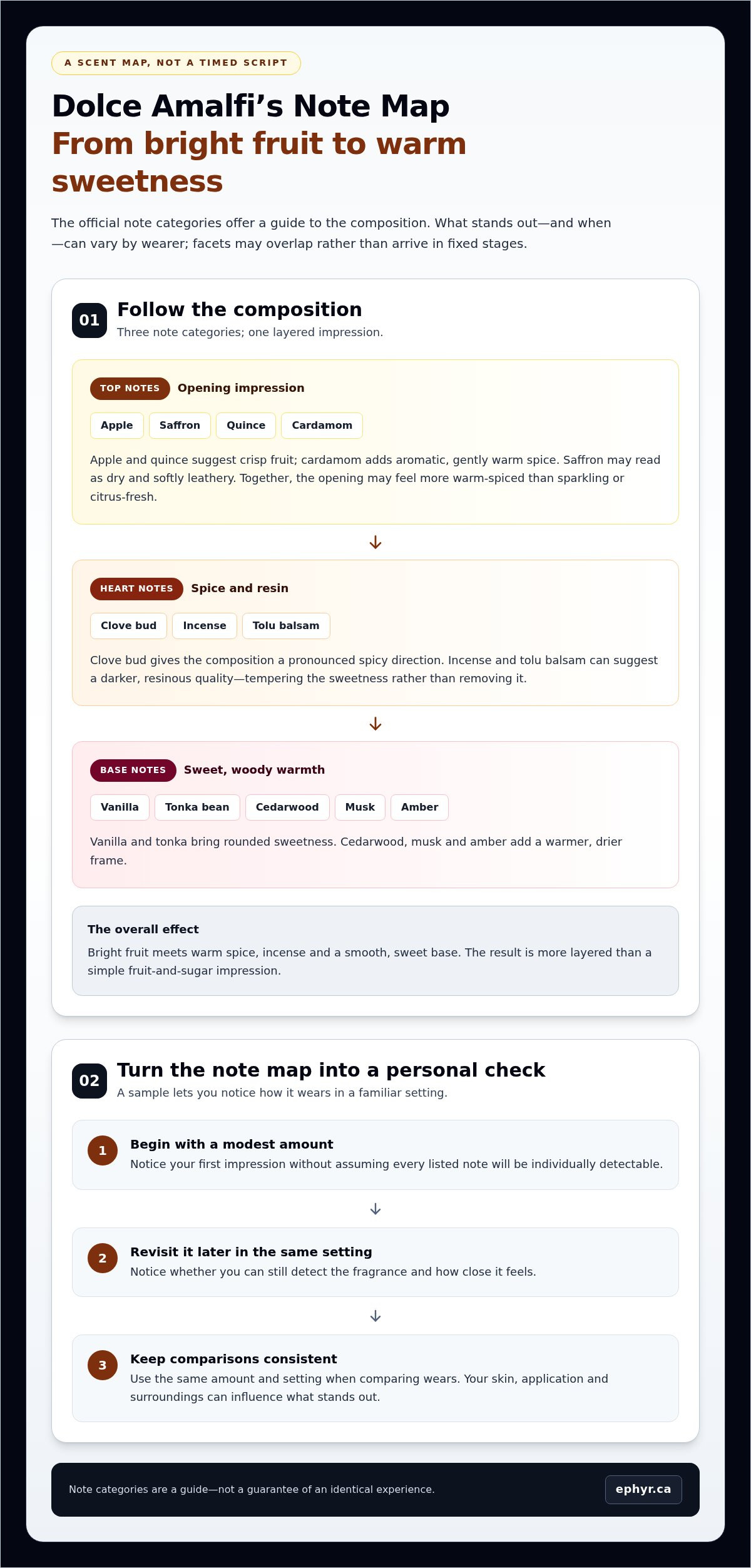
- Top notes: apple, saffron, quince and cardamom.
- Heart notes: clove bud, incense and tolu balsam.
- Base notes: vanilla, tonka bean, cedarwood, musk and amber.
These are the official note categories. The descriptions below translate them into likely scent impressions. They don’t mean that the perfume contains literal fruit, sweets or smoke.
The opening: identify the first impression
Apple and quince suggest crisp, fruity brightness, while cardamom brings aromatic, gently warm spice. Saffron can read as dry and softly leathery in a blend, adding contrast rather than making the opening purely juicy. Together, these notes may feel more warm-spiced than sparkling or citrus-fresh. That’s an interpretation of the listed notes, not a guaranteed impression on every skin.
Some fragrance descriptions compare the fruit-and-spice effect to bubblegum. Treat that as a subjective shorthand for a sweet, distinctive impression, not an official note or literal candy accord. If you usually prefer restrained fruit, that playful association is a good reason to sample before choosing a bottle.
The heart and dry-down: follow the scent’s character
As the brighter fruit becomes less prominent, clove bud gives the composition a pronounced spicy direction. Incense and tolu balsam can suggest a darker, resinous quality, tempering the sweetness rather than removing it. Vanilla and tonka in the base bring a rounded sweetness; cedarwood, musk and amber add a warmer, drier frame.
These facets may overlap rather than arrive in neat stages. The result can feel like fruit folded into spiced resin, then softened by sweet, woody warmth. Skin, application and surroundings all influence what stands out. Without controlled wear testing, exact longevity and projection shouldn’t be treated as settled facts. The more useful question is whether you enjoy the composition’s particular balance, rather than whether it follows a fixed timeline.
How Dolce Amalfi Develops on Skin: Notes, Texture and Performance
A fragrance’s note pyramid is a map, not a minute-by-minute script. In a considered Casamorati Dolce Amalfi review, it helps to separate what the brand lists from what a wearer perceives. The listed structure can suggest how the composition is organized, but it can’t predict exactly what you’ll notice or when.
Note pyramids describe a composition, not an identical experience on every wearer.
What a note pyramid can and cannot tell you
Top notes describe the opening impression; heart notes point to the composition’s central character; base notes describe the deeper materials that help shape its overall impression. These labels are useful shorthand. They don’t guarantee that each note will be individually detectable, equally prominent or experienced in a fixed sequence.
That distinction matters with a layered fragrance. You might register a general warm-spiced effect without being able to pick out any one listed material. A note name also isn’t necessarily a literal smell; it can refer to an impression created by the blend. The official pyramid is manufacturer-reported information, while words such as crisp, resinous and soft are interpretations. For general background on fragrance as an ingredient in cosmetics, the FDA’s overview of cosmetic fragrances is useful, though it isn’t a guide to how this perfume will smell on an individual.
Think of the structure as a musical arrangement. The opening may lead while other facets remain audible beneath it. Rather than waiting for each “stage” to arrive, notice which qualities come forward, which recede and what impression remains.
Assessing longevity and projection responsibly
Longevity means how long you can detect the scent on yourself. Projection describes how far it radiates from you. They’re related, but not interchangeable: a fragrance can remain noticeable to the wearer without filling a room. No controlled wear test is available here, so exact duration or distance claims would imply more certainty than the evidence supports.
Your impression may shift with your skin, application and environment. The amount applied, where you wear it and the conditions around you can all influence what you notice. One person’s “soft” may be another’s prominent, and a scent that seems vivid outdoors may feel more concentrated in a small indoor space. Assessing your own wear is more useful than relying on promises about a particular result.
For a useful personal check, apply a modest amount and note your first impression. Revisit it later in the same familiar setting, then consider whether you can still detect it and how close it feels. Keep the amount and setting consistent if you compare wears. A sample makes this kind of observation easier before choosing a bottle. Explore fragrance samples at Maison Ephyr to make that decision more considered.
Who Might Enjoy Casamorati Dolce Amalfi, and Who May Not?
Dolce Amalfi may suit someone who likes fruit with a more complex edge: sweetness shaped by spice, resinous warmth and woods, rather than a purely fresh or sugary finish. But a polished description can’t predict personal chemistry. The same blend that feels rounded and intriguing to one wearer may feel too sweet, spicy or dense to another.
Use preference as your guide, not gender or age. A note you usually enjoy can behave differently when paired with other materials, and the balance you notice may change on your skin. The practical question is less “Do I like vanilla?” and more “Do I like how sweetness, fruit and spice work together here?”
A potential fit for these scent preferences
It may appeal if you enjoy fruity fragrances with warmth and dimension, or want sweetness balanced by aromatic spice and darker accents. If you tend to reach for simple, crisp fruit scents, the spiced, resinous direction may feel like an unexpected turn. That contrast is part of the character, but liking apple, cardamom or vanilla in other fragrances doesn’t guarantee you’ll enjoy their combination here.
- Potential fit: You enjoy warm fruit, noticeable spice, or sweet scents with a woody or resinous counterpoint.
- Sample first: You’re unsure how much sweetness or spice you like, or you prefer fragrances that stay light and uncomplicated.
- Possible mismatch: You usually avoid warm, sweet compositions or find prominent spice distracting.
These are preference cues, not fixed verdicts. They can help you decide what to pay attention to, but wearing the fragrance is the best way to find out how its balance lands for you.
When sampling first makes more sense
Sampling is especially useful if you’re torn between curiosity and caution. One quick spray or brief encounter may capture the opening without giving you enough time to understand how the fragrance feels later. Try it in a familiar setting and notice whether the sweetness remains comfortable, whether the spice appeals and whether the overall character fits your routine.
Season and occasion can guide your expectations, but they aren’t rules. Dolce Amalfi’s warm, sweet-spiced character may feel appealing in cooler weather or for an evening out; someone else may enjoy it in a different setting. Application and surroundings influence perception, so don’t treat a suggested season or occasion as a performance guarantee.
For a more deliberate first impression, wear a sample through your usual day before deciding whether you’d reach for a full bottle. Maison Ephyr’s Canadian fragrance sample guide offers a helpful starting point for exploring niche scents through sampling. Let your own preferences make the final call.
How to Sample Dolce Amalfi Before Choosing a Bottle
A sample turns a scent description into a personal reference point. Instead of deciding from notes alone, you can see whether Dolce Amalfi’s character feels comfortable and appealing beyond a fleeting first impression. Treat the process as a small wear test, not a verdict made in seconds.
A practical wear-test sequence
Start with a modest application, following the sample’s directions. Keep the setting familiar and avoid testing several fragrances at once, so other scents don’t compete for your attention. Notice the first impression, then return to it later without repeatedly reapplying. A quick note on your phone can help you remember what changed and what stayed present.
- Test: Apply the sample as directed in a setting where you can comfortably wear it.
- Observe: Record your opening impression, then check again later. Note whether the scent feels sweeter, spicier, softer or simply different to you.
- Compare: Consider how the experience relates to fragrances you already enjoy, focusing on mood and texture rather than an exact match.
- Decide: Ask whether you’d want to wear it again and in what situations. If you’re still unsure, another wear may give you a more useful comparison.
Use your own language. “Warm and cozy” or “too sweet for work” can be more useful than trying to identify every note. For a Casamorati Dolce Amalfi review that helps you decide, comfort matters as much as whether the listed notes sound appealing.
Compare the experience with your own collection
Think of a fragrance you already reach for because it feels warm, fruity, spicy or sweet. Compare the feeling and overall texture, not whether the scents smell alike. You might enjoy the softness of a familiar fragrance but find Dolce Amalfi’s spice more prominent, or appreciate its contrast while preferring a lighter scent for everyday wear.
Keep the comparison fair: test on a similar area of skin, use a similar application and give each fragrance room to make its own impression. Your usual setting can help you judge versatility. A scent worn at home during a typical day may tell you more about your habits than a quick test in a busy shop. The sample itself has limits, too. Its size may offer fewer chances to wear it, while application and environment can shape what you notice.
For a fuller routine, the guide to testing perfume samples at home offers more ways to make each trial useful. To explore fragrance samples as a considered step before choosing a bottle, browse Maison Ephyr’s fragrance selection.
Where to Go Next: Explore Casamorati and Niche Fragrance Samples
Dolce Amalfi may interest you if you enjoy fruit softened by sweetness and warmed with spice. If you prefer crisp, airy scents or aren’t sure how you feel about a sweet-spiced blend, sampling before choosing a bottle is the more considered move. The central takeaway from this Casamorati Dolce Amalfi review is simple: notes can guide your expectations, but your own wear experience should make the decision.
Explore the house beyond one fragrance
Maison Ephyr carries Casamorati, giving you a way to explore the house beyond a single fragrance review. Dolce Amalfi’s specific profile is one point of reference; it doesn’t define every scent from the house. As you explore, consider which broader qualities draw you in, such as warmth, sweetness, spice or a softer overall feel. That keeps the focus on your preferences rather than assuming the same character runs through every fragrance.
There’s no need to decide on a full bottle simply because a description sounds appealing. A fragrance can intrigue you in theory and feel different once worn. Give yourself room to compare impressions and follow what feels right on your skin.
Continue your fragrance discovery
Individual 1 ml samples and discovery sets offer different ways to explore fragrance. A sample lets you focus on one scent; a discovery set can help you compare several options and notice which styles you return to. Either approach can make fragrance discovery more deliberate, especially if you’re still working out how much sweetness, spice or warmth you enjoy.
Before choosing, keep the decision practical. Ask yourself:
- Did I enjoy the fragrance beyond the first impression?
- Did its sweetness and spice feel balanced for my taste?
- Can I picture wearing it in settings that matter to me?
- Would I choose it again over scents I already own?
Your answers don’t need to be perfect. They just need to reflect your own experience, not a promise made by a note list or review. If you’re curious to keep exploring, browse Maison Ephyr’s Casamorati selection, fragrance samples and discovery sets as a thoughtful next step. Whichever scent catches your attention, personal wear is the final fit test.
Let Your Own Wear Test Make the Call
A fragrance decision doesn’t have to come from a note list or polished description. Let curiosity guide you, then give your own preferences the final say. If Dolce Amalfi’s balance sounds intriguing but you’re unsure how it will feel on you, take time to explore rather than rush.
This Casamorati Dolce Amalfi review can help you decide what to look for, but your experience is the part no description can supply. Notice what you enjoy, what you’d change and whether the scent feels like you. That clarity can make your next fragrance choice more personal, whether you’re considering a familiar house or discovering a new direction.
Ready to explore? Explore Maison Ephyr’s niche fragrance selection and find a thoughtful next step for your scent journey. Stay curious, trust your own nose and enjoy the discovery.
Frequently Asked Questions
What does Casamorati Dolce Amalfi smell like?
Casamorati Dolce Amalfi smells fruity, warm and spicy, with a sweet, resinous depth. Its listed notes pair apple and quince with cardamom and saffron, then move through clove, incense and balsamic warmth toward vanilla, tonka, woods, musk and amber. The overall impression is more layered than a simple fruit scent. Individual notes may blend together, so the balance can differ from one wearer’s experience to another.
Is Casamorati Dolce Amalfi sweet?
Yes, sweetness is part of its character, especially in the vanilla- and tonka-led base, but it’s balanced by fruit, spice and resinous facets. It may feel richer than a fresh, crisp scent and less like a straightforward sugary gourmand. If sweet fragrances often become cloying for you, try a sample before choosing a bottle. Pay attention to whether the spice and drier notes keep the sweetness comfortable for your taste.
How long does Dolce Amalfi last?
There isn’t a reliable wear test here to support a specific number of hours. Longevity means how long you can personally detect a fragrance, and it can vary with application, skin and surroundings. Dolce Amalfi is an Eau de Parfum, but concentration alone can’t promise a set duration. For a useful estimate for your own wear, apply a sample as directed and check it later rather than relying on another person’s report.
Is Dolce Amalfi suitable for everyday wear?
It can be, if its sweet, warm-spiced character suits your routine and personal comfort. For example, you might prefer a light application for a workday and save a more noticeable wear for an evening out. Those are options, not rules. Consider your setting and how prominent you like a fragrance to feel. Wearing a sample during an ordinary day can help you decide whether you’d reach for it regularly.
Can I try Casamorati Dolce Amalfi before buying a bottle?
Sampling is a practical way to assess a fragrance before committing to a bottle. Maison Ephyr offers individual 1 ml fragrance samples and discovery sets as ways to explore niche scents. Wear a sample in a familiar setting and note your impressions at different points in the day. A quick first impression may not tell you whether you’ll enjoy wearing a fragrance routinely.
What is the difference between Casamorati Dolce Amalfi and other Casamorati fragrances?
Each Casamorati fragrance has its own composition, so the house name alone doesn’t tell you whether two scents will feel alike. Dolce Amalfi’s fruit, spice, incense and sweet base give it a warm, layered direction. To compare it with another fragrance, focus on qualities you notice and enjoy, such as freshness, sweetness or spice, rather than assuming shared branding means a similar scent experience.
Is Dolce Amalfi a good blind buy?

Article by
Dmitrii Savishin
Dmitrii Savishin is the founder of Maison Ephyr and Parfum Exquis, two Canadian destinations dedicated to the world of niche perfumery. With years of experience discovering exceptional fragrance houses from around the globe, Dmitrii shares expert insights on perfume trends, fragrance notes, luxury brands, and the art of choosing the perfect scent. His mission is to make niche perfumery more approachable while helping readers discover fragrances that leave a lasting impression.


