
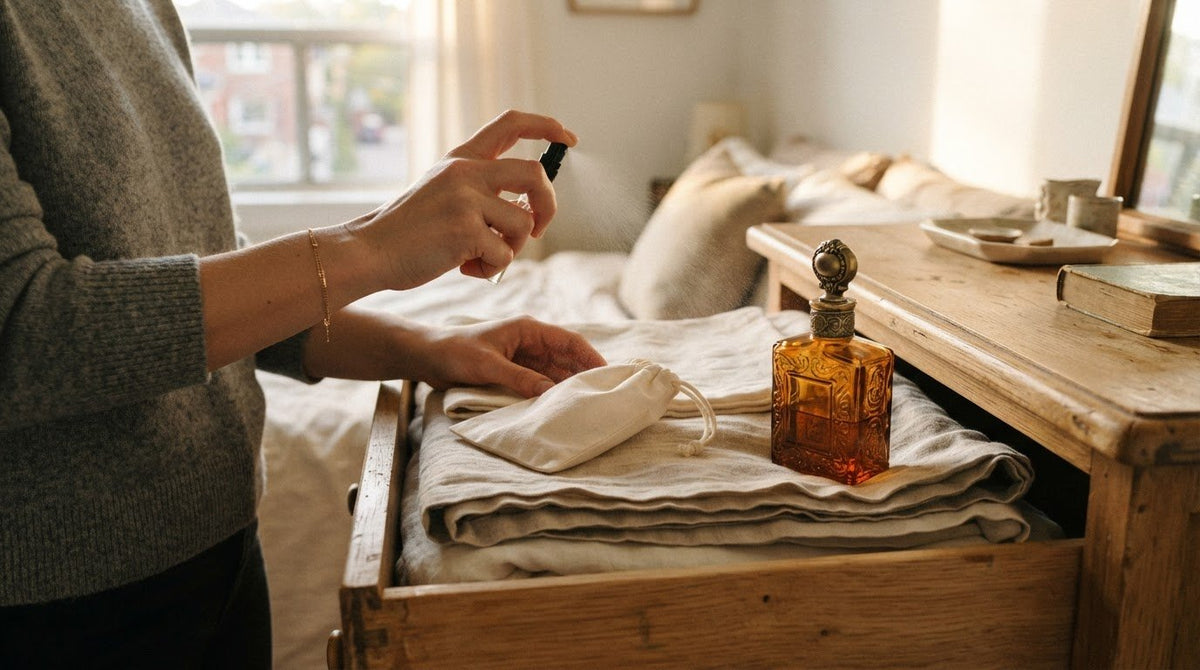
An expired perfume isn’t automatically destined for the bin. If you’re deciding what to do with perfume you don't like, you can pass it on if it still smells as expected, or use it to scent a room if its aroma is simply muted. If it smells sour, metallic, or unpleasant, don’t use it around the home.
A fragrance that doesn’t suit you may feel right in a different setting, or become someone else’s favourite. Choose a use that suits the bottle’s condition, and test carefully before applying perfume to fabrics or household items.
Here are thoughtful ways to regift or donate gently used perfume, use a fragrance at home, and handle a bottle that’s past its best. From a simple drawer sachet to a careful fabric test, these ideas can help you decide whether to share it, repurpose it, or let it go.
Key Takeaways
- Before passing a bottle along, make sure its scent and appearance haven’t changed.
- A fragrance that isn’t right for you may suit a friend or family member better; a small swap can help match bottles to new owners.
- Try a subtle home use, such as scenting a drawer sachet, and test fabric in a hidden spot first.
- Donation may be an option for gently used perfume, but ask the organization about its acceptance guidelines.
- For a return or exchange in Canada, the seller’s policy and the details of your purchase shape the next step.
1. Giving unwanted perfume to friends or family
If you’re deciding what to do with perfume you don't like, start by thinking about who might enjoy its scent. Consider a friend who wears similar fragrances, or ask a family member about their preferences before offering the bottle. Describe the scent honestly and say whether it’s been opened. A clear offer lets them accept, decline, or ask to sample it first.
A small fragrance swap can make sharing more considered. Invite friends to bring perfumes they no longer reach for, and label each bottle with its name and whether it’s been opened. Set out blotters so guests can smell the fragrances without applying them. Let everyone choose freely: someone who loves a bright floral scent may not enjoy a heavier, sweeter one.
Try the perfume on a blotter again before passing it along. Smell it for several seconds, pause, then revisit it over about a minute and write down what you notice. A scent that seems overwhelming at first may settle into a more appealing impression. If you’re still unsure what to do with perfume you don't like, wait until another season or try it on holiday before deciding.
Layering may also reveal a new use. Test a small amount of the unwanted fragrance beneath a perfume the recipient already enjoys, or pair it with a differently scented lotion. Keep the fragrances separate; don’t pour them together into one bottle. If the scent remains unpleasant on a blotter, skip gifting and layering.
Before giving the bottle away, check its appearance and smell. Don’t pass it on if the liquid has changed colour or smells sour, metallic, or unpleasant. Unopened eau de parfum can last 3-5 years from manufacture, but age alone doesn’t establish whether a particular bottle is still suitable. Its storage and current condition matter.
Store a bottle you plan to give away in a cool, dry place, away from sunlight and heat. Keep the cap secure, and choose a cupboard outside the bathroom instead of a humid shelf. Before wrapping it, check for leaks and make sure the sprayer works. The original box can help the recipient identify the fragrance.
Reselling may suit a bottle in good condition, especially if it has its original packaging. Describe the fragrance, whether it’s opened, and how much remains. Vintage bottles, including those from the 1990s or earlier, may interest collectors. Be transparent about storage and condition, and don’t present a changed or unpleasant fragrance as wearable.
3. Using perfume to scent drawers, stationery and home items
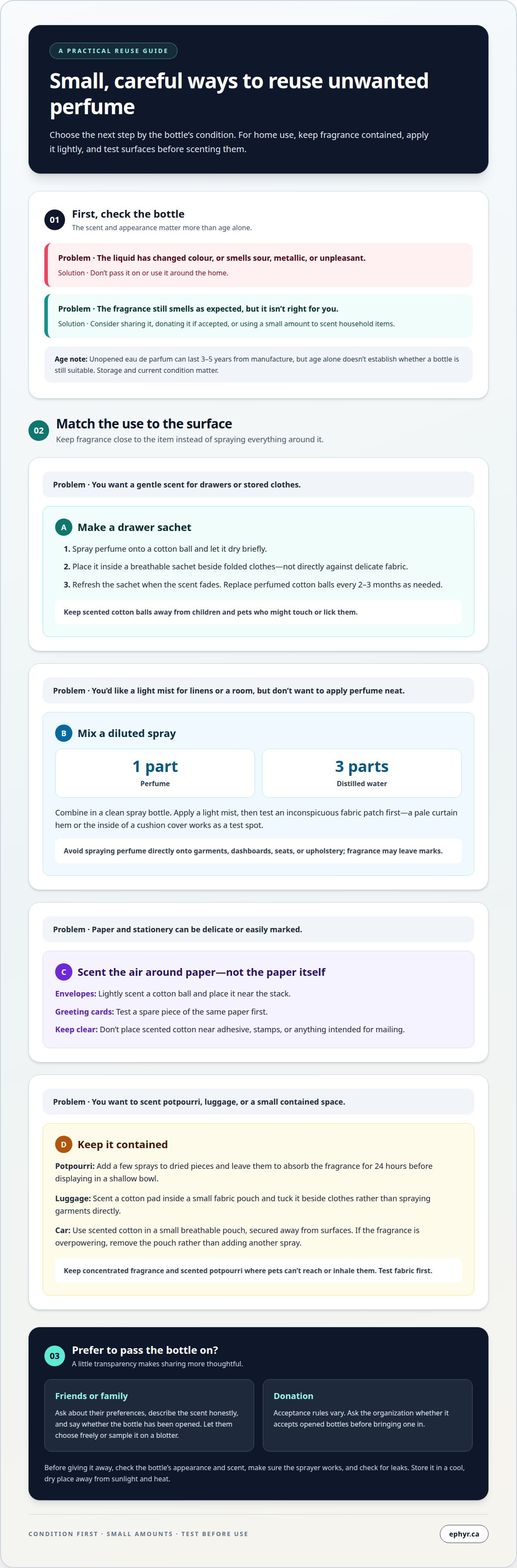
A familiar fragrance can gently scent stored items without spraying the whole room. For drawers, spray perfume onto a cotton ball, let it dry briefly, then place it inside a breathable sachet. Keep the sachet beside folded clothes, not directly against delicate fabric. Perfume-scented cotton balls can also be placed in wardrobes, but keep them away from children and pets who might touch or lick them.
Refresh the sachet when its scent fades. Replace perfumed cotton balls every 2-3 months as needed. For a linen or room spray, mix one part perfume with three parts distilled water in a clean spray bottle. Apply a light mist, then test an inconspicuous patch of fabric first. A pale curtain hem or the inside of a cushion cover makes a useful test spot.
Stationery offers a smaller, more controlled surface. Lightly scent a cotton ball and place it near a stack of envelopes rather than spraying paper directly. For a greeting card, test a spare piece of the same paper first. Perfume can leave marks, especially on delicate or coated surfaces. Keep the scented cotton away from adhesive, stamps, and anything meant for mailing.
For potpourri, add a few sprays to the dried pieces, then leave them to absorb the fragrance for 24 hours before displaying them. A shallow bowl on a shelf keeps the arrangement contained. Avoid placing it where pets can reach or inhale concentrated fragrance. In a suitcase, scent a cotton pad inside a small fabric pouch, then tuck it beside clothes rather than spraying garments directly.
A car freshener can use the same contained approach: scent cotton, place it in a small breathable pouch, and secure the pouch away from surfaces. Don’t spray perfume onto dashboards, seats, or upholstery. Test any fabric first, since fragrance may leave marks. If the scent is overpowering, remove the pouch rather than adding another spray.
Choose a scented candle when you’d rather have a dedicated home fragrance than repurpose perfume. A candle gives you a separate scent option for a room, while a cotton sachet keeps fragrance close to drawers or luggage. For a more considered home-scent choice, explore scented candles alongside these small-scale reuse ideas.
The page also suggests using an unwanted perfume to scent drawer liners, stationery, envelopes or household items, extending the idea beyond the small sachet and paper examples already covered. A forum participant suggested using unwanted perfume to scent linen. The page advises testing perfume spray on an inconspicuous area before using it on linens or curtains, keeping that check in mind for either of those uses.
Other forum suggestions include spraying unwanted perfume inside worn shoes or on the back of bathroom hand towels. One participant also suggested spraying it in luggage before packing clothes. These ideas extend the contained scenting methods to fabrics and stored belongings, but test surfaces first and avoid direct application where fragrance might leave marks.
4. Donating gently used perfume
A gently used bottle may be welcome, but donation rules vary by organization. Some women’s shelters accept unopened or gently used personal-care items. Contact the shelter before bringing perfume, and ask whether it accepts opened bottles. A brief call can prevent an unsuitable drop-off and help staff plan for items they can distribute.
Start by checking the bottle. Make sure the cap and sprayer work, the container isn’t leaking, and the label is readable. Spray onto a blotter and see whether the fragrance smells as expected. A sour, metallic, or unpleasant change means it isn’t suitable to donate. Don’t pass along a bottle with an altered scent simply because it still contains liquid.
Describe the bottle clearly when you contact the organization. Say whether it’s unopened or used, and give an honest estimate of how much remains. Ask about these details:
- Whether the shelter accepts perfume at all.
- Whether it accepts opened bottles or only unopened items.
- How the organization wants donations packaged or delivered.
- Whether it has a current need for personal-care products.
These questions matter because an organization’s storage space, distribution process, and donation guidelines affect what it can accept. A shelter may welcome unopened personal-care items but decline a partly used fragrance. Let its answer guide you rather than assuming every organization follows the same policy.
If the shelter welcomes the bottle, prepare it neatly. Wipe the exterior, secure the cap, and place it upright in a small bag or box for transport. Keep the original carton if you have it. Include the fragrance name and disclose that it’s been opened, so staff can assess it easily.
If the shelter doesn’t accept used perfume, consider another recipient. A community donation drive may have its own rules, so ask before adding fragrance to a mixed box. If no suitable organization can take it, offer a sound bottle directly to a friend or family member who enjoys that fragrance style. Be transparent: explain how often it was used and let them smell it before deciding.
Donation should never mean passing along a questionable bottle. If the scent has changed, don’t offer it to a shelter or another recipient. Set it aside for appropriate disposal instead. An honest description, a clean bottle, and the receiving organization’s permission make the process more considerate for everyone involved.
5. Giving perfume to friends or family
Before passing a bottle along, match it to someone’s actual preferences. Think about the fragrances your sister wears, or ask a friend which scents they enjoy. Don’t rely on the bottle’s name or packaging alone. Offer a blotter test first, then let them decide whether to try it on skin or clothing.
Give yourself time before deciding. A scent that feels wrong today might seem different after a break or in another season. Set the bottle aside until later in the year, or try it on holiday before making up your mind. Smell it on a blotter for several seconds, pause, then repeat for about a minute and note what stands out.
If the fragrance feels too strong or incomplete, experiment before gifting it. A scent that seems underwhelming on its own may work as a base beneath one the wearer already likes. Try layering it with a differently scented lotion or another fragrance. Keep each test small, and don’t alter the original bottle or mix perfumes inside it.
For a low-pressure handoff, invite friends or family to a small scent swap. Set out bottles labelled with their names and whether they’ve been opened. Let everyone sample on a blotter before choosing. Clear labels prevent confusion, while an honest note about each bottle’s use helps people decide comfortably.
Share the bottle only if its scent and colour haven’t changed. If it smells sour, metallic, or unpleasant, don’t regift it. Unopened eau de parfum is listed as lasting 3-5 years from manufacture; opened perfume used occasionally may last 2-3 years if stored properly. These ranges are guides, so assess the bottle itself before offering it.
Keep a bottle intended as a gift tightly closed in a cool, dry place, away from sunlight. A drawer outside the bathroom is a better choice than a warm, humid shelf. Before handing it over, wipe the bottle, check the sprayer, and include the original box if available. These small steps make a used gift feel considered.
Be straightforward about what the recipient is getting. Say whether the bottle is opened, how much remains, and why you’re passing it on. If they prefer not to take it, accept that without pressure. Fragrance is personal, so leave the choice with the person who’ll wear it.
5. How to return or exchange unwanted perfume in Canada
Start with the retailer’s return policy. In Canada, perfume return rules vary by seller, and some policies exclude opened bottles. Review the terms on your receipt, order confirmation, or the retailer’s returns page. Check whether the policy distinguishes between an unopened bottle and one you’ve sprayed.
Then gather the purchase details. Keep the receipt or order confirmation, perfume box, and any included packaging together. If you bought the bottle as a gift, a gift receipt can help identify the purchase without disclosing its price. Note the purchase date and whether the bottle has been opened, as these details may affect the retailer’s decision.
For an unopened bottle, keep the seal intact while you review the policy. Don’t spray it to test the scent if you’re considering a return. If the bottle is opened, be upfront about its condition and explain whether you’re requesting an exchange or return. A change of preference differs from a damaged or incorrect item, so describe the issue accurately.
Contact the original seller using the customer-service method on your receipt or order confirmation. In a concise message, state the perfume name, purchase date, and condition. For example: “I purchased this bottle last week; it’s unopened, and I’d like to ask about an exchange.” A written response gives you a clear record of the next steps.
If the perfume arrived damaged, take clear photos of the bottle, packaging, and shipping materials before discarding anything. If you received the wrong fragrance, keep the product and packaging as they arrived. Share those details with the retailer rather than opening or using the bottle. For an in-store purchase, bring the receipt and item together if the policy directs you to return it in person.
The retailer’s terms determine whether an opened fragrance qualifies for a return or exchange, so don’t assume you can return a bottle simply because its scent doesn’t suit you. If the seller declines, consider gifting a bottle that remains in good condition, or try another suitable idea from this article. Don’t resell or donate perfume that smells sour, metallic, or otherwise changed.
If you’re choosing a different scent after an unsuccessful exchange, explore a new fragrance direction before committing to a full bottle.
If a return or exchange isn’t possible, you can still find another use for the fragrance. Try it on a scarf you can take off if the scent becomes too strong. You could also add it with fabric conditioner in a washing machine to scent laundry, or dab it onto a cotton bud to remove crayon marks from walls.
Another option is to host a perfume-swapping party or regift the fragrance. Give it away only if it hasn’t expired or changed in scent. If you choose to resell it, a reasonable resale price is around 20-40% of its original retail price.
Maison Ephyr: Bianco latte perfume
Maison Ephyr offers Bianco latte perfume for readers ready to explore a different fragrance after passing on a bottle that didn’t suit them. If you’re still narrowing down your preferences, consider the scent styles that appeal to you before choosing your next bottle. The boutique’s selection also includes Xerjoff Fragrances, Nishane Fragrances, and Casamorati, offering several directions to explore.
A thoughtful next choice begins with your own taste, not pressure to replace what you gave away. Take time to consider which fragrances you enjoy wearing, then explore options that feel more aligned with your preferences. To discuss the fragrances available, contact Maison Ephyr.
Choose your next scent with intention
Deciding what to do with perfume you don't like can reveal what you want from a fragrance instead. Was it too sharp, too sweet, too strong, or simply different on your skin? Keep those preferences in mind as you explore another scent direction. A clearer sense of what suits you can make your next choice feel more personal.
Maison Ephyr offers luxury niche fragrances for those ready to explore. If you’d like guidance as you consider what might suit your taste, contact Maison Ephyr for fragrance advice.
Your next favourite doesn’t have to be an instant decision. Let curiosity, not obligation, lead the way.
Frequently Asked Questions
Is it okay to give away old perfume?
Yes, if the perfume still smells as expected and the recipient knows its condition. Age alone doesn’t determine whether a bottle is suitable to pass on. Consider how it was stored, inspect the liquid, and test it on a blotter. Tell the recipient if the bottle is opened, and let them decline or sample it first. If the scent has turned sour or unpleasant, don’t give it away.
What can I do with a perfume I don’t like?
Choose a new use based on the bottle’s condition and what you’re comfortable doing. A sound fragrance could go to someone who enjoys that scent style, or be set aside for a contained use at home. If you’re unsure whether the fragrance suits you, try it on a blotter another day before deciding. If the scent has changed, turned sour, or become unpleasant, don’t reuse it; arrange appropriate disposal.
How can I repurpose perfume you don't like safely?
Keep repurposing controlled: start with a small amount on a blotter or cotton pad, not a direct spray on a valuable surface. Test fabric in a hidden spot for marks, and avoid placing concentrated fragrance where pets could lick or inhale it. Don’t mix perfume into cleaning products containing bleach. If the fragrance smells sour, metallic, or unpleasant, don’t repurpose it.
How can I use unwanted perfume as a room or linen fragrance?
For a simple spray, mix one part perfume with three parts distilled water in a clean spray bottle. Test an inconspicuous fabric area first, such as an inside hem, and let it dry before treating a larger item. Use a light mist rather than soaking linens. For bedding, spray earlier in the day and let it air out before use. Don’t use perfume that smells unpleasant.

Article by
Dmitrii Savishin
Dmitrii Savishin is the founder of Maison Ephyr and Parfum Exquis, two Canadian destinations dedicated to the world of niche perfumery. With years of experience discovering exceptional fragrance houses from around the globe, Dmitrii shares expert insights on perfume trends, fragrance notes, luxury brands, and the art of choosing the perfect scent. His mission is to make niche perfumery more approachable while helping readers discover fragrances that leave a lasting impression.


