
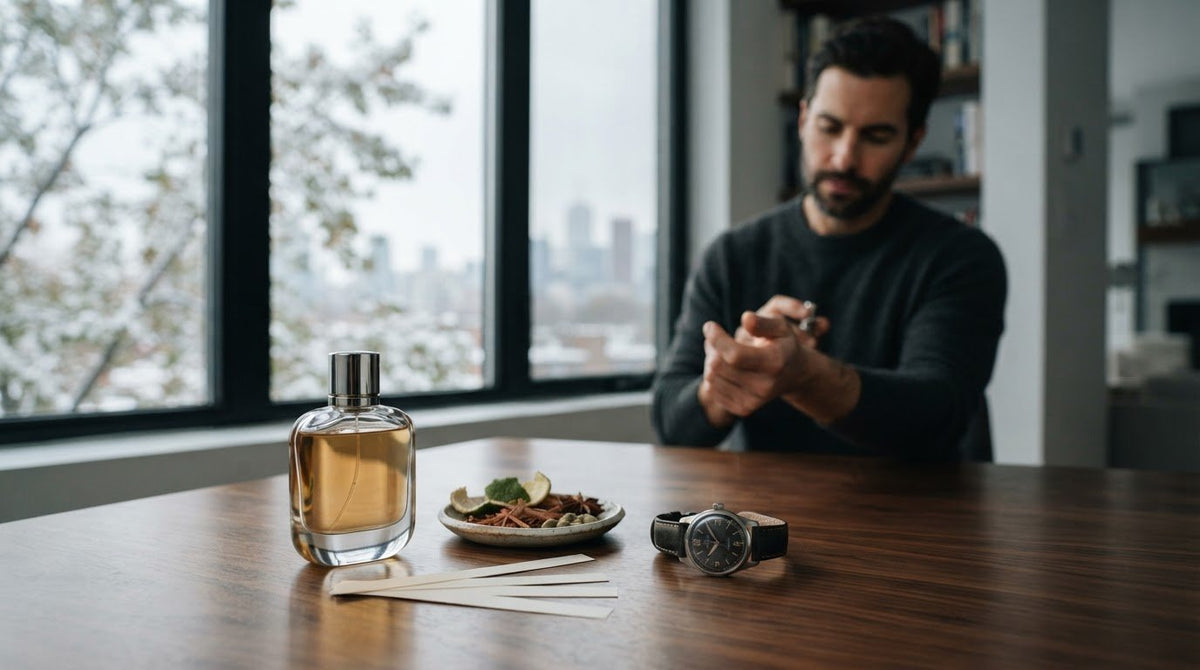
Your skin is the better starting point for a signature scent. Apply a luxury perfume for him to skin and judge how it develops there, rather than relying on the first impression from the bottle or a spray on clothing. Eau de parfum typically contains 15 to 20 per cent perfume oil, while eau de toilette typically contains 5 to 15 per cent.
Clothing can be part of how you wear fragrance, but it won’t show how your skin chemistry shapes the scent. If fragrance fades quickly or smells different on you than expected, concentration is only one part of the equation. Application and skin also play a role.
This guide explains fragrance concentrations, where to apply perfume, and how to assess longevity and projection on your skin. You’ll also learn how to build an everyday signature scent that feels considered, wears comfortably, and suits how you want to be noticed.
Key Takeaways
- Use concentration as a starting point: eau de parfum typically contains 15 to 20 per cent perfume oil, while eau de toilette typically contains 5 to 15 per cent.
- Test fragrance on your skin and give it time to develop before deciding whether it suits you.
- Choose an everyday scent that fits your routine and the level of projection you prefer.
- Protect fragrance from direct sunlight and store it in a cool, dark place to help preserve it.
- Compare scents by how they wear on you, not just by their first impression or concentration label.
1. What is the difference between an eau de parfum, an eau de toilette and a cologne?
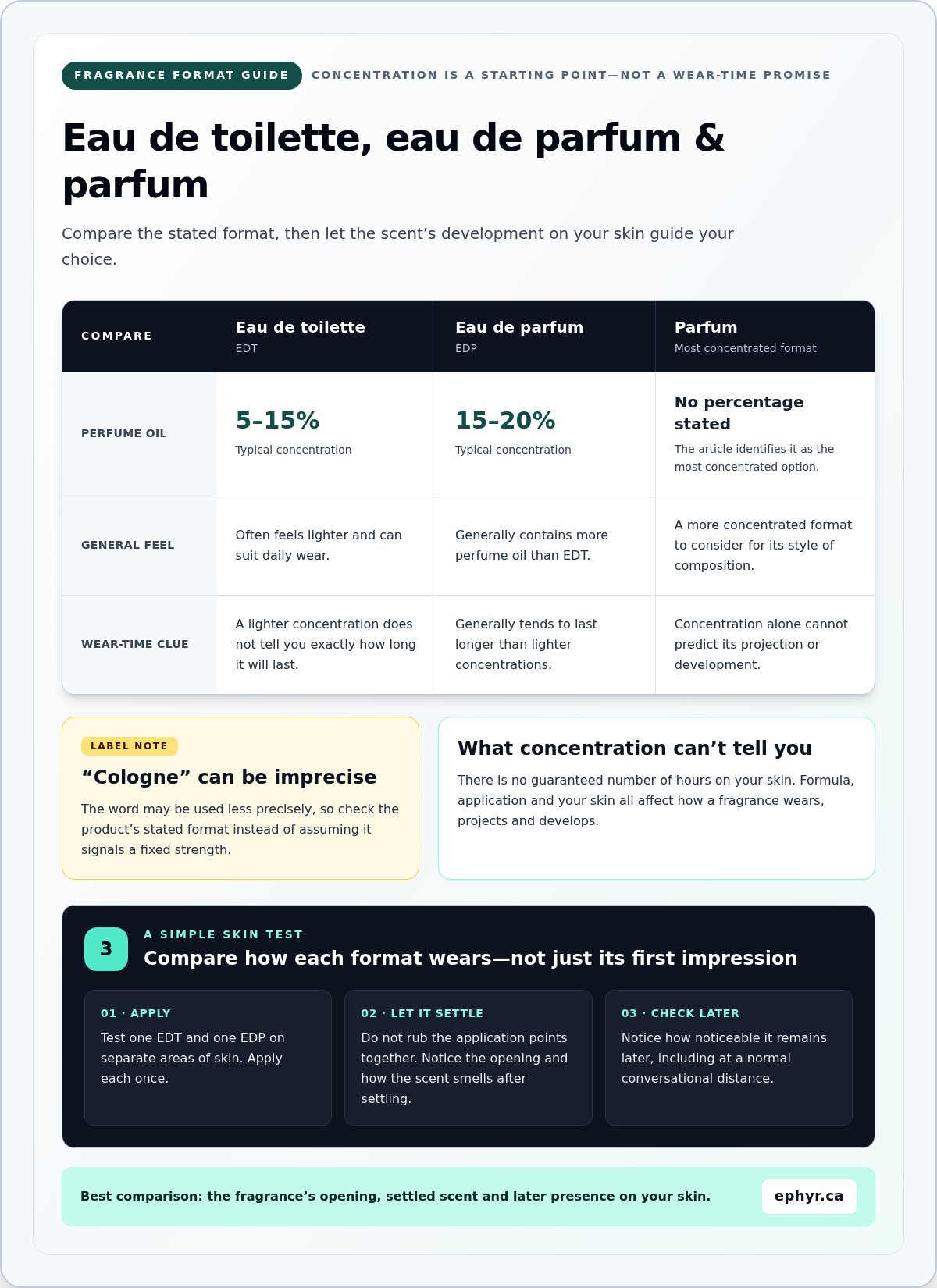
The label on a fragrance describes its format, not a guaranteed number of hours on your skin. Eau de parfum typically contains 15 to 20 per cent perfume oil. Eau de toilette typically contains 5 to 15 per cent. Parfum is the most concentrated option, while “cologne” can be used less precisely, so read the product’s stated format rather than assuming a fixed strength from that word alone.
These ranges help explain why eau de toilette often feels lighter and suits daily wear. Eau de parfum generally contains more perfume oil and tends to last longer than lighter concentrations. Parfum sits at the most concentrated end, but the label alone can’t tell you exactly how a fragrance will project or develop. The formula, application, and your skin all affect the impression.
For a practical comparison, test one eau de toilette and one eau de parfum on separate areas of skin. Apply each once, then note the opening, how the scent smells after settling, and how noticeable it remains later. Don’t rub the application points together, as this changes how you experience the fragrance. This simple method helps distinguish an intense first impression from lasting presence.
Parfums de Marly Haltane is a useful example for assessing longevity and performance. Rather than assuming its wear time from the name or concentration, apply it to your skin and observe how it develops through your usual routine. Note when it feels close to the skin and when it remains noticeable at a normal conversational distance. That record gives you a more personal measure than a general claim about strength.
Choose between eau de parfum and parfum by considering how and where you’ll wear the scent. Eau de parfum can balance presence with everyday practicality; parfum is the more concentrated format when you want that style of composition. For a luxury perfume for him, compare the experience on skin, not just the label. Test each option separately, give it time to unfold, and choose the one whose dry-down fits your day.
2. Fragrance concentration and how to make perfume last longer
Concentration influences a fragrance’s strength, but it doesn’t set a guaranteed wear time. Eau de parfum typically contains 15 to 20 per cent perfume oil; eau de toilette typically contains 5 to 15 per cent. Parfum is the most concentrated format. Even within one format, a fragrance’s composition and your skin affect how it wears. Compare the concentration label with your own experience, not as a stand-alone performance rating.
For a longer-wearing result, apply fragrance to clean, moisturized skin and let it settle without rubbing. Warm areas such as the neck or wrists can help the scent unfold, while a light application keeps projection measured. If you prefer fragrance on clothing, test a discreet area first. Fabric and skin can present the same composition differently, so judge each method by the impression you want throughout the day.
Store bottles in a cool, dark place away from direct sunlight. A bathroom shelf can expose fragrances to changing conditions, while a closed drawer protects them from light. Keep the cap secure between uses. These habits help preserve a fragrance’s character, though they can’t change its concentration or make every composition last longer on every wearer.
In Canada, luxury fragrance prices vary by brand, concentration, and bottle size, so the cost per 50 ml or 100 ml depends on the specific bottle. Compare the listed size and format when weighing options rather than assuming that a higher concentration always offers better value.
For gifts in Canada, discovery sets offer a way to experience several scents before choosing a full bottle. Individual 1 ml fragrance samples can also make a thoughtful, low-commitment introduction to niche fragrances, especially when the recipient’s preferred notes are still a mystery.
Clive Christian’s bold, unisex amber-woody fragrance offers a useful example of choosing by character, not just concentration. Its profile may suit someone who wants a more pronounced impression. Consider the recipient’s routine and preferred projection, then test the scent on skin before choosing it as a signature.
Match fragrances to the setting. A restrained scent may feel more at home in a close office or daytime routine, while a richer profile can suit an evening out. The best choice fits the wearer’s habits, preferred intensity, and comfort with projection. A bottle that stays untouched because it feels too formal isn’t a practical signature scent.
To assess performance, note the opening, the dry-down, and how noticeable the scent feels as your day progresses. Test on skin, not only on a paper strip, and avoid adding more before you’ve assessed the first application. Exploring 1 ml fragrance samples can help you compare compositions before choosing a full-size bottle.
3. Everyday signature scents
A signature scent should fit the hours you actually live, not just special occasions. Picture a weekday that moves from a morning commute to a shared office and dinner afterward. A fragrance built around fresh citrus, such as bergamot, can give that routine a clear opening without feeling reserved for formal evenings. The aim is a recognisable character that’s easy to wear.
Start by naming the settings where you want to wear the fragrance. For a close workspace, choose a composition that feels comfortable at conversational distance. For a day spent outdoors, you may prefer a more noticeable presence. This isn’t about choosing a fragrance for every calendar event. It’s about finding one profile that works across the everyday situations you return to.
Test a candidate through a normal day before calling it your signature. Apply it in the morning, then notice how the scent changes during your commute, at lunch, and later in the day. Write down which stage you enjoy most: the bright opening, the settled middle, or the warmer finish. That record helps distinguish a memorable first impression from a fragrance you’ll want to wear repeatedly.
Think about how a scent fits your existing wardrobe, too. A crisp shirt and tailored jacket might pair naturally with a polished, understated fragrance; casual clothes may invite a more relaxed profile. When refreshing your everyday aesthetic alongside a new scent, browsing apparel on upstormed.com can provide versatile inspiration. These aren’t rules. They’re useful prompts for noticing whether a scent feels like an extension of your style or a costume you reach for only occasionally.
“Exclusive” doesn’t have to mean difficult to wear. A distinctive note or unexpected contrast can make a fragrance feel personal, while a balanced composition keeps it practical for everyday use. If bergamot appeals to you, compare how it’s framed: with clean woods for a composed effect, or warmer notes for a softer, more enveloping character. The full blend matters more than any single note.
Build a simple wearing routine around your chosen scent. Apply it consistently to the same area of skin, then adjust the amount only after observing how noticeable it feels in your usual settings. Keep a sample nearby while testing, so you can wear the fragrance on different kinds of days before committing to it as your daily choice.
A well-chosen signature scent doesn’t need to announce itself in every room. It should feel like yours at the desk, over coffee, and on an unplanned evening out. Choose a profile you enjoy after it settles, and let its familiar character become part of your everyday rhythm.
4. Longevity, projection and skin chemistry
Longevity describes how long you can detect a fragrance; projection describes how far its scent travels. Top luxury men’s perfumes vary in both, with profiles ranging from airy and restrained to dense and noticeable. Compare them by testing on skin, then noting how the scent develops and carries during your regular routine.
Two published performance examples offer reference points, not universal promises. Imaginary Authors Memoirs Of A Trespasser is described as having 8-10 hours of longevity, while Gritti Duchessa Extrait de Parfum has a stated longevity rating of 8 out of 10. Those figures describe different kinds of claims, so don’t treat them as directly comparable measurements.
Skin chemistry helps explain why a fragrance can create different impressions on different people. The skin’s natural oils, moisture, and temperature influence how fragrance materials evaporate and interact. The same scent may feel warmer or softer on one wearer, then sharper or closer to the skin on another. Its lasting power and projection can therefore vary by wearer, even when the bottle is unchanged.
For a fair test, apply the fragrance to clean skin and let it develop before deciding. Notice the opening, then return to it after the first impression has settled. Check whether it remains easy to detect on your skin and whether someone nearby can notice it at a comfortable distance. Testing on skin and allowing the fragrance to develop reveals more than a quick impression from a paper strip.
Keep your test consistent. Apply the same fragrance to the same area, using the same amount each time. Avoid layering another scent during the comparison, as it can alter what you perceive. Record whether the fragrance stays close, fills your immediate space, or feels too intense for your usual setting. This turns “strong” into a practical observation rather than a guess.
Extreme projection isn’t automatically better. A fragrance that travels widely may suit an open-air event, while close quarters call for a quieter presence. Consider your workplace, commute, and evening plans before judging performance. A scent that feels balanced at home might seem overwhelming in a shared office, so test it in the setting where you expect to wear it.
Skin care can also affect your test. Compare fragrance on moisturized skin as part of your usual routine, and avoid rubbing the application point. If a scent fades sooner than you’d like, consider whether your skin feels dry and whether the application area is exposed to heat or friction. Retest on another day before deciding that the composition doesn’t suit you.
Choose from a collection by matching each fragrance’s actual wear to your preferences. The right balance is a scent you enjoy as it develops, with projection that suits your surroundings and lasting character that fits your day.
5. What are the best luxury perfumes for men in Canada in 2026?
The strongest shortlist starts with your routine, then narrows by scent profile, concentration, and personal wear. Two established niche options to test are Maison Ephyr Signature Eau de Parfum and Nishane Hacivat Extrait de Parfum, launched in 2017. Their different formats give you a useful comparison, but neither label alone tells you which will suit your skin or style.
Maison Ephyr Signature is an eau de parfum to consider if you want a versatile starting point for your collection. Test it on skin and follow its development through a typical day. Notice whether the opening, later stages, and overall presence suit work, commuting, or evenings. Those observations are more useful than choosing by launch date or prestige alone.
Nishane Hacivat is an extrait de parfum, offering a contrasting concentration format to assess. Try it on a separate day from Maison Ephyr so one scent doesn’t shape your impression of the other. Pay attention to how close it stays, how noticeable it feels in conversation, and whether you enjoy its full development. The best choice is personal, not a contest between labels.
Build a Canada-focused shortlist around where you’ll wear the fragrance. For an indoor workday, assess whether the scent feels comfortable in close quarters. For outdoor plans, consider how the fragrance feels as your surroundings and temperature change. A profile that feels balanced during a cool morning commute may wear differently later, so test it under conditions resembling your actual routine.
Use a simple comparison card for each candidate. Record the name, concentration, application area, and your impressions at the opening and after it settles. Add a note about the setting, such as an office day or evening event. Comparing the same details for Maison Ephyr and Nishane Hacivat makes your decision more deliberate than relying on memory or a first spray.
Don’t treat a “best” list as a fixed ranking. A fragrance that suits one wearer’s taste, skin, and daily setting may not work for another. If you’re choosing a luxury perfume for him as a gift, start with the recipient’s known preferences, then consider a sample or discovery set. This lets them experience the scent before committing to a full bottle.
For a considered purchase in 2026, test both candidates on skin, wear each in a familiar setting, and compare the full development. Choose the fragrance you enjoy wearing repeatedly, not simply the one with the most intense first impression. That is the practical measure of a strong personal pick.
Maison Ephyr: Xerjoff Fragrances
Maison Ephyr is a natural next step when you’re ready to compare niche fragrances and find a scent that suits your routine. Explore Xerjoff Fragrances alongside Nishane Fragrances and Casamorati, then see how each composition develops on your skin.
If you’re still narrowing your choice, Fragrance Samples (1ml) let you experience a scent before choosing a full bottle. Wear a sample through a familiar day and notice its opening, development, and projection in your usual settings. That personal comparison can make a considered choice easier.
For a closer look at niche fragrance options, visit ephyr.ca or contact Maison Ephyr.
Make your next scent a personal choice
The right fragrance can become a quiet part of your daily rhythm, something that feels distinctly yours rather than chosen for a label or trend. Give yourself room to explore. Notice which compositions you return to and which feel natural in the settings that matter to you.
For a luxury perfume for him, personal preference is what matters most. Maison Ephyr offers Amouage Fragrances, Xerjoff Fragrances, and Nishane Fragrances, giving you distinct niche houses to explore as you refine your choice.
Bring your notes, preferences, or a sense of the impression you want your scent to leave. A focused conversation can help turn those instincts into a more confident direction. Contact Maison Ephyr for fragrance advice, then take the next step toward a scent that feels like your own.
Frequently Asked Questions
Should I apply fragrance to clothes or skin?
Skin is usually the better place to judge a fragrance, while clothing can hold a different impression. If you want to scent a garment, test a hidden area first and consider how its fabric and laundry products may affect the result. For example, a scarf worn close to your face can make a fragrance feel more present than a light application on your wrist.
What are the best everyday signature scents for men?
The best everyday choice feels comfortable across your regular settings. Citrus, aromatic, and soft woody profiles can be useful starting points if you prefer a composed impression. Think about where you’ll wear the fragrance: a shared office may call for a quieter scent, while a day outdoors may suit a more noticeable character. Choose one you enjoy beyond its opening.
What is the difference between an eau de parfum, an eau de toilette and a cologne?
Eau de parfum and eau de toilette describe fragrance concentrations, with eau de parfum typically the stronger format. “Cologne” is used less consistently, so it doesn’t always indicate a precise concentration. Compare the product label and test the scent itself. If you want a more discreet effect, focus on how much you apply and how it feels in your setting, not just the format name.
What scent families are best for men?
No scent family is limited to men; the best fit depends on the character you enjoy. Citrus and aromatic compositions can feel crisp, woods can add structure, and amber or gourmand notes can create a warmer impression. Think of notes you already like in candles, tea, or grooming products. That gives you a personal starting point instead of relying on gendered labels.
Which luxury men’s fragrances are best for everyday wear, work, and special occasions?
For work, look for a scent that stays comfortable at close range, such as a restrained citrus or woody profile. Everyday wear benefits from versatility across your routine. For a special occasion, you might choose a richer amber, spice, or gourmand character that feels more expressive. Consider the venue and how close you’ll be to others before choosing a fragrance with pronounced projection.
What are the most popular luxury men’s perfume brands and signature fragrances?
For niche fragrance examples, consider Amouage Reflection Man Eau de Parfum and Nishane Hacivat Extrait de Parfum. Xerjoff and Casamorati are also established fragrance houses to explore. Rather than treating any list as a universal ranking, compare each house’s style with the notes and presence you enjoy. A signature fragrance should suit its wearer, not be chosen for its name alone.
How do I choose a luxury perfume for him based on his preferences and the season?
Start with what he already enjoys: fresh citrus, dry woods, spice, or sweeter notes. Then consider the season and setting. A lighter-feeling profile may appeal on warm-weather days, while a richer composition can feel fitting in cooler weather. For a gift, a fragrance sample or discovery set lets him explore a scent before choosing a full bottle.
What are good luxury men's perfume gift sets available in Canada?
Discovery sets let recipients experience several scents before choosing a full bottle. Individual 1 ml samples are another low-commitment gift option, especially when their preferred notes are unknown.
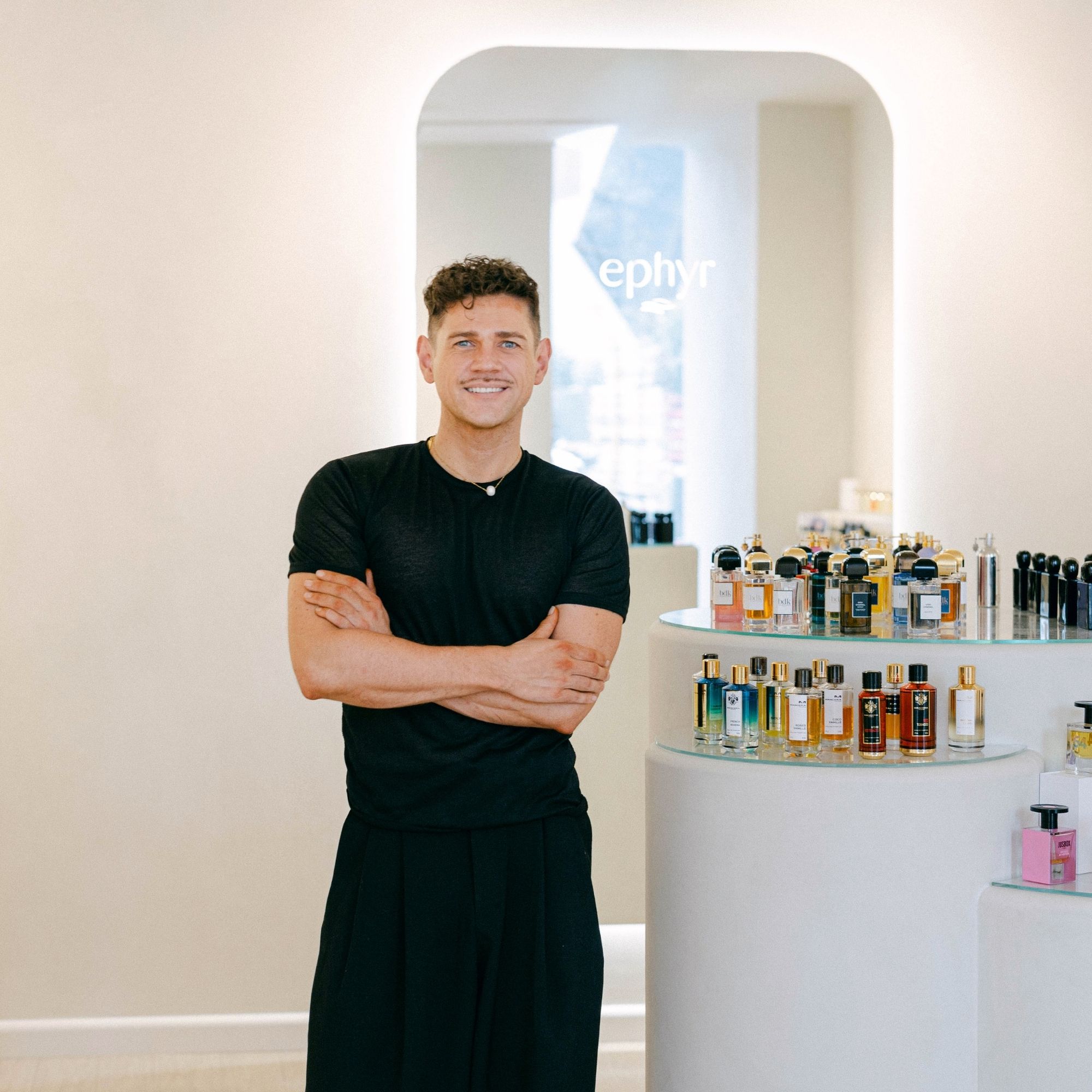
Article by
Dmitrii Savishin
Dmitrii Savishin is the founder of Maison Ephyr and Parfum Exquis, two Canadian destinations dedicated to the world of niche perfumery. With years of experience discovering exceptional fragrance houses from around the globe, Dmitrii shares expert insights on perfume trends, fragrance notes, luxury brands, and the art of choosing the perfect scent. His mission is to make niche perfumery more approachable while helping readers discover fragrances that leave a lasting impression.


