

A boardroom fragrance should signal composure, not compete for attention. Choosing power scents for the boardroom starts with grounded, assured notes and a light application.
Balance matters. Warm sandalwood, leather, and amber can suggest steadiness and trust, while citrus or a restrained herbal note can feel alert and focused. Choose a direction that suits the impression you want to create and the setting. Fragrance is personal, so apply it subtly in shared spaces.
This guide explores how fragrance notes can support a polished professional presence, from welcoming warmth to sharper focus and quiet authority. You’ll learn which scent profiles suit different boardroom moods, how to keep a fragrance composed rather than overpowering, and how to test a scent before making it part of your routine. Think of it as fine-tuning one detail of your presence: deliberate, well judged and unmistakably your own.
Key Takeaways
- Use sandalwood, leather, or amber for a grounded, welcoming impression, and keep the application restrained.
- Choose a softer fragrance profile to support an atmosphere of trust and open collaboration.
- For a more alert feel, consider invigorating herbal notes and a clear, uncluttered meeting space.
- Shape a signature scent around the impression you want to leave, from quiet authority to creative confidence.
- Match fragrance notes to the business setting, balancing bright accents with subtle, composed warmth.
1. Sandalwood, leather, and amber fragrance notes
Sandalwood, leather, and amber bring warmth to a boardroom fragrance without relying on sharp freshness. Sandalwood suggests polished wood and a calm, grounded presence. Leather adds a dry, tailored impression, while amber contributes resinous warmth and depth. Together, these notes can create a welcoming feel associated with trust. Balance is key: a restrained blend feels composed, while a dense, sweet fragrance may dominate a small meeting room.
In Canada, fragrance prices vary by brand, concentration, and bottle size, so compare equivalent formats rather than names alone. A smaller bottle and a full-size bottle are not like-for-like comparisons. Consider the scent profile too: a polished, discreet fragrance may suit the office better than a louder composition, even if both feature amber or woods.
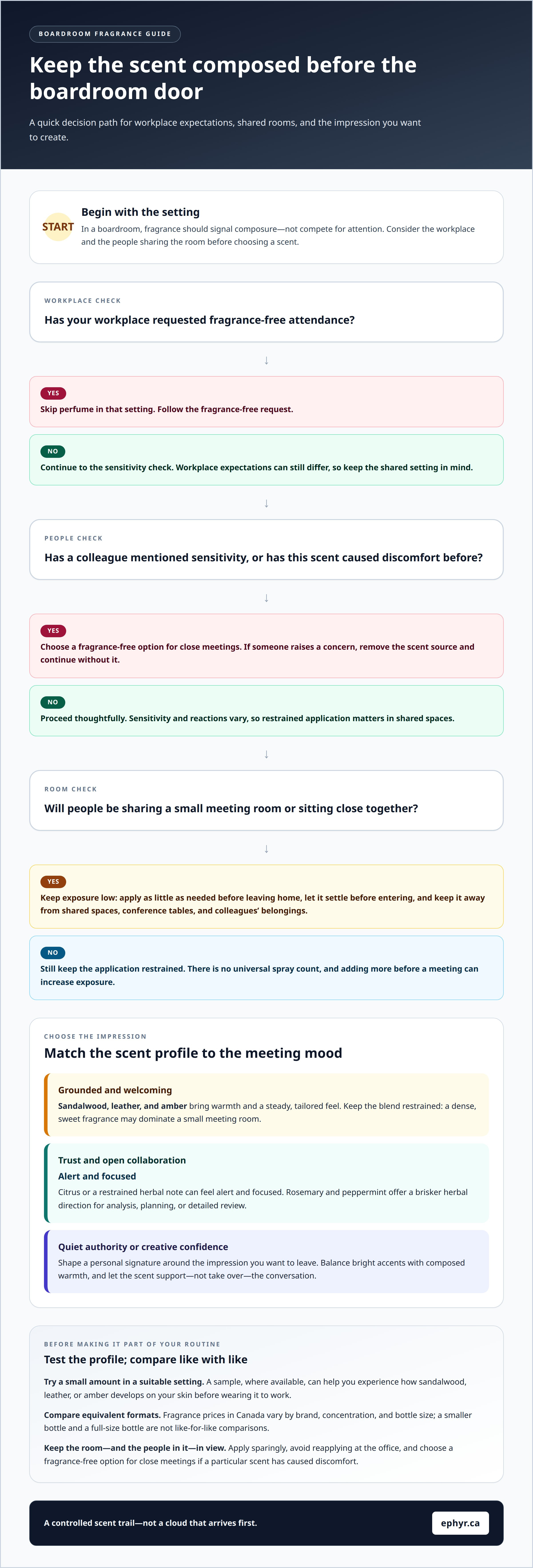
There is no universal spray count for the office, since formulas and personal sensitivity vary. Apply as little as needed, and avoid adding more before a meeting. To reduce projection, apply fragrance under clothing rather than around the neck or on a lapel. Keep it away from shared spaces, conference tables, and colleagues’ belongings. Let it settle before entering the room.
Canadian offices may have fragrance-free policies, and expectations differ between workplaces. Be especially restrained in shared meeting rooms, particularly if a colleague has mentioned sensitivity. If your workplace requests fragrance-free attendance, skip perfume in that setting. Sandalwood, leather, and amber are scented materials; a warm or refined profile is not neutral.
Fragrance ingredients can cause discomfort for people with sensitivities, and reactions vary. Strong application, repeated sprays, or scent on clothing can increase exposure in a small room. For a considerate approach, keep fragrance off shared surfaces and avoid reapplying at the office. If a particular scent has caused discomfort before, choose a fragrance-free option for close meetings.
In Canada, fragrance retailers offer different formats, including smaller samples where available. Prices depend on brand, concentration, and size, so compare those details before choosing. A sample can help you experience how a sandalwood, leather, or amber composition develops on your skin before wearing it to work.
In a boardroom, aim for a controlled scent trail, not a cloud that arrives before you. Treat warm notes as an accent: choose a balanced composition, apply it sparingly before leaving home, and consider the room and the people sharing it. This restraint lets sandalwood’s smoothness, leather’s tailored character, and amber’s warmth support a polished presence without taking over the conversation.
Boardroom Solid Fragrance is described as blending ambroxan, ambergris, amber, bergamot, and woody notes. Those listed notes can be considered alongside the warm profile described here, but the name alone does not show how strongly it will project. Try a small amount in a suitable setting and consider workplace fragrance expectations before wearing it to a boardroom.
2. Scents for trust and open collaboration
A collaborative meeting needs room for different voices. A welcoming fragrance can contribute to the atmosphere, but it shouldn’t become the main event. Treat scent as one detail alongside a clear agenda, attentive listening, and an inviting layout. For a project kickoff around a circular table, for example, choose a soft fragrance that stays in the background rather than announcing itself at the door.
Pleasant, welcoming fragrances may influence beta wave activity in the brain’s left frontal region, a change linked with improved mood and approach behaviours. This offers a perspective, not a shortcut to trust. Fragrance can shape the sensory setting, while trust still depends on how people communicate and follow through. In open discussions, power scents for the boardroom should feel welcoming rather than imposing.
Start with the meeting’s purpose. A project kickoff may suit a warm, familiar impression, while a sensitive negotiation calls for less sensory presence. Choose a clean, balanced profile rather than something sharply sweet or heavily smoky. Assess it in the actual room, too: a fragrance that seems subtle in an open space may feel stronger around a small conference table.
Room design can also make a space feel welcoming. Natural wood and softer textures can make a collaborative room feel less formal, while a circular table can soften the visual hierarchy of a head-of-table arrangement. Pair those details with a restrained scent profile. Aim for coherence: a calm room, a clear purpose, and no sensory element competing with the conversation.
Before a group session, follow a simple sequence. First, consider whether attendees have requested a fragrance-free environment. Next, keep scent away from shared materials, food, and seating. Finally, let the room settle before people arrive. These steps help keep attention on the discussion. If someone raises a concern, remove the scent source and continue without it.
For individual wear, a soft fragrance can be a quiet finishing detail. Apply it before travelling to the office, then avoid refreshing it in a meeting room. Colleagues should notice your contribution before your scent. That restraint matters during close discussions, when people sit together for an extended conversation. Thoughtful power scents for the boardroom support the tone without taking over.
Atmosphere can also begin outside the meeting room. In a private preparation space, a scented candle can offer a considered fragrance cue before the meeting, without making the conference room the test environment. Choose a profile that suits the tone you want, then keep the meeting space focused on the people in it.
3. Scents intended to support alertness and focus
Rosemary and peppermint offer a brisker direction for meetings focused on analysis, planning, or detailed review. Their herbal profiles feel more vivid than soft woods and can give a room an energetic tone. Research findings associate rosemary and peppermint fragrances with decreased frontal alpha and beta wave power, a change linked to heightened alertness and improved cognitive performance. Treat that association as a reason to consider these notes, not as a substitute for sleep, preparation, or a well-run agenda.
Choose a scent to suit the task. A peppermint-led profile can feel crisp during a morning planning session, while rosemary can bring a green, aromatic edge to a long strategy discussion. If both notes appear in a fragrance, notice how their balance develops over time. A sharp opening may soften into a warmer base, changing the impression before the meeting ends. The boardroom setting matters as much as the note list.
Room design can reinforce a focused mood. Pair an invigorating scent with bright, cool-toned lighting and an uncluttered table. Clear away spare papers, cups, and unused devices before participants arrive. A clean visual field gives attention fewer distractions. Keep the scent in the background rather than making it another stimulus demanding notice.
For individual wear, apply fragrance before arriving at work and keep the amount restrained. Avoid refreshing it in the meeting room, where a close group may experience it differently from the wearer. Rosemary or peppermint may seem subtle in a hallway yet feel much stronger around a small table. Choose a formula that stays close, especially for sessions requiring sustained concentration or quiet review.
Use this simple selection process for a focus-oriented meeting:
- Match the note to the work. Try rosemary or peppermint for analysis and planning, rather than a heavy, sweet profile.
- Consider the room. Bright, cool-toned lighting and a clear table support the same deliberate atmosphere.
- Keep the scent controlled. Apply before the meeting and avoid reapplication in shared space.
For a workspace outside the meeting room, a scented candle can introduce an aromatic cue during personal preparation. Keep that use separate from the boardroom itself, where colleagues share the air. The best focus profile is therefore not simply the strongest or freshest fragrance. It is the one that suits the agenda, feels composed in its setting, and leaves the conversation in the foreground.
Choose a fragrance that stays close and remains unobtrusive while people work. If the meeting shifts from concentrated review to relationship-building, consider a warmer direction. Sandalwood, leather, and amber can create a welcoming atmosphere and suggest established trust. Keep the blend measured so it supports that impression without competing with conversation.
The room can also reinforce an inclusive tone during collaborative sessions. Softer textures, natural wood, and circular tables can help create a welcoming atmosphere while preserving a composed setting for discussion. Consider the agenda first, then align fragrance and furnishings with the kind of interaction participants need.
4. Signature scents for sophistication and authority
A signature fragrance becomes part of professional presentation through consistency, balance, and fit. Peach, honey, and grounding musk create a distinctive profile associated with creativity and confidence. Peach brings fruit-like brightness, honey suggests warmth, and musk anchors the composition. Together, they can feel expressive without being sharp or overly formal.
What are the best long-lasting office fragrances for men and women? There is no single best fragrance for either group: gender labels do not determine office suitability or how long a scent lasts. Choose a composed profile that wears close, then consider how its notes develop on your skin before making it a workday signature.
Authority doesn’t require a forceful scent. A carefully balanced composition can feel assured when its opening, heart, and base work together. A bright opening, for example, may draw attention briefly, while a warmer base provides a measured finish. A fragrance that stays coherent from the first impression through its dry-down feels more intentional than one that shifts sharply from fresh to sugary.
Build a signature through a repeatable selection process. First, identify the impression you want to convey: measured confidence, creative leadership, or a polished welcome. Smell the fragrance on a test strip, then on skin, since the two can differ. Finally, wear it during an ordinary workday before choosing it for a presentation or negotiation. This gives you a practical sense of its character in your routine.
Consider your meeting calendar, too. A fragrance suited to a one-to-one conversation may feel too present in a packed strategy session. Apply it sparingly, especially if it has a sweet profile such as peach and honey. If the scent remains noticeable across a shared room, use less or reserve it for less crowded settings. Aim for a recognisable personal detail, not a room-wide signature.
Consistency helps a signature feel considered. Wear the same profile with professional clothing, but adjust your application to the room and the people present. A close-fitting office, a long presentation, and a private meeting each create different conditions. Don’t layer another fragrance over the first; overlapping notes can blur the composition and make its impression harder to control.
For sophisticated authority, choose a profile that reflects your natural style rather than borrowing someone else’s. Peach, honey, and musk offer one route to creative confidence; a restrained, balanced composition offers another. Test the fragrance in your real routine, keep it discreet, and let your preparation and ideas make the strongest impression.
5. What fragrance notes work best in a business setting?
Bright citrus top notes with a subtle hint of white tea create an invigorating direction for business settings. Citrus gives the opening a crisp, lively edge, while white tea can soften it with a quieter character. This pairing suits a morning presentation or planning session when you want a polished impression without leaning heavily on sweetness. Keep the blend restrained, especially in a smaller meeting room.
Match the fragrance structure to the workday. A citrus-led opening can feel fresh at the start of a meeting, while its later notes shape the lasting impression. White tea offers a gentler counterpoint to an intense sugary accord. For a client presentation, that balance can feel deliberate and composed. For a long internal workshop, consider how the fragrance wears over time, not just how it smells at first.
Business fragrance isn’t a fixed formula. A creative discussion may call for a different profile than a formal review, and a fragrance can smell different on skin than on a paper strip. Test a small amount before wearing it to work. Let it settle, then assess whether its citrus brightness stays balanced by the tea note. This simple trial helps you judge the fragrance’s full development.
Use the setting as a final filter. In an open office, a close-wearing scent is less likely to travel across shared desks. For a boardroom presentation, apply it before leaving home and avoid refreshing it in the room. Follow your workplace’s fragrance-free policy if it has one. A considered scent choice takes the people sharing the space into account.
To choose a business-friendly profile, focus on these practical details:
- Opening: Look for bright citrus that feels crisp rather than sharp.
- Balance: Choose a subtle white tea note to temper the initial brightness.
- Wear: Test the fragrance on skin and notice how it develops through the day.
- Setting: Keep application minimal for close meetings and shared offices.
Another signature direction combines peach, honey, and grounding musk to convey creativity and confidence. It feels warmer and more expressive than citrus with white tea. Choose between them by considering the impression you want to make: fresh and invigorating, or warmly self-assured. The right fit is a composition that feels coherent and appropriate in your actual work setting.
Explore refined fragrance profiles as you narrow your preferred balance of freshness, softness, and warmth. A deliberate choice starts with the notes, then considers how they develop and how closely you’ll be sitting with colleagues. In a business setting, precision is part of the signature.
Maison Ephyr
Maison Ephyr offers a considered place to explore fragrances for a polished professional presence. Its curated selection includes Xerjoff Fragrances, Nishane Fragrances, and Casamorati, with distinct profiles to explore as you find your preferred balance of warmth, freshness, and restraint.
If you’re deciding whether a scent feels right for work, a Fragrance Sample (1ml) lets you experience its character on your skin before choosing a larger format. Wear it through an ordinary day and notice how its notes develop, including in shared spaces. That small test can help you choose with more confidence and keep your boardroom presence considered.
For help exploring fragrance options for the office, contact Maison Ephyr.
Make your signature deliberate
Choose a fragrance that feels like a natural extension of how you lead. Treat power scents for the boardroom as a personal style decision, not a formula: consider the impression you want to leave, the setting, and how much fragrance feels comfortable around colleagues. A thoughtful choice can be distinctive without becoming the focus of the room.
Maison Ephyr’s selection includes Xerjoff, Nishane, and other master houses, with different profiles to explore as you refine your choice. Let your preferences guide you, whether you’re drawn to a warmer character or a cleaner, brighter feel. Aim for a scent that feels authentic to you and appropriate for the people sharing the space.
Ready to explore your options? Contact Maison Ephyr for fragrance advice and take the next step toward a more considered professional signature. Choose with intention, then let your presence speak for itself.
Frequently Asked Questions
What fragrances are considered suitable for a boardroom or professional office?
Suitable office fragrances are balanced, understated, and appropriate for the room’s expectations. A soft aromatic or gently woody profile can suit a regular workday, while a bright, clean composition may fit a client presentation. Consider the setting as well as your preference: a private office allows a different scent presence than a shared meeting space. Follow any fragrance guidance your workplace provides.
Which scents project confidence and authority without being overpowering?
Choose a composed fragrance with a clear structure rather than an intense scent cloud. Grounding musk can give a profile a measured finish, while restrained warmth can feel assured without seeming severe. A balanced fragrance worn lightly, for example, can complement formal clothing without competing with conversation. Focus on how it smells at close range, where colleagues experience it, rather than how strongly it announces itself across a room.
How do popular professional fragrances compare by price in Canada?
In Canada, fragrance prices vary by brand, concentration, and bottle size. Compare equivalent formats, since a smaller bottle and a full-size bottle are not like-for-like comparisons.

Article by
Dmitrii Savishin
Dmitrii Savishin is the founder of Maison Ephyr and Parfum Exquis, two Canadian destinations dedicated to the world of niche perfumery. With years of experience discovering exceptional fragrance houses from around the globe, Dmitrii shares expert insights on perfume trends, fragrance notes, luxury brands, and the art of choosing the perfect scent. His mission is to make niche perfumery more approachable while helping readers discover fragrances that leave a lasting impression.


