
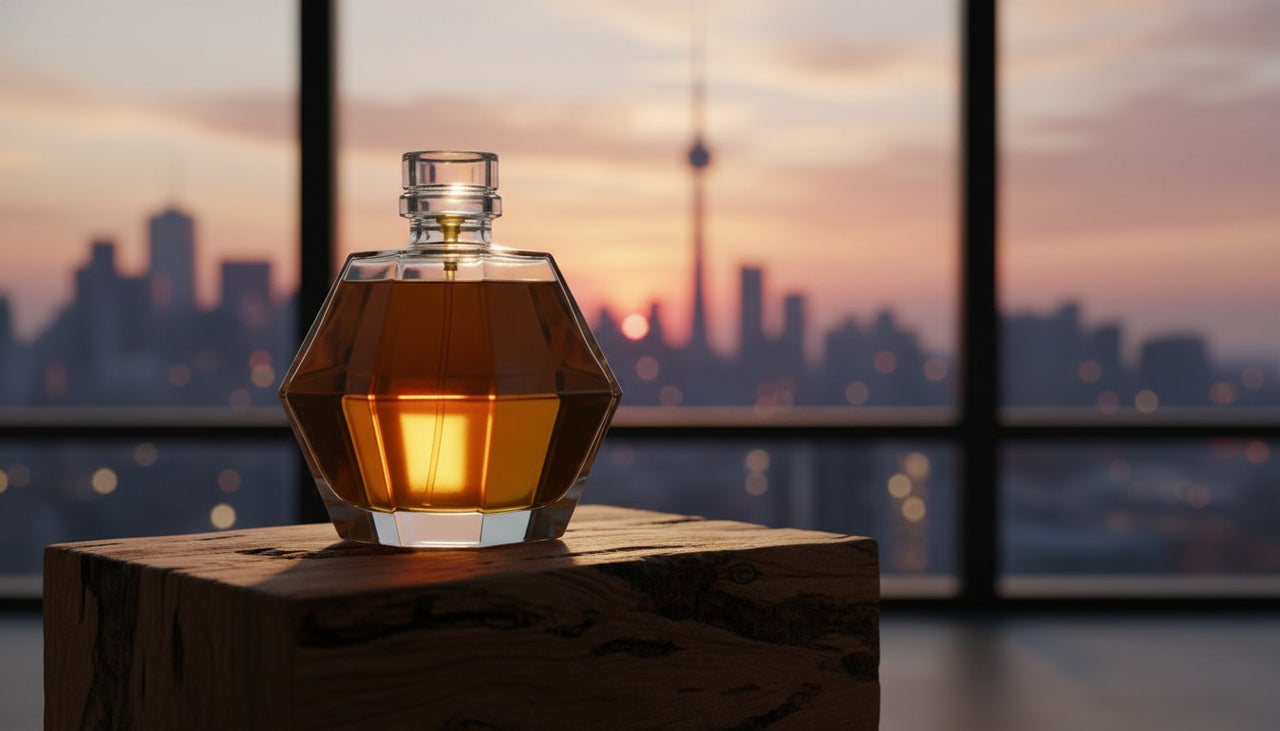
Most luxury fragrance enthusiasts are currently wearing a lab-grown imitation of a substance that costs more per ounce than 24-karat gold. This reality forces us to ask: what is oud in perfume? It isn't merely a scent profile. It's a biological reaction. When the Aquilaria tree survives a specific fungal attack, it produces a dense, dark resin to protect itself. This is the liquid gold. In 2024, premium natural oud oil can reach market prices exceeding C$60,000 per kilogram. It's a rare, technical masterpiece of nature.
You've likely felt the hesitation that comes with its heavy, animalic reputation. It's natural to feel overwhelmed by the intensity of niche compositions or the fear of a "barnyard" profile. We'll bridge that gap. You'll discover the precise alchemy behind its creation and learn to distinguish between synthetic shortcuts and bespoke quality. We're breaking down the biological origins and the sensory profiles to give you a clear starting point for your niche fragrance journey.
Key Takeaways
- Uncover the origins of "Liquid Gold," a rare resin born from the Aquilaria tree’s silent defense and refined into a masterpiece of nature.
- Decode exactly what is oud in perfume by exploring the rare fungal alchemy that transforms timber into an ingredient valued at over C$65,000 per kilogram.
- Navigate a polarizing olfactory landscape of smoky, balsamic, and animalic accords that create a sensory signature of uncompromising depth.
- Understand the scarcity of a botanical anomaly found in only 1% of wild trees, defining the ultimate peak of luxury fragrance investment.
- Master the art of the skin test to witness how this "living note" evolves and adapts to your unique chemistry for a truly bespoke finish.
Defining the Mystery: What Exactly is Oud?
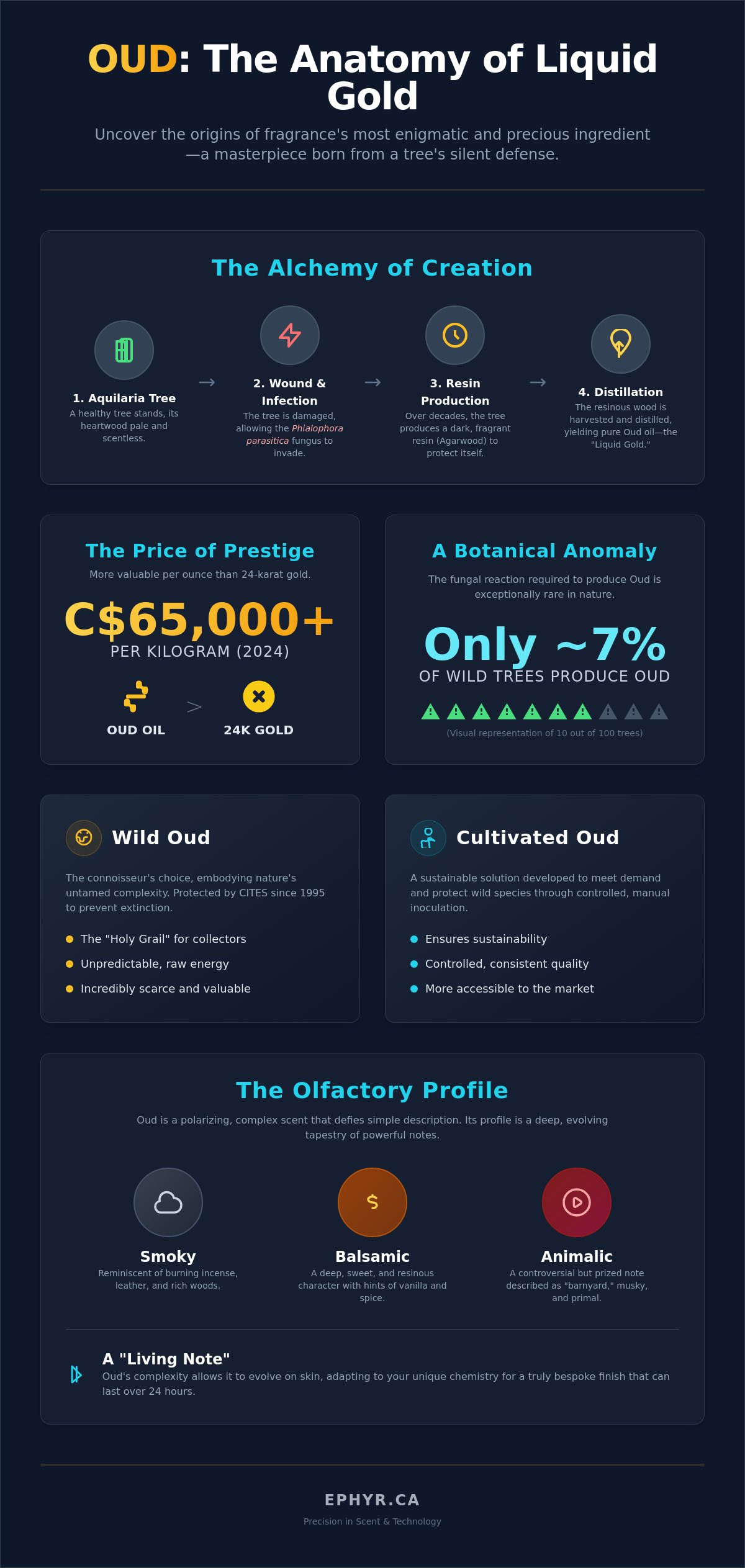
Oud is a biological masterpiece. It doesn't begin as a scent, but as a defense. When the Aquilaria tree is compromised by a specific fungal infection, it secretes a dense, dark resin to protect its core. This process is rare. It's slow. Only about 7% of wild trees produce the resin naturally, making it one of the most elusive substances in the botanical world. This is the essence of "beauty through trauma," where a tree's survival instinct creates the most complex olfactory profile on earth. Understanding what is oud in perfume requires looking past the bottle and into the heart of the wood itself.
Industry experts call it "Liquid Gold" for a reason. The scarcity is absolute. High-grade oud oil regularly commands prices exceeding C$65,000 per kilogram in 2024. This isn't just an ingredient; it's a long-term investment in sensory excellence. Once a cornerstone of Middle Eastern heritage, it now dictates the standards of the global niche market. It represents a bridge between raw botanical power and refined luxury. At Ephyr, we appreciate this level of dedication; it mirrors the precision we apply to our bespoke builds in Montreal, where every component must serve a higher purpose.
The Etymology of Excellence
Precision starts with language. The word "Oud" stems from the Arabic term for "wood." While often used interchangeably with Agarwood (Oud), a technical distinction exists. Agarwood is the raw, resinous timber. Oud is the distilled soul of that wood, refined through careful extraction. This substance carries a weight of history that few other materials can claim. You'll find its presence documented in the Sanskrit Vedas and ancient religious texts from as early as 1500 BCE. It has always been a marker of the elite, used to signal status and spiritual purity across civilizations.
The Cultural Legacy of the Gift of Kings
Heritage drives the value of this material. In traditional Middle Eastern settings, oud is the scent of hospitality. Guests are often greeted with the smoke of burning agarwood chips, a ritual that signals respect and deep-rooted cultural pride. The transition from these ancient incense burners to modern pulse points was inevitable as perfumers sought more permanent ways to wear the scent. For centuries, artisans crafted concentrated oil-based attars for the ruling classes, prioritizing depth over volume.
Modern perfumery has evolved these traditions into complex, sprayable compositions. This transition represents a blend of ancient craftsmanship and contemporary technical precision. If you've ever wondered what is oud in perfume, it's the bridge between a 3,000-year-old ritual and a contemporary masterpiece of functional art. It's a scent that demands attention, much like a perfectly tuned workstation, where the unseen details define the final experience.
The Alchemy of Infection: How Oud is Created
Oud doesn't exist by design; it exists by accident. It's the result of a biological siege. When the Aquilaria tree is wounded, a specific mould called Phialophora parasitica takes hold. This isn't a flaw. It's the catalyst for the most expensive aromatic material on earth. Understanding what is oud in perfume requires looking at the tree’s immune response. To survive, the tree saturates its heartwood with a dense, dark, and incredibly fragrant resin. This is its shield. In the wild, this occurrence is rare. Current data suggests only 7% of wild Aquilaria trees ever produce this resin naturally. It’s a lottery of nature where the prize is liquid gold.
Time is the silent architect here. A tree's age dictates the complexity of the oil. Younger trees offer a surface-level scent. Mature trees, often 50 years or older, produce a "soul" that's multi-layered and profound. It’s the difference between a mass-produced component and a finished masterpiece. The older the tree, the more concentrated the chemical compounds become, resulting in a scent that can linger on the skin for over 24 hours. This level of precision in natural engineering is what defines the premium tier of perfumery.
Wild vs. Cultivated: The Craftsman’s Choice
Wild-harvested oud is increasingly scarce. Since 1995, CITES has protected these species to prevent extinction. This led to the rise of cultivated oud. Modern inoculation involves manually wounding the tree and introducing the fungus. It's a controlled process that ensures sustainability. Yet, for the niche collector, wild oud remains the holy grail. It possesses an unpredictable, raw energy that cultivated versions can't quite replicate. It's the ultimate bespoke ingredient for those who demand uncompromising depth. For many, what is oud in perfume is defined by this tension between nature's chaos and human intervention.
Distillation: Capturing the Spirit of the Wood
The extraction process is where the spirit is captured. Hydro-distillation involves soaking the wood for up to 30 days before boiling. This often yields a deeper, more "barnyard" profile. Steam distillation is faster and produces a cleaner, more woody finish. The "cooking" time is critical. A master distiller might boil the wood for 12 days to achieve a specific olfactory profile. Agarwood resin is the result of a biological battle.
- Phialophora parasitica: The fungal trigger for resin production.
- Resin Density: High-quality oud wood will sink in water due to oil saturation.
- Inoculation: A 100% human-managed process to save the species.
- Olfactory Profile: Ranges from sweet balsamic to smoky leather depending on the "cook."
The Olfactory Profile: Why Oud Smells Like Nothing Else
Oud is a disruptor. It refuses to blend into the background or play a supporting role. When enthusiasts ask what is oud in perfume, they're usually reacting to its sheer, uncompromising intensity. It's a scent that demands a reaction. The profile is a dense architecture of woody, smoky, and balsamic accords. It's often described as "polarizing," a term that translates to "unforgettable" in the world of high-end perfumery. It captures the raw tension between decay and beauty.
Chemically, oud functions as a powerhouse fixative. Its heavy molecular weight anchors more volatile notes, ensuring a fragrance remains detectable for 48 hours or longer. This technical advantage is particularly relevant in the Canadian climate. Our cold, dry air often strips away delicate citrus or floral top notes within minutes. Oud thrives in these conditions. The crisp atmosphere of a Montreal winter allows these dense molecules to bloom slowly, creating a private sanctuary of warmth around the wearer that doesn't dissipate in the wind.
The Spectrum: From "Barnyard" to "Balsamic"
The variety within oud oils is staggering, dictated by the specific region of origin and the distillation process. You'll frequently encounter the term "animalic." This refers to a primal, earthy profile reminiscent of hay, leather, or a warm barnyard. While it sounds challenging on paper, these notes transform on the skin into something deeply sensual and sophisticated. The geographical markers are distinct:
- India (Assam): Known for the most traditional, "barnyard" profiles. These are fermented, leathery, and intensely potent.
- Laos and Vietnam: These regions produce ouds with a sweeter, more "jammy" quality, often leaning toward dried fruits and tobacco.
- Thailand and Cambodia: Often categorized as "clean" ouds. They offer medicinal, minty, or ethereal profiles that feel lighter and more crystalline.
The Art of the Blend
Blending oud is a high-stakes engineering task. Because the resin is so dominant, a master perfumer must use surgical precision to balance it. The most iconic pairing is oud and rose. It's a classic dance of shadow and light; the floral sweetness softens the resinous bite, while the oud gives the rose a dark, metallic edge. Modern interpretations have moved toward "Westernized" profiles, integrating gourmand notes like vanilla or bright citrus to make the scent more accessible for daily wear.
For those seeking the pinnacle of this technical craft, Amouage Perfume remains the gold standard. They treat the ingredient with the reverence of a master watchmaker, ensuring every facet of the resin is polished to perfection. Understanding what is oud in perfume requires experiencing these complex blends where the raw power of the wood is harnessed into a sophisticated, wearable art form. It's an investment in a scent that evolves, shifts, and persists.
The Economics of Rarity: Why Oud is Fragrance’s Most Expensive Note
Natural oud oil isn't just a raw material. It's a finite resource. High-grade agarwood oil can command prices exceeding C$68,400 per kilogram. This valuation reflects a brutal scarcity. In the wild, only 1 in 100 Aquilaria trees produces the resin. This infection is a biological anomaly. Understanding what is oud in perfume requires looking at the ledger. Harvesters must use surgical precision, hand-carving the dark, resinous heartwood from the healthy timber. This labor-intensive process makes mass production impossible. It's the ultimate bottleneck in the fragrance world. This scarcity drives the market toward "Oud-Accords," which are synthetic recreations found in almost all commercial scents.
Natural Oud vs. Synthetic Accords
Most designer bottles labeled "Oud" contain zero actual agarwood. They rely on chemical blueprints. Chemists use cypriol oil for earthiness and cashmeran for a woody, musky texture. This explains why what is oud in perfume often remains a synthetic approximation in the mainstream market. You can spot the difference through performance. Real oud is a shapeshifter. It evolves over 12 hours. Synthetics are static. They hit a single note and stay there. If a 100ml bottle costs less than C$250, it's almost certainly a synthetic reconstruction. Real oud carries a depth that lab-grown molecules cannot replicate.
Investing in a Masterpiece
A true oud fragrance is performance art on the skin. It offers a superior return on investment through longevity. One spray can last 24 hours. Because the cost of entry is high, smart collectors seek luxury fragrance samples Canada to test the depth before committing to a full bottle. This is the Ephyr standard of selection. You analyze the sillage. You track the dry down. You treat your scent profile like a bespoke workstation: optimized, powerful, and built to last. High-end oud doesn't just sit on the skin; it radiates with a technical complexity that justifies its premium price point. It's an individually tuned instrument for the senses.
Discover uncompromising quality and precision in every detail. Experience the Ephyr standard of craftsmanship.
Finding Your Oud: A Guide to Niche Mastery
Understanding what is oud in perfume requires more than a simple definition. It demands patience. Oud is a living, biological masterpiece that reacts uniquely to every wearer. You shouldn't rush the process of discovery. Your skin is the final ingredient in the formula. It acts as a warm catalyst that transforms raw resin into a personal signature. Testing on skin is mandatory; a paper blotter cannot capture the three-dimensional evolution of agarwood. We recommend wearing a scent for at least six hours before making a final judgment. This allows the base notes to settle and reveal their true character.
Entry-Level Ouds for the Curious
Lighter compositions offer a sophisticated bridge for those transitioning from designer fragrances. Xerjoff Perfumes provides a masterclass in this category. Their artistic approach balances the intense, medicinal edge of agarwood with bright citrus or delicate florals. It's accessible luxury with a technical edge. For a Canadian collector, a Discovery Set is the most strategic first step. Canada’s diverse climate, ranging from humid coastal air to the dry winters of the Prairies, affects how oud projects. A discovery set allows you to calibrate your choice across different environments without a massive initial investment. Precision in testing ensures your collection remains lean and high-performing.
The Masterpiece Selection
Once your nose is calibrated, you can move toward the heavy hitters. Brands like Amouage and Nishane represent the peak of technical perfumery. These scents are dense, complex, and unapologetic. Wearing a bold oud in a professional Canadian environment requires discipline. One spray is often a complete statement. It's about creating a presence, not overwhelming the room. Focus on pulse points like the wrists or the base of the neck. This creates a controlled scent trail that reflects quiet confidence. We select these brands for our inventory because they meet a specific threshold of craftsmanship. They aren't mass-produced commodities; they're individually tuned instruments of scent.
The Ephyr Standard dictates that every fragrance we carry must offer uncompromising performance. We look for thermal stability and long-term reliability in the dry down. Our curation process is meticulous, treating niche fragrance with the same technical authority we apply to high-end hardware. There's no room for filler. Every note must serve a purpose in the overall architecture of the scent. This disciplined approach ensures that your investment provides lasting value. Explore our curated collection of authentic niche ouds to begin your journey with a scent that truly defines what is oud in perfume for the modern connoisseur. Experience the intersection of raw nature and refined art.
Mastering the Art of Liquid Gold
Oud isn't just a scent. It's a testament to nature's resilience, born from the precise alchemy of resin and time. You now understand that what is oud in perfume represents the pinnacle of olfactory craftsmanship. This rare, dark resin is harvested from the heart of the Aquilaria tree. It commands prices exceeding C$50,000 per kilogram in global markets. This makes it the most expensive raw material in a perfumer’s palette. It’s an investment in an invisible aesthetic that defines your presence through technical complexity and raw power.
At Ephyr, we treat fragrance as a form of functional art. We're an official Canadian retailer for prestige houses like Amouage, Xerjoff, and Nishane. Our master curators provide the technical expertise you need to navigate these complex profiles. We don't believe in guesswork. We offer authentic 1ml samples for every luxury fragrance in our vault to ensure your choice is precise. This is the Ephyr standard of excellence applied to your personal scent profile.
Begin your olfactory journey with our curated niche discovery sets and find a signature that projects quiet confidence. Your evolution into the world of niche mastery starts today.
Frequently Asked Questions
Is oud perfume for men or women?
Oud is a genderless ingredient that transcends traditional binary labels. It's a foundational element in Middle Eastern perfumery where men and women have shared its complex profile for centuries. The Ephyr standard treats fragrance as a technical achievement rather than a gendered product. You'll find oud in 35 percent of high-end niche releases, offering a versatile base that adapts to the wearer's skin chemistry through precision and balance.
Why does some oud smell like "barnyard" or "medicine"?
These distinct notes result from the specific fermentation process and the fungal infection within the Aquilaria tree. A "barnyard" profile often indicates a traditional water distillation method common in Indian oud, while medicinal scents come from high concentrations of sesquiterpenes. It's a hallmark of raw, unrefined quality. In a 2022 study of agarwood oil, researchers identified over 150 chemical compounds that contribute to these polarizing, high-performance olfactory textures.
How can I tell if a perfume has real oud in it?
Price and ingredient transparency are your primary indicators of authenticity. Genuine agarwood oil is an expensive raw material, often trading for C$50,000 per kilogram in the Canadian luxury market. If a 50ml bottle retails for under C$100, it likely utilizes synthetic bases like Oud Synthetic 10760. True oud provides a multidimensional evolution on the skin that lasts for 12 hours or more, a feat synthetics rarely match.
Does oud perfume last longer than other scents?
Oud possesses an exceptionally low evaporation rate, making it one of the most persistent base notes in a perfumer's toolkit. Its heavy molecular structure allows it to act as a fixative, binding lighter citrus or floral notes to the skin for extended periods. When asking what is oud in perfume, you're looking at a substance that can maintain its presence for 24 hours. This long-term reliability is why we value it as a core component.
Can I wear oud fragrance in the summer heat?
You can wear oud in the summer heat if you select a composition balanced with fresh or aquatic accords. In temperatures exceeding 25 degrees Celsius, the heat intensifies the projection of the oil. Opt for variants that utilize a 5 percent concentration of the resin. This ensures the scent remains sophisticated without becoming overwhelming in the Montreal humidity. It's about thermal optimization for your personal aura and meticulous application.
Why is oud called "Liquid Gold"?
Oud earns the "Liquid Gold" moniker because of its extreme rarity and the labor-intensive extraction process required. Only 7 percent of wild Aquilaria trees naturally produce the resinous heartwood needed for distillation. This scarcity drives the market value to heights that rival precious metals. It's a bespoke investment in olfactory art. For a Master Craftsman, this material represents the pinnacle of precision and natural luxury in any high-performance blend.
What is the best way to test an oud fragrance sample?
The only way to accurately assess an oud fragrance is through a full 8 hour skin test. Paper blotters fail to capture the heat-activated nuances of the resin. Apply a single spray to your wrist and monitor the development at the 30 minute, 4 hour, and 8 hour marks. This allows you to understand the transition from the volatile top notes to the deep, resonant heart. It's a methodical approach to choosing a signature scent.


