

Authenticity starts with a more accountable point of sale. Supporting official fragrance retailers connects you more clearly to the brands they carry, with knowledgeable guidance and a considered way to explore a scent before choosing it. That’s why supporting official fragrance retailers matters: the experience can be as thoughtful as the fragrance itself.
It’s natural to want confidence in what you’re buying, especially when a fragrance may become part of your daily routine. Official retail relationships, samples, discovery sets and informed advice can all help you choose with greater confidence and make the process more personal.
Here’s what an official retailer can offer beyond the bottle, when that support is useful, and how Maison Ephyr brings niche fragrances together with ways to explore them. The aim is a clearer path from first impression to a scent that feels right for you.
Key Takeaways
- Learn how an official retail relationship can support confidence in a fragrance’s authenticity.
- Use samples and discovery sets to explore how a scent suits your preferences before choosing a full bottle.
- Understand what to weigh when comparing official retail prices with discount and grey-market offers in Canada.
- Recognize how knowledgeable sales advice can help narrow choices by scent profile and occasion.
- Explore 1ml fragrance samples from Maison Ephyr, including options from Xerjoff, Nishane and Casamorati.
Fragrance authenticity
An authorized retailer is approved to sell a fragrance brand’s products through its retail network. In Canada, that relationship offers consumers a clearer route to the brand behind the bottle.
Checking Retailer Authorization
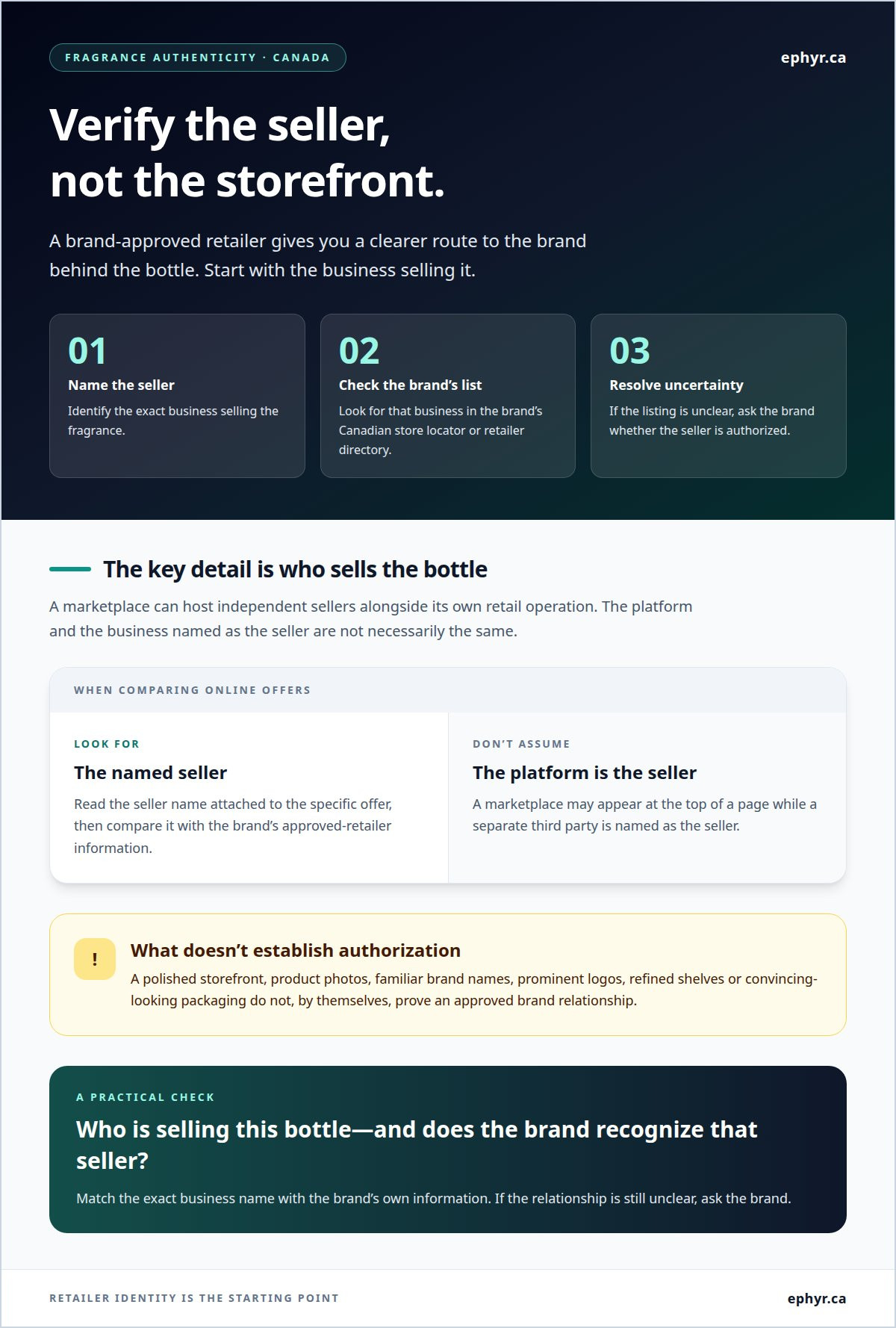
Retailer authorization means a fragrance brand has approved a business to sell its products. A store’s appearance, product photos or familiar brand names don’t establish that approval. Start with the brand’s Canadian retailer information, if available, and match the exact business name. If a listing is unclear, ask the brand whether that seller is authorized.
Finding Brand-Approved Sellers
Brand-approved sellers are retailers identified by the fragrance house as part of its authorized network. In Canada, begin with the brand’s official store locator or retailer directory, if available. Search for the exact store name, not just a marketplace or shopping platform. A platform may host independent sellers alongside its own retail operation, so distinguish the platform from the business selling the fragrance.
Authorization offers a stronger point of reference than a product listing alone. An official retailer has a direct commercial relationship with the brand or its approved distribution channel, making the fragrance’s source easier to trace if questions arise. The seller’s identity is the key detail. A familiar storefront, polished packaging or prominent brand logo doesn’t independently show who supplied the product.
This distinction is especially useful when shopping online. A marketplace can display several offers for the same fragrance, fulfilled by different businesses. Read the seller name attached to the specific offer, then compare it with the brand’s approved-retailer information. The platform may appear at the top of the page while a separate third party is named as the seller. Those are different businesses.
For a physical store, authorization still concerns the retailer, not its location or presentation. A refined interior and carefully arranged shelves can make a strong impression, but they don’t prove a brand relationship. Identify the business operating the store, then compare its name with the brand’s own retailer information. This keeps your decision focused on traceable details.
Packaging offers context, but it shouldn’t determine your decision. A convincing-looking box is not, by itself, evidence of an authorized supply route. Nor can a single printed detail confirm who sold the product. Treat presentation as one part of the purchase and retailer identity as the more useful starting point when assessing a fragrance’s source.
- Identify the seller: distinguish the business selling the fragrance from the marketplace hosting its listing.
- Use the brand’s information: look for the exact retailer name in its Canadian store locator or directory.
- Resolve ambiguity: ask the brand about the named retailer when its information doesn’t make the relationship clear.
This is a practical check, not a test of perfume expertise. You don’t need to judge a scent by its colour or make assumptions from its packaging. If two Canadian online listings show the same fragrance, compare the named sellers first. Matching a seller to the brand’s approved network gives you a clearer basis for understanding the product’s retail origin.
Official status also creates a more accountable connection between the brand and the point of sale. When a retailer’s identity and authorization are clear, the purchase has a defined commercial path. That doesn’t mean every detail of a fragrance can be judged from a listing. Start with a concrete question: who is selling this bottle, and does the brand recognize that seller?
That question separates brand presentation from brand authorization. Stores can use the same fragrance imagery and similar product descriptions, but those similarities don’t establish an official relationship. Check the retailer’s name against the brand’s own information before treating a listing as brand-approved. It’s a simple, useful distinction when choosing a fragrance in Canada.
Personalized service and sales advice
A fragrance specialist can turn a broad preference into a more focused choice. Rather than browsing every bottle, describe a scent you already enjoy, such as a crisp citrus cologne or a soft floral. An associate can use that as a starting point, suggest scents with a similar character and explain how each option differs. The conversation gives your search direction without reducing fragrance to a label.
Sampling puts advice into practice. Brand boutiques and curated luxury destinations such as BÆR. demonstrate how dedicated service, product knowledge and sampling can elevate the discovery experience. Try one fragrance at a time and notice how its character develops. A scent that feels bright at first may become warmer or softer later. This gives you a more considered impression than choosing from a product description alone.
Useful recommendations start with the wearer, not a sales script. A specialist may ask whether you want a fragrance for work, evenings or everyday use, and what you tend to avoid. If very sweet scents feel tiring, for example, you might prefer a fresher direction. Clear preferences help narrow the field and make each sample more informative.
Specific language makes the conversation more useful. Rather than saying only “something fresh,” describe a clean, green scent or a citrus opening. Naming a familiar fragrance gives the associate a reference point. They can explain which qualities overlap and which differ, helping you compare options without assuming two scents will smell identical. Informed, personal exchanges are part of why supporting official fragrance retailers matters.
Sampling can also answer a practical question: does the fragrance suit your routine? Apply a sample when you’d normally wear perfume, then notice how it feels through the day. Consider whether it suits your workplace, commute or evening plans. This personal test adds context that a quick first impression in a store can’t provide.
Good advice comes with reasons, not just recommendations. An associate might explain that one option feels lighter for daytime, while another has a richer profile for evening wear. These are starting points, not fixed rules. Your comfort matters most. Sharing your reactions to each sample helps make the conversation more precise, especially when you’re choosing between very different scents.
Discovery sets make exploration more structured. Instead of committing immediately to a full bottle, you can compare several fragrances from a brand. Try each on a separate occasion and note what you enjoy: the opening, the overall character or how the scent suits your plans. These observations make a later conversation more useful and can reveal patterns in your preferences.
Personal service is valuable when choosing a gift, too. If you know the recipient’s favourite fragrance, use it as a reference. If not, their preferred scent style or the occasions when they wear fragrance can guide suggestions. A specialist can help translate those clues into options, while samples let the recipient explore at their own pace. That’s another reason shoppers support official fragrance retailers: the advice can respond to a person, not just a product category.
For a more focused conversation, bring three details: a fragrance you like, one you don’t, and the occasion you have in mind. That simple brief gives the specialist a clear starting point. If you’re also considering how scent shapes a room, scented candles offer another way to explore fragrance beyond personal wear.
Retail advice can also consider the atmosphere around a fragrance. A study found that sales doubled in women’s clothing stores using traditionally feminine scents around female customers. Seasonal fragrances may also shape the shopping experience; diffusing them at appropriate times of year is recommended as a strategy to boost retail sales. These examples show how recommendations can extend beyond an individual bottle to the setting in which people encounter scent. They don’t replace asking shoppers what they enjoy, and personal preferences remain central to choosing a fragrance.
In workplaces and shared spaces, scent awareness calls for a broader view than perfume alone. A workplace scent-free policy should account for building materials, cleaning supplies and personal care products, which can also contain scents or chemicals. Considering these sources can make conversations about fragrance more thoughtful and inclusive, whether someone is sampling a scent, creating one or deciding what feels comfortable in a shared environment.
Official vs. Discount Fragrance Prices in Canada
An official retailer’s price and a discount listing can differ, but the number alone doesn’t explain why. Compare the same fragrance, concentration, bottle size and seller before judging value. In Canada, compare the complete purchase, including delivery charges and applicable taxes shown at checkout. A lower listing price may reflect a different sales channel, promotion or purchase experience.
What the price difference can reflect
Official retailers sell through brand-approved channels. Discount sellers may use promotions or operate outside that network. A grey-market fragrance can be genuine while arriving through an unauthorized distribution route. Grey-market status doesn’t itself prove a product is counterfeit, just as a low price alone doesn’t prove it’s genuine. The distinction is the product’s source and whether the brand authorized the seller.
Start with an exact comparison. A 50 ml bottle and a 100 ml bottle aren’t equivalent purchases, even when the name and packaging look similar. Concentration matters too: an eau de parfum and an eau de toilette can share a fragrance name but differ in formulation. Compare the listed format, size and concentration, not just the brand and scent name.
Promotions can change the price without changing a retailer’s authorization. A seasonal sale, store offer or discount on an older listing can make one seller appear less expensive. Check that the price applies to the exact item and whether delivery or other checkout charges affect the total. The displayed product price is only one part of what you’ll pay.
How to compare offers fairly
Use the same checklist for an official listing and a discount offer. This keeps the comparison focused on like-for-like details rather than a headline number.
- Match the fragrance: confirm the name and concentration are identical.
- Match the format: compare the same bottle size and packaging format.
- Identify the seller: distinguish the retailer from a marketplace hosting its offer.
- Review checkout costs: compare delivery and applicable taxes before deciding.
- Consider the purchase experience: include access to product guidance and brand-recognized retail support.
Imagine two Canadian listings for the same fragrance. One is sold directly by an authorized retailer; the other appears through a marketplace seller at a lower price. First confirm that both describe the same concentration and bottle size. Then identify who fulfils each order and compare checkout totals. The lower figure may be attractive, but it doesn’t tell you about the seller’s relationship with the brand.
Official pricing can also reflect a direct retail relationship, with access to brand information and knowledgeable sales advice. That can matter when you’re unfamiliar with a fragrance or choosing between similar options. A discount offer may suit someone who already knows the exact product they want. Guided advice may be more useful when the scent profile, concentration or suitability is uncertain.
Neither price category settles the decision on its own. An official retailer isn’t necessarily the lowest-priced option, and a discount listing isn’t necessarily counterfeit. Weigh the price against the source, exact product details and support available with the purchase. That’s a more reliable way to judge value than treating the largest markdown as the best offer.
For a lower-commitment way to explore a scent before choosing a bottle, consider fragrance samples. They let you focus on how a fragrance suits you, rather than comparing full-bottle prices before you know what you want.
Maison Ephyr: Fragrance Samples (1ml)
Maison Ephyr offers 1ml fragrance samples for exploring niche scents before choosing a full bottle. They’re a practical starting point when you’re curious about a fragrance but want to experience it on your own terms. Explore samples from Xerjoff, Nishane and Casamorati, or browse the wider selection of these fragrances.
A sample lets you wear a scent in your usual routine and notice how it feels beyond the first impression. That can help you decide which fragrance deserves a closer look. Maison Ephyr pairs sample-sized discovery with an official retail source, bringing product exploration and retailer support together.
Explore fragrance samples at Maison Ephyr and find a scent to try.
Choose Your Next Scent with Confidence
Your next fragrance doesn’t need to be an instant decision. Let curiosity guide you: a new note, a different mood or a scent house you haven’t explored before—whether through local boutiques or specialized online stores like rayhaanperfumeseu.com that feature signature eau de parfum collections. Taking the time to find what feels like you can make the choice more rewarding.
That’s part of why you should support official fragrance retailers: the relationship can continue beyond the purchase, through thoughtful guidance and a considered selection. Maison Ephyr offers fragrances from Xerjoff and Nishane, giving you distinct houses to explore as you refine your preferences.
If you’re weighing options or looking for a considered recommendation, contact Maison Ephyr for fragrance advice. Start with what you enjoy, share what you’re curious about, and let the next discovery unfold at your pace.
Frequently Asked Questions
What are the benefits of buying fragrance from an official retailer?
Buying from an official retailer gives you a more accountable purchase, with a seller connected to the brand’s authorized supply channel. This can help if you need to identify the exact fragrance or understand its product details. Keep your receipt and order confirmation together; they record the seller and item purchased. Review the retailer’s stated return terms before ordering, so you understand the process if your plans change.
What is the risk of counterfeit perfume from unauthorized sellers?
The main risk is receiving a product that isn’t what its label claims. A counterfeit may imitate a known fragrance’s name and packaging without matching the brand’s formulation or production standards, leaving its contents and performance uncertain. An unfamiliar seller offering a branded bottle through a marketplace, for instance, may provide limited information about its source. A low price alone can’t establish whether a product is counterfeit.
How do official retailers ensure fragrance authenticity and quality?
Official retailers source products through brand-authorized channels, creating a clearer link between the fragrance house and the point of sale. This supports traceability, but doesn’t mean authenticity can be determined from a bottle’s appearance alone. If a fragrance seems different from one you remember, personal perception and skin chemistry may affect how it smells. A change in impression doesn’t, by itself, prove the product is counterfeit.
What are the risks of buying fragrance from marketplace sellers or resellers?
A familiar marketplace may list an offer while a separate seller handles the sale. This can make responsibility less clear if the item arrives damaged, differs from its listing or raises questions after purchase. Before ordering, identify the named seller and read the offer’s terms. Save the listing and order confirmation. These records help you describe the specific transaction if you need to follow up.
Can fragrances from unauthorized sellers be expired, diluted, or improperly stored?
They can be, but an unauthorized seller doesn’t prove that any particular bottle is expired, diluted or poorly stored. Fragrance can fade or change after exposure to heat, light or air. Personal perception or skin chemistry can also make a scent seem different. If its smell or appearance raises concern, don’t draw conclusions from price alone; the seller’s sourcing and the product’s handling history matter.
Article by
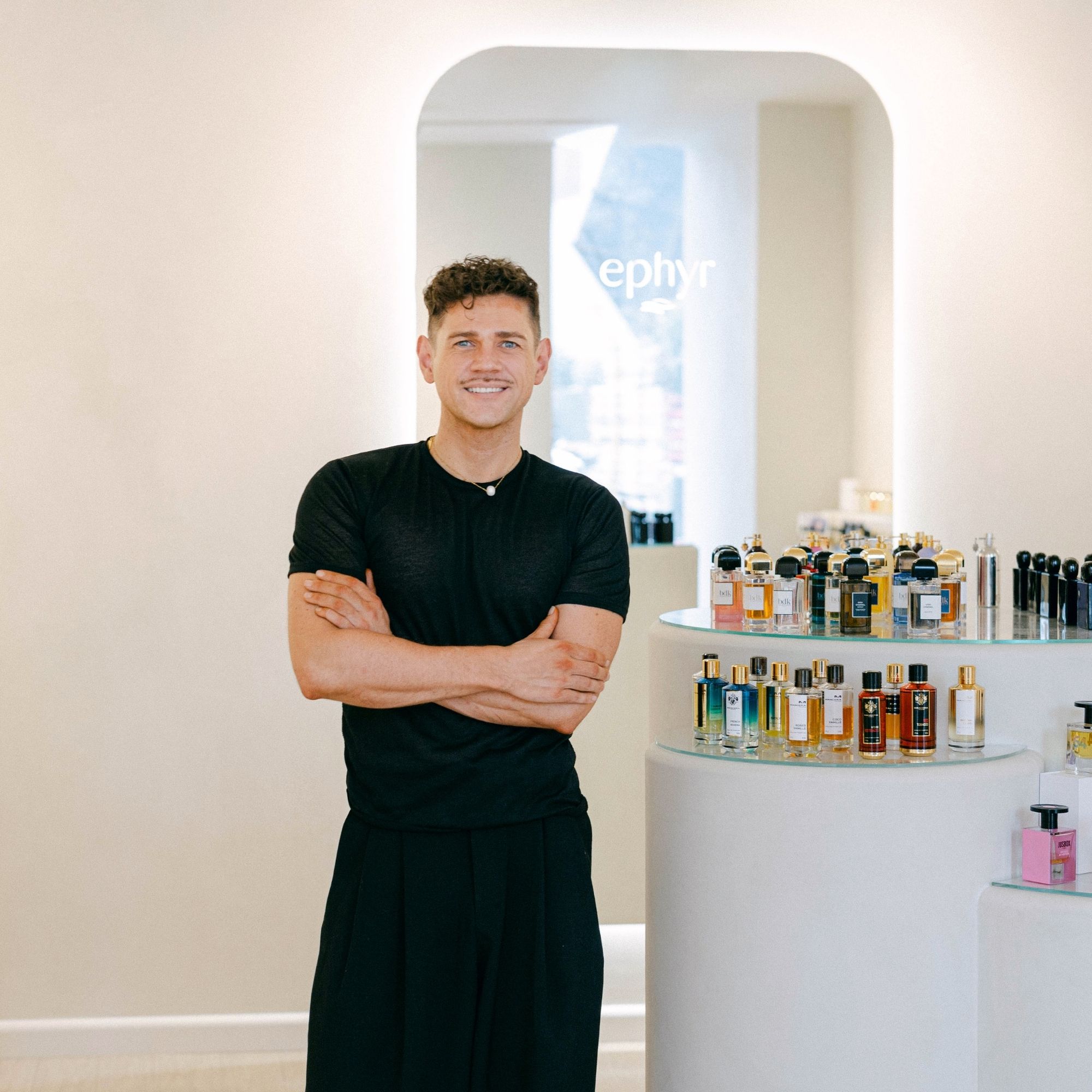
Dmitrii Savishin
Dmitrii Savishin is the founder of Maison Ephyr and Parfum Exquis, two Canadian destinations dedicated to the world of niche perfumery. With years of experience discovering exceptional fragrance houses from around the globe, Dmitrii shares expert insights on perfume trends, fragrance notes, luxury brands, and the art of choosing the perfect scent. His mission is to make niche perfumery more approachable while helping readers discover fragrances that leave a lasting impression.


