
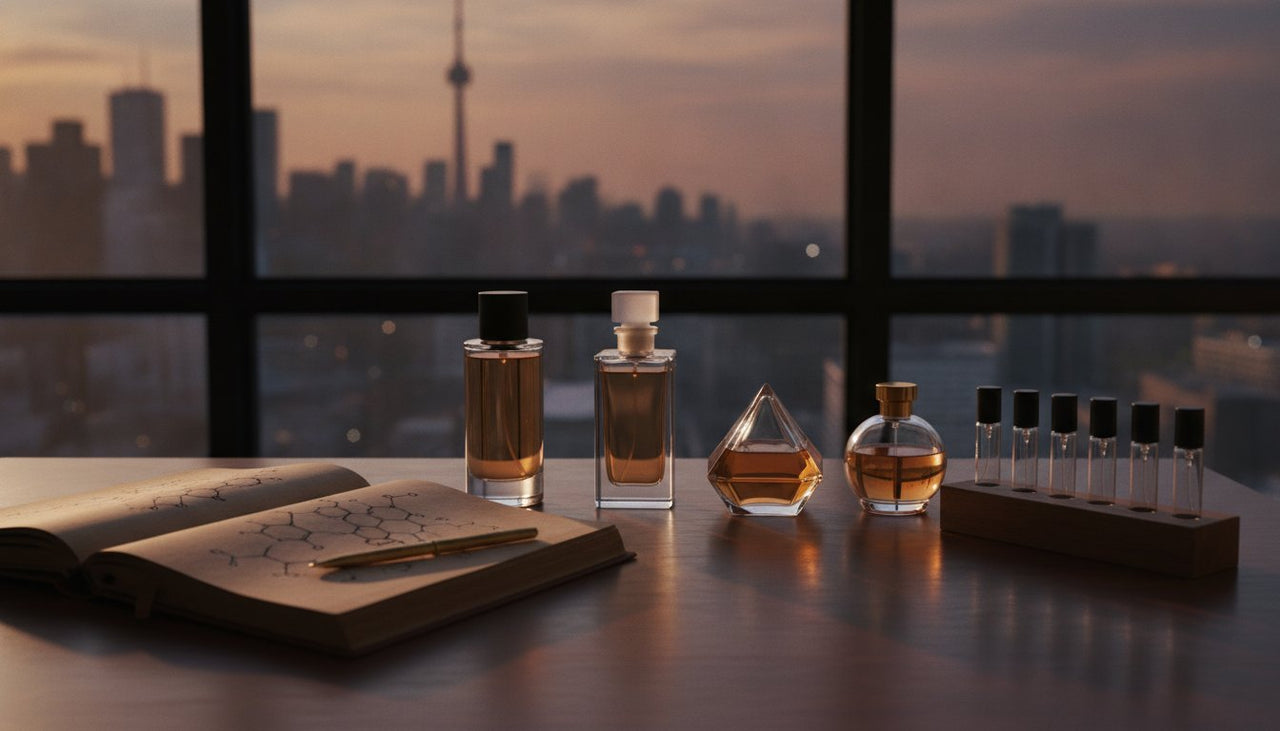
Most luxury collections are actually expensive graveyards of half-used glass. You buy for the initial rush, only to realize the juice doesn't fit your lifestyle six months later. Building a fragrance wardrobe shouldn't be an exercise in trial and error. It's a matter of precise engineering. We know the frustration of olfactory fatigue and the sting of a high-end bottle that sits gathering dust because the notes don't translate across seasons. You deserve a curated olfactory library that functions with the same reliability as a bespoke suit.
This guide provides the blueprint to architect a sophisticated collection that adapts to every mood and occasion. We'll move past the noise of mass-market trends to focus on the technical mastery of houses like Amouage and Nishane. You'll learn how to use 1ml samples to test-drive potential pillars and understand the logic of seasonal rotation. We're moving from random acquisition to intentional curation. By the end, you'll have the technical confidence to select Extrait de Parfum concentrations and artisanal scents that offer long-term performance and unmatched depth.
Key Takeaways
- Replace the limiting signature scent concept with a functional library of moods that don't restrict your personal expression.
- Architect a high-performance collection using the four-pillar framework for building a fragrance wardrobe.
- Optimize scent performance by matching molecular density to the specific temperature and humidity of the Canadian seasons.
- Decode technical metrics like sillage and concentration to ensure every selection meets your specific requirements for longevity.
- De-risk your curation process by using 1ml samples and discovery sets to vet niche DNA before committing to a full bottle.
Beyond the Signature Scent: The Philosophy of the Olfactory Wardrobe
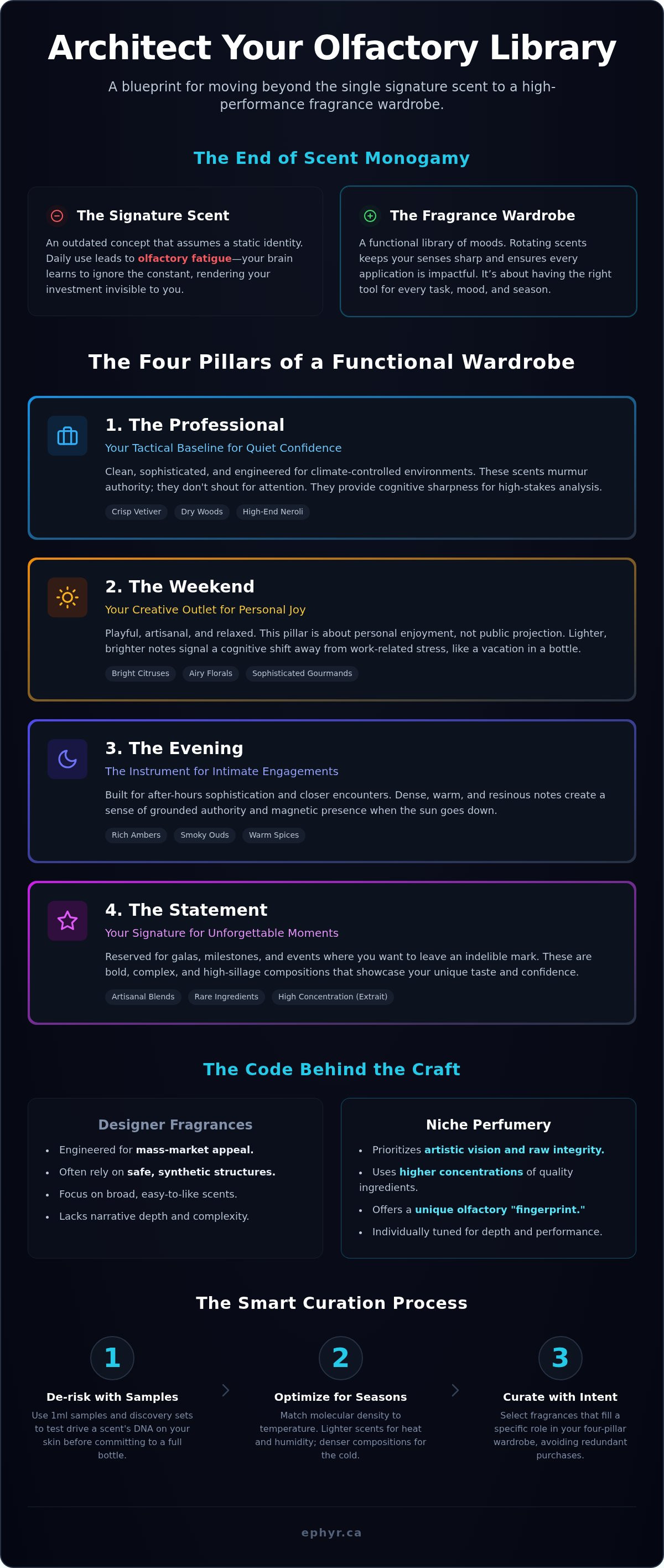
The concept of a signature scent is an outdated relic. It assumes a person is a static entity. You aren't. Your life is a series of shifting environments and technical demands. Building a fragrance wardrobe is the transition from random acquisition to architectural curation. It treats scent as a functional library of moods. This isn't about owning many bottles. It's about having the right tools for specific tasks. You wouldn't wear a tuxedo to the gym. Why would you wear the same heavy amber to a morning strategy session and a summer gala?
Olfactory tailoring is the practice of matching a scent’s molecular profile to the texture of your day. A crisp, citrus-heavy scent provides the cognitive sharpness needed for high-stakes analysis. A dense, resinous oud creates a sense of grounded authority for evening engagements. By using scent as a psychological anchor, you can program your brain for peak performance. Scent association is a powerful cognitive hack. It allows you to enter a specific headspace the moment the top notes hit your skin. It is the difference between wearing a uniform and curating a deliberate aesthetic.
The End of the Monogamous Scent
Your brain is built to ignore constants. When you wear the same fragrance daily, your receptors stop registering the notes. This is olfactory fatigue. It's a biological efficiency that renders a premium investment invisible to the wearer. A curated wardrobe solves this. By rotating scents, you maintain sensory sensitivity. This variety ensures that every spray remains impactful. It also offers the creative joy of matching an aesthetic to an emotional state. A wardrobe doesn't just provide options. It extends the functional life of every bottle in your collection. You aren't just wearing a perfume; you're deploying a specific olfactory strategy.
Niche vs. Designer: The Foundation of Quality
Mass-market designer fragrances are engineered for broad appeal. They often rely on safe, synthetic structures that lack narrative depth. Niche perfumery operates on a different logic. It prioritizes the raw integrity of ingredients and the complexity of the art and science of perfumery. These are not mass-produced commodities. They are individually tuned instruments. Niche houses like Amouage or Xerjoff offer a unique fingerprint that designer scents cannot replicate. The concentration of natural oils is higher. The sourcing is more rigorous. The results are more durable. Understanding the art of the niche perfume boutique is essential for any serious collector. It provides the technical context needed to transition from a casual buyer to a master craftsman of scent. This is where quality meets intent.
Architecting the Pillars: The Four Essential Categories of Scent
A random collection of bottles isn't a wardrobe. It's clutter. To achieve true olfactory mastery, you must apply a structural framework. Think of it as a blueprint for your personal brand. Building a fragrance wardrobe requires four distinct pillars. Each serves a specific functional purpose. This structure prevents redundant purchases. It stops you from buying three "dark" scents when you lack a single reliable office companion. By categorizing your scents, you ensure that every investment serves a tactical role in your daily life.
The Professional pillar is your tactical baseline. These scents are clean, sophisticated, and project quiet confidence. Look for crisp vetiver, dry woods, or high-end neroli. They shouldn't scream. They should murmur. The Weekend pillar is where you relax the constraints. This is the space for airy florals, bright citruses, or sophisticated gourmands. It's about personal joy rather than public projection. Understanding the science of scent perception shows that these lighter, brighter notes can actually trigger a cognitive shift away from work-related stress. They signal to your brain that the pressure is off.
The Professional and The Weekend
The Professional scent is a reliable instrument. It performs consistently in climate-controlled environments. It doesn't overwhelm the boardroom. The Weekend scent is your creative outlet. It's playful and artisanal. Xerjoff perfumes are the gold standard for this pillar. Their Italian heritage brings a vibrant, high-definition quality to citrus and fruit notes. They feel like a vacation in a bottle. They provide a necessary break from the rigid structures of the work week. They offer a sense of luxury that is effortless and sun-drenched.
The Evening and The Statement
The Evening pillar is built for intimacy and depth. Think of amber, leather, or soft spices. These scents bloom as the temperature drops. They have a closer sillage, inviting people in rather than pushing them away. Then there's The Statement. This is your olfactory shadow. It's bold, avant-garde, and unforgettable. Building a fragrance wardrobe without a statement piece is like owning a closet of basics without a single tailored coat. Amouage perfumes define this category. They use rare resins and high-concentration oils to create complex, multi-layered narratives. They don't just fill a room; they change the atmosphere. They're designed for the person who isn't afraid to be remembered.
Selecting these pillars ensures your collection is balanced. You'll always have the right tool for the moment. If you're ready to start your curation, you can explore our niche collection to find your first pillar.
Navigating the Elements: Seasonal Curation for the Canadian Landscape
Fragrance is a living chemical reaction. In Canada, that reaction faces extreme thermal shifts. Building a fragrance wardrobe requires an understanding of how temperature and humidity dictate performance. Cold air is dry; it suppresses scent molecules. High humidity does the opposite. It amplifies them. This shift changes how a perfume blooms on your skin. Without seasonal adjustments, your collection will fail to perform for half the year. You need a strategy that accounts for the environment as much as the occasion.
The "Heavy vs. Light" rule is your primary technical constraint. Winter demands denser molecular structures. Think resins, balsams, and heavy spices. These notes have the mass required to cut through the freezing air. Summer requires the opposite strategy. You want high-volatility molecules like citrus, aquatics, and tea notes. They provide immediate radiance and stay fresh when the humidity rises. Bridging the gap during transitional weather like spring and fall requires scent layering. You can apply a woody base to anchor a lighter top note, creating a custom blend that survives the morning frost and the afternoon sun.
Winter Depth and Summer Radiance
Heat accelerates the evaporation rate of top notes. In a humid July, a bright lemon scent might vanish in thirty minutes. You need technical resilience. Tea notes and dry vetiver offer better longevity in heat than pure citruses. Conversely, winter is the time for ouds, ambers, and leather. These notes project slowly. They provide a steady olfactory presence that lasts through the day. They don't just sit on the skin; they radiate warmth. Understanding these evaporation rates is the key to maintaining your presence regardless of the forecast.
Scenting the Sanctuary
Your wardrobe shouldn't end at your skin. It should extend to your environment. Environmental curation creates a cohesive sensory experience. High-end scented candles and diffusers can mirror the seasonal shift of your personal collection. This creates a sanctuary that feels intentional and disciplined. Matching your home scent to your personal profile reinforces your aesthetic identity. If you're looking to master this aspect of environmental engineering, the ultimate guide to home fragrance in Canada offers a deep dive into curation. It's the final layer of a truly sophisticated library.
The Master Craftsman’s Lens: Technical Metrics of Scent Performance
Scent isn't just an aesthetic choice. It's a matter of molecular engineering. When building a fragrance wardrobe, you're managing volatility and thermal stability. The industry uses specific benchmarks to define how a liquid performs once it leaves the atomizer. Concentrations are the most critical metric. An Eau de Toilette (EDT) typically contains 5 to 15 percent perfume oil. It's designed for rapid dispersal. An Eau de Parfum (EDP) sits between 15 and 20 percent, offering a stable mid-range performance. Then there's the Extrait de Parfum. With concentrations often exceeding 30 percent, it's the heavyweight of the industry. It offers unparalleled depth and durability.
These concentrations dictate where a scent fits in your wardrobe architecture. An Extrait is dense. It has low projection but immense longevity. This makes it ideal for the Evening pillar. However, it might be too heavy for The Professional pillar. In a workspace, you want sillage that suggests presence without occupying the entire room. You can find more specific data on these performance metrics in our guide to cologne for men. Understanding these numbers allows you to select scents that function as intended rather than just smelling pleasant in the moment.
Understanding Concentrations and Sillage
Predicting a scent’s evolution is a matter of reading the notes pyramid. Top notes are the lightest molecules. They evaporate within thirty minutes. Heart notes form the core for several hours. Base notes are the heavy hitters that provide the dry down. When building a fragrance wardrobe, you must account for this timeline. Don't buy a bottle based on the first five minutes. The heart and base are where the real performance lives. Sillage is the trail you leave behind. It's a functional tool. High sillage is for Statement pieces; low sillage is for intimate or professional settings.
Longevity and Projection Strategies
Application technique is about efficiency. The pulse point myth suggests spraying only the wrists and neck. While heat helps a scent bloom, skin chemistry is volatile. Natural oils and pH levels can distort a fragrance. To ensure maximum longevity, spray your clothing. Scent molecules bond more effectively to natural fibers like wool or silk. They don't evaporate as quickly as they do from warm skin. This strategy allows you to maintain a consistent olfactory shadow throughout the day. It ensures you aren't wasting precious juice through rapid evaporation.
Respect the craft through proper storage. Heat and light are the enemies of complex molecules. Store your collection in a cool, dark environment. This olfactory resting prevents oxidation. It ensures the juice remains true to the master perfumer's intent for years. If you're ready to invest in high-performance liquids, you can browse our high-concentration extraits to anchor your wardrobe.
The Art of Discovery: Building Your Wardrobe Through Sampling
Blind buying a full bottle is a technical failure. It’s a gamble that often results in expensive clutter. When building a fragrance wardrobe, the goal is a collection of masterpieces, not a shelf of regrets. This requires a "Discovery First" mindset. Sampling is the low-risk, high-reward phase of your curation process. It allows you to stress-test a scent’s performance in your actual environment before you commit to the glass. You aren't just buying a smell; you're auditing a potential pillar for your library.
The One Week Rule is your primary safeguard. Never decide a scent’s place in your wardrobe after a single wear. You must wear a sample for seven consecutive days. Scent molecules interact differently with your skin based on your diet, stress levels, and the ambient humidity. Does the fragrance still satisfy you on day six? Does it provide the same cognitive boost on a rainy Tuesday as it did on a sunny Sunday? If a fragrance can't survive a full week of scrutiny, it doesn't deserve a permanent slot in your rotation. This discipline ensures every full bottle you own is a functional asset.
The Power of the 1ml Sample
The 1ml sample is the most powerful tool in your kit. It’s a precision instrument for gap analysis. Organize your samples by mood or functional pillar. If you have five evening ouds but zero reliable professional scents, your library is structurally unbalanced. Use these small vials to test-drive specific DNA from houses like Nishane or Casamorati. This prevents buyer’s remorse and allows for a broader olfactory education. You can access a curated selection of luxury fragrance samples in Canada to begin this audit. It’s the most efficient way to find the missing pieces of your blueprint.
Discovery Sets as Curated Experiences
Discovery sets offer a horizontal view of a brand’s creative logic. They aren't just collections; they're educational modules. By experiencing a brand’s entire range, you learn to recognize their signature accords and quality benchmarks. Host a scent flight at home. Compare woody notes against florals side-by-side to understand how different houses handle similar ingredients. This comparative analysis is how a novice becomes a master craftsman. Utilize perfume samples in Canada to refine your discovery strategy. By the time you purchase a full bottle, you’ll have the absolute certainty that it belongs in your wardrobe.
Curating Your Olfactory Legacy
A high-performance collection is never an accident. It's the result of disciplined curation and technical mastery. You've moved beyond the limitations of the signature scent to embrace a functional library of moods. Building a fragrance wardrobe is about more than just smelling good. It's about deploying specific olfactory tools to match the rhythm of your life. Every selection must be vetted through sampling and measured against the technical demands of the Canadian seasons. This is the difference between a random assortment of glass and a legacy collection.
Maison Ephyr serves as your partner in this pursuit. As an official Canadian retailer for Amouage and Xerjoff, we provide the authentic juice your collection deserves. Our expertly curated 1ml samples allow for low-risk discovery. With fast national shipping across Canada, your next pillar is always within reach. Don't settle for mass-market redundancy. Invest in the artisanal quality that defines a master craftsman.
Begin your olfactory journey with our curated Discovery Sets
Your library is waiting for its next masterpiece. Start curating with the precision your legacy demands.
Frequently Asked Questions
How many fragrances should be in a basic wardrobe?
A functional library requires a minimum of four pillars to cover all technical bases. These correspond to the Professional, Weekend, Evening, and Statement categories. Starting with four ensures you have a reliable solution for every environment without accumulating redundant clutter. Focus on quality and functional coverage rather than sheer volume. A lean, well-engineered collection is always superior to a shelf of half-used designer bottles.
Can I layer different niche perfumes to create a custom scent?
Scent stacking is a valid method for personalizing your olfactory profile. You can apply a heavier base, like a resinous oud, and top it with a lighter citrus to bridge the gap during transitional Canadian weather. Niche compositions are complex, individually tuned instruments. Layering should be done with intent to avoid clashing molecular structures. Test your combinations on paper before applying them to your skin.
What is the best way to store a fragrance wardrobe to prevent spoilage?
Store your collection in a cool, dark, and dry environment. Heat and UV light are the primary catalysts for molecular degradation and oxidation. Avoid the bathroom. Humidity levels there fluctuate too rapidly for delicate liquids. A dedicated cabinet or a climate-controlled room is the gold standard for preserving the craft. Proper storage ensures your investment maintains its integrity for years.
How do I know if a scent is Professional vs. Evening?
The distinction lies in sillage and the density of the notes. Professional scents utilize clean, reliable molecules like vetiver or iris that project quiet confidence. They shouldn't dominate a shared workspace. Evening scents utilize deeper, more sensual resins like amber or oud. These notes have a closer, more intimate sillage. They invite engagement rather than demanding it from across the room.
Is it better to buy one expensive niche bottle or three designer bottles?
One high-performance niche bottle offers significantly more value than three redundant designer options. When building a fragrance wardrobe, you're looking for a unique olfactory fingerprint. A single bottle from a house like Amouage provides a level of depth and longevity that mass-market scents cannot replicate. It’s a long-term investment in your personal brand rather than a disposable commodity.
What should I do if my favorite scent does not last on my skin?
Shift your application strategy to your clothing. Skin chemistry is volatile and can accelerate the evaporation of top notes. Natural fibers like wool or silk provide a stable surface for scent molecules to bond. This ensures a consistent olfactory shadow throughout the day. You can also opt for higher concentrations, such as Extrait de Parfum, which are engineered for maximum durability.
How often should I update or change my fragrance wardrobe?
Your collection should evolve with the seasons and your lifestyle shifts. A biannual audit is recommended to ensure your pillars still serve their functional purpose. As you discover new DNA through 1ml samples, you may find a new masterpiece that replaces an existing pillar. It's a continuous process of refinement. Your wardrobe is a living library that reflects your current aesthetic and technical needs.
Can men and women share the same fragrance wardrobe?
Niche perfumery is increasingly gender-neutral. High-end houses focus on the raw beauty of ingredients rather than traditional gender archetypes. Sharing a wardrobe is a practical way to expand your library of moods. It allows for a more diverse range of notes and textures. If a scent meets your individual performance requirements and matches your mood, the label on the bottle is irrelevant.

Article by
Dmitrii Savishin
Dmitrii Savishin is the founder of Maison Ephyr and Parfum Exquis, two Canadian destinations dedicated to the world of niche perfumery. With years of experience discovering exceptional fragrance houses from around the globe, Dmitrii shares expert insights on perfume trends, fragrance notes, luxury brands, and the art of choosing the perfect scent. His mission is to make niche perfumery more approachable while helping readers discover fragrances that leave a lasting impression.


