
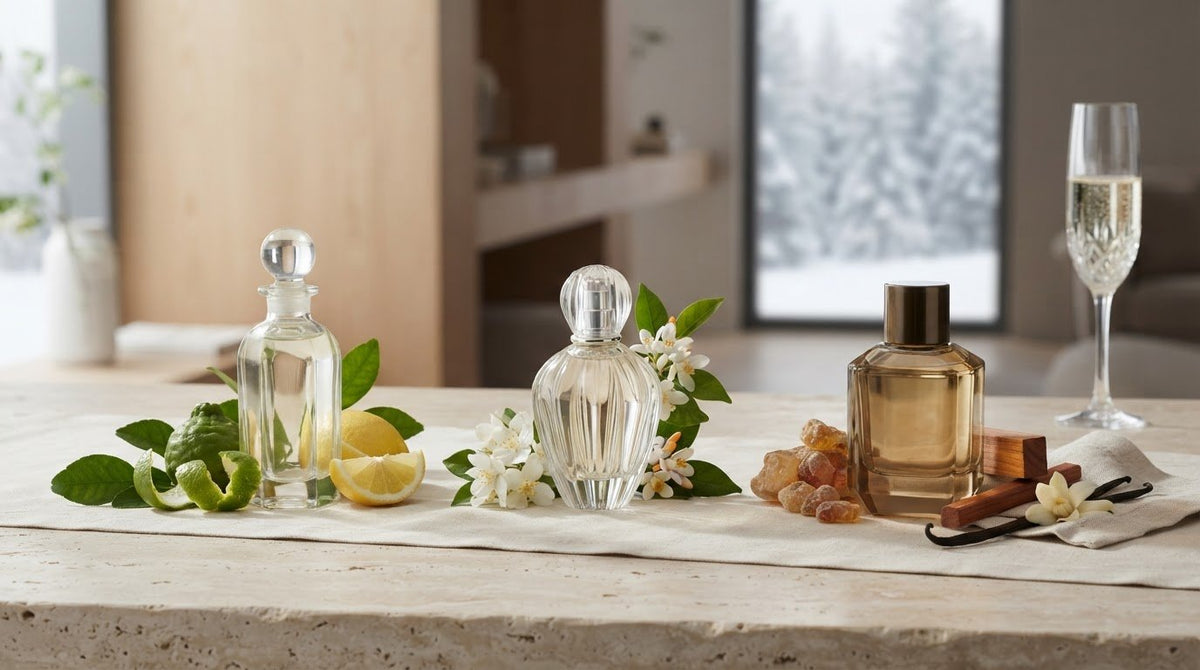
The best exclusive fragrances for her aren’t simply the richest or rarest. They’re the compositions whose scent family, key notes, and character suit the wearer and the occasion. Citrus and green notes can feel crisp by day, while florals, woods, amber, and gourmand accords offer different ways to create presence for evenings or special moments. The right choice depends on how the notes work together, not on one note alone.
A striking opening can be tempting, but a fragrance changes as its notes unfold on skin. Understanding that progression helps you compare scents and decide what you’ll enjoy wearing, from a subtle everyday signature to a more distinctive evening choice.
This guide compares luxury women’s fragrances by scent family, defining notes, and occasion. You’ll also find a practical way to weigh freshness, warmth, character, and versatility, so choosing a signature scent feels considered rather than like guesswork.
Key Takeaways
- Compare fragrance families and key notes to find a scent profile that feels like you.
- Match a fragrance’s character to its setting, from everyday wear to date nights.
- Look beyond the opening notes and consider how a composition develops on your skin.
- Use small samples to explore a scent before choosing a full-size signature.
- Choose where to shop based on whether you prefer browsing online or experiencing fragrances in person.
Luxury perfume recommendations for women
Compare luxury fragrances by scent family, composition, and intended setting, rather than prestige alone. Start with a category, then examine the notes and concentration to decide what suits your style.
Exclusive Women’s Fragrances
Exclusive women’s fragrances stand out through factors such as a retailer-specific release, a limited collection, or a less familiar composition. “Exclusive” describes access or positioning, not a particular scent family or guaranteed ingredient standard. Compare each fragrance on its own merits: an exclusive floral can smell very different from an exclusive amber, even when both carry a luxury label.
Niche Women’s Fragrances
Niche women’s fragrances come from perfume-focused houses with distinctive creative direction. Their compositions may emphasize an unusual pairing or a clear olfactory concept, rather than reflecting a fashion house’s broader style. Niche and exclusive can overlap, but they aren’t interchangeable: niche describes a perfumery identity, while exclusive can refer to a particular release or access.
Designer fragrances usually extend a fashion or beauty house’s identity into scent. Luxury is broader: it signals a premium position and can include designer, niche, or exclusive perfumes. In Canada, fragrance boutiques and department-store fragrance counters are places to explore exclusives and private collections; Canadian specialist retailers also offer online fragrance selections.
Start with the scent structure you enjoy. Citrus and green accords often feel crisp; florals range from sheer to richly layered; woods and amber bring warmth; and gourmand compositions emphasize edible-style notes. These are starting points, not strict rules. A floral blended with woods, for example, can feel more grounded than a bright, single-note impression suggests.
Ingredients and extraction methods shape a perfume’s character. Jasmine shows why natural materials can require careful sourcing: producing one pound of jasmine oil takes around 2000 pounds of jasmine flowers. Another stated measure is 8000 jasmine flowers for 1/25 ounce of jasmine absolute oil. These figures describe different yields and units, not a direct comparison.
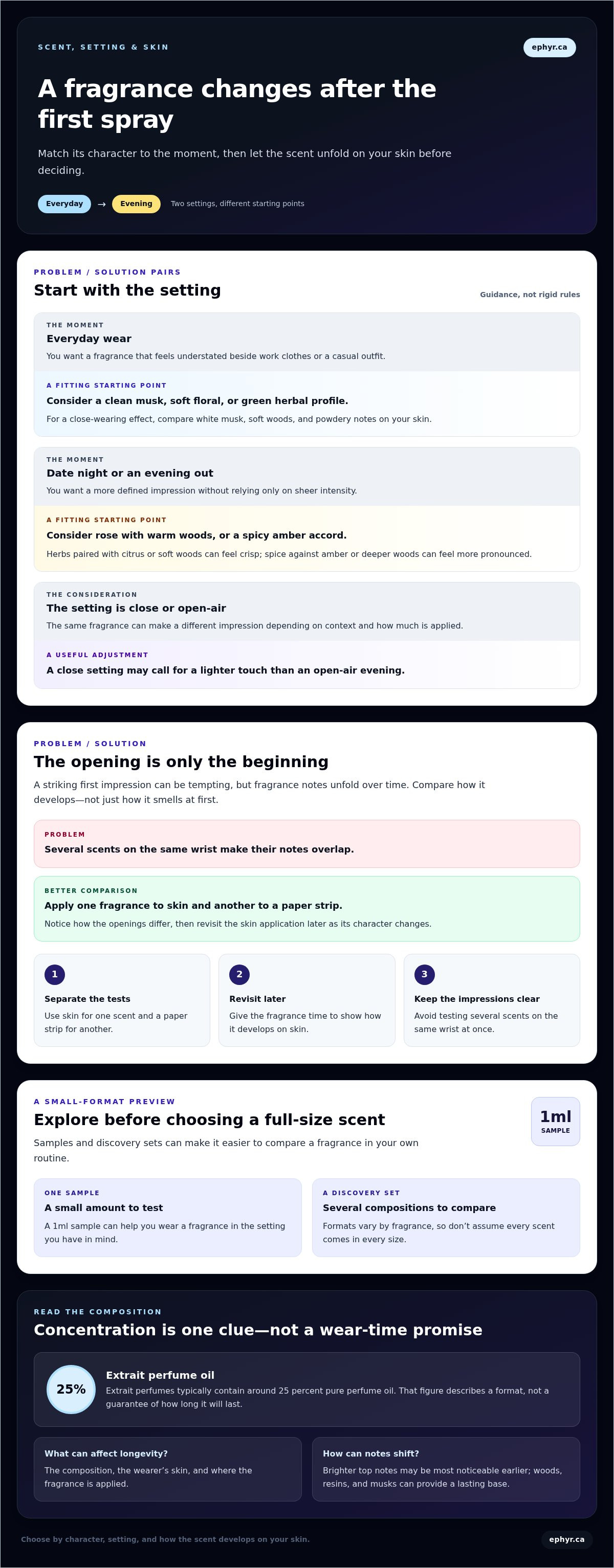
Concentration offers another comparison point. Extrait perfumes typically contain around 25 percent pure perfume oil. That figure describes a format, not a promise of wear time. Longevity also depends on the composition, the wearer’s skin, and where the fragrance is applied. Woods, resins, and musks can provide a lasting base, while brighter top notes may be most noticeable earlier.
| Option | Identity | What to compare | Useful starting point |
|---|---|---|---|
| Exclusive | Distinct access or release | Availability and composition | Check its note structure |
| Niche | Perfumery-led creative identity | Concept and unusual pairings | Explore a sample |
| Designer | Fashion-house expression | How the scent reflects the house | Compare its scent family |
| Luxury | Premium positioning | Materials, concentration, and finish | Assess the full composition |
Choose a scent family and composition that appeal to you, then try a sample to see how the fragrance develops on your skin.
Perfumes for everyday wear and date nights
Choose for the setting, then judge the fragrance on your skin. A sheer musk can sit close for an office day, while a richer rose or spice accord may suit an evening out. These are starting points, not rules: the amount applied and the composition shape the impression as much as the scent family.
Yes, exclusive women’s fragrances can be explored through samples and discovery sets, while travel-size formats vary by fragrance. A 1ml sample gives you a small amount to test, and a discovery set lets you compare several compositions. Check the format attached to the fragrance you’re considering, rather than assuming every scent comes in each size.
Test deliberately. Apply one fragrance to skin and another to a paper strip, then notice how their openings differ. Revisit the skin application later as its character changes. Avoid testing several scents on the same wrist at once; overlapping notes make it harder to identify what you actually enjoy. A 1ml sample can also help you wear a fragrance in the setting you have in mind.
- For everyday wear: Try a clean musk, soft floral, or green herbal profile. These can feel understated beside work clothes or a casual outfit.
- For date night: Consider rose with warm woods, or a spicy amber accord. These combinations can create a more defined impression without relying on sheer intensity.
- For either setting: Adjust application to the context. A close setting may call for a lighter touch than an open-air evening.
Skin scents and musky perfumes are built around an intimate effect. White musk, soft woods, and powdery notes can create a subtle, close-wearing impression. If you want a fragrance that feels personal rather than immediately noticeable, compare how a musk settles on your skin instead of judging only its first spray.
Herbal and spicy compositions offer a different kind of contrast. Lavender, aromatic herbs, cardamom, or pepper can give a perfume a crisp or lively edge. For daytime, consider herbs paired with citrus or soft woods; for evening, spice against amber or deeper woods can feel more pronounced.
The bottle affects the experience, but it can’t tell you how the perfume smells. Consider whether the design is practical to hold, store, and use. Clear glass lets you see how much fragrance remains, while a sculptural flacon may work as a display object. Let the composition lead; packaging is the finishing detail.
To compare options before choosing, explore fragrance samples and discovery sets. Testing a scent in your own routine makes its everyday or evening character easier to assess.
Fragrance families and key notes
For Canadian fragrance orders, read the seller’s return terms, shipping details, and duty or tax information before checkout. Choose a retailer that clearly identifies the fragrance and its authenticity, with product details that match the bottle and packaging.
A fragrance family is a useful guide, not a complete description. Two rose perfumes can feel entirely different when one pairs rose with citrus and another with patchouli. Read the full note list, then consider which materials shape the fragrance’s mood and structure.
- Citrus: Bergamot, lemon, and mandarin create a bright, crisp opening. Neroli can add a floral quality, while vetiver gives citrus a drier finish.
- Floral: Rose, jasmine, and iris range from fresh to powdery or lush. Orange blossom can add a green, honeyed impression.
- Woody: Cedar, sandalwood, and vetiver bring dry, creamy, or earthy facets. Their character changes with supporting notes such as rose or vanilla.
- Amber: Labdanum, vanilla, and resinous accords can produce a warm, rounded profile. Spices may make the effect drier or more vivid.
- Gourmand: Vanilla, tonka, and caramel-style accords suggest edible textures. A woody or floral counterpoint can keep sweetness in balance.
- Aromatic: Lavender, sage, and rosemary lend herbal definition. Pairings with citrus feel brisk; woods can make them more grounded.
Notes are often described in stages. Top notes create the initial impression, heart notes form the central character, and base notes provide the lingering foundation. A perfume might open with bergamot, move into jasmine, and settle into cedar. This progression explains why the first spray may not represent the full scent.
Ingredients can also suggest texture. Iris often smells powdery, while vetiver can feel dry and earthy; vanilla can soften woods or deepen an amber accord. These impressions depend on the full formula. Treat a note list as a guide to the composition, not a promise that one ingredient will dominate.
To compare two perfumes, start with their shared materials. If both list rose, compare the supporting notes: rose with bergamot may feel brighter than rose with patchouli and amber. Then identify the contrast you prefer, such as airy versus dense, dry versus sweet, or herbal versus floral.
Use that comparison to narrow your options. Start with the family you naturally enjoy, identify its supporting notes, and test the full progression on your skin. A citrus-led floral and a rose-amber blend may share one note yet create very different signatures.
How to choose a signature scent
A signature scent should suit your habits as naturally as a favourite coat. Consider how a fragrance feels across your usual settings, from a quiet workday to dinner out. A polished citrus, soft musk, or rose layered with woods can each become personal through repeated wear.
Start with your own preferences, not a trend list. Notice whether you reach for crisp, dry, powdery, sweet, or warm scents. Then name a few notes you already enjoy in other products, such as lavender in a candle or vanilla in a hand cream. Familiar references can narrow the field without deciding for you.
- Define the role. Decide whether you want one versatile perfume or a scent for a specific routine. A clean floral may suit daytime meetings, while a resinous amber might feel more deliberate for evening plans.
- Choose a direction. Select a family that matches your preferences, then compare its supporting notes. If you like rose, test rose with bergamot against rose with patchouli. The shared note makes the contrast easier to evaluate.
- Wear it in context. Try the fragrance during an ordinary day, not only during a store visit. Notice whether its character fits your clothing, surroundings, and the distance between you and others.
- Record your impression. Write down the opening, the later character, and the notes you still enjoy. A short note such as “dry woods, soft floral, comfortable at work” is more useful than a vague rating.
Test each candidate separately. Comparing several perfumes at once can blur their details, so keep a simple record of each one. Note the setting and your response: “bright for errands,” “too sweet for the office,” or “warm and composed for dinner.” These observations turn preference into a clear selection criterion.
Consider versatility without expecting one perfume to suit every moment. A balanced floral with woods may work across casual and formal settings. A pronounced gourmand or spicy profile can feel more individual, yet may be less suited to your daytime routine. Choose the composition you want to return to, not simply the one that makes the strongest first impression.
Where can I buy exclusive women’s fragrances in Canada, including online and in-store?
In Canada, explore niche perfume boutiques, department-store fragrance counters, and specialist online shops. Each offers a different way to compare exclusive scents. A store visit lets you smell a fragrance before buying; online browsing makes it easier to review several compositions and formats at your own pace. Choose the route that suits how you prefer to evaluate perfume.
For an in-store visit, arrive with a scent direction in mind, such as floral, woody, or amber. Test a small selection on paper first, then apply your strongest candidates to skin. Note each fragrance’s name and opening impression. This simple record helps distinguish similar bottles and keeps the experience focused.
Online, read each product page carefully. Confirm the exact fragrance name, concentration, bottle size, and listed notes before adding it to your cart. Compare the return terms and shipping information displayed at checkout, especially if you’re ordering from outside your province. Clear product descriptions make it easier to compare like with like.
- For a first purchase: Choose a retailer that identifies the fragrance and its format clearly. A sample or discovery set can help you assess a scent before committing to a full bottle.
- For a specific perfume: Search by the complete fragrance name and concentration. Similar names can refer to distinct versions or formats.
- For authenticity: Review the seller’s business details, product description, and purchase documentation. Compare the named product and packaging details with the fragrance you intended to buy.
- For an in-person comparison: Test one fragrance at a time on skin. Record the name and your impression so the options don’t blur together.
Keep the purchase record and packaging details after an online order arrives. If the item differs from its description, these details help you explain the issue through the retailer’s stated process. For an in-store purchase, retain the receipt and note the exact fragrance name before leaving. Small details make it easier to reorder the same composition later.
Canada’s online and physical retail options each support a different stage of choosing. Use a store visit to assess how a perfume feels on skin, or browse online when you already know the scent family and want to compare formats. For a focused starting point, explore exclusive fragrance selections and narrow your shortlist by composition.
Explore niche perfume boutiques, department-store fragrance counters, and specialist online shops for exclusive women’s fragrance selections.
Maison Ephyr: Xerjoff Fragrances
Maison Ephyr is a natural next step when you’re comparing niche compositions. Its selection includes Xerjoff Fragrances, Nishane Fragrances, and Casamorati, with distinct creative directions to compare against your preferred scent family and occasion.
If you’re still deciding, 1ml fragrance samples let you experience a scent on your skin before choosing a full bottle. Compare the opening, dry-down, and how the composition fits your routine. This is especially helpful when a fragrance’s notes sound appealing but you’re unsure how they’ll wear throughout your day.
Explore Maison Ephyr’s fragrance selection online, or visit ephyr.ca to begin comparing options.
Make Your Next Scent a Personal Choice
A signature fragrance doesn’t need to follow a trend or suit every occasion. Let your preferences set the direction, then choose a composition you’ll enjoy wearing again. The most memorable exclusive fragrances for her feel aligned with the wearer, not simply impressive on a shelf.
Maison Ephyr offers luxury niche perfumes and distinct aromatic profiles for exploring distinctive compositions. Each offers a different creative direction to consider as you refine your shortlist. Start with the notes and character you want to wear.
Contact Maison Ephyr for fragrance advice and take the next step toward a scent that feels unmistakably yours.
Frequently Asked Questions
What special techniques or ingredients are used?
Luxury perfumes can combine natural materials with aroma molecules created for perfumery. Extraction methods shape the smell of natural ingredients: distillation uses steam to capture volatile materials, while solvent extraction can produce richer absolutes. A perfumer balances these materials with the fragrance’s other notes. For example, jasmine absolute can lend a deeper floral character than a bright citrus opening.
What are the best exclusive luxury fragrances for women in Canada?
The right choice depends on the character you want to wear, not a universal ranking. For a polished floral, consider rose or jasmine; for warmth, explore amber, vanilla, or woods. Compare the full composition and format, then test a sample as part of your routine. A fragrance suited to your setting and style is a more useful shortlist choice than prestige alone.
Which niche perfume brands offer exclusive fragrances for her?
Amouage, Xerjoff, Nishane, and Casamorati are niche fragrance houses to explore when comparing distinctive compositions. Their names can help you start a shortlist, but the fragrance itself should guide your choice. Compare note structures, concentration, and the mood you want. A niche position doesn’t mean every perfume has the same style, intensity, or intended occasion.
What are the most popular women’s limited-edition or exclusive perfumes in 2026?
There isn’t one definitive choice for every Canadian fragrance enthusiast, since popularity can mean sales, limited availability, or editorial attention. Amouage Reception Essence de Parfum is one named luxury fragrance to consider, but its presence alone doesn’t establish a popularity ranking. For a useful 2026 shortlist, compare current releases by scent profile, release type, and whether the composition fits your preferences.
How much do exclusive women’s fragrances cost in Canada?
Prices vary by fragrance, format, and bottle size. As of October 20, 2026, Bianco Latte | Giardini Di Toscana is listed at C$229 per piece for 100ml and C$5 per piece for a 1ml sample. Treat those as specific product prices, not a general market range. Compare the size and format alongside the fragrance before deciding what suits your budget.
What are the best exclusive women’s fragrances by scent family and occasion?
For daytime, consider a citrus-led floral or soft musk; for evening, try a richer amber, rose, or woody composition. Gourmand notes such as vanilla can create a warm, personal profile, while aromatic herbs offer a fresher direction. Use these as starting points, then compare the full note list. The best match is the one that feels right for your plans.
How long do exclusive women’s perfumes last, and how strong is their projection?
Wear time and projection depend on the formula, application, skin, and surroundings, so two perfumes can behave differently. Bianco Latte is listed with longevity of 8+ hours, described as all-day softness. That longevity detail doesn’t establish how far its scent projects. For your own assessment, wear a sample through your routine and note how noticeable it feels at different moments.

Article by
Dmitrii Savishin
Dmitrii Savishin is the founder of Maison Ephyr and Parfum Exquis, two Canadian destinations dedicated to the world of niche perfumery. With years of experience discovering exceptional fragrance houses from around the globe, Dmitrii shares expert insights on perfume trends, fragrance notes, luxury brands, and the art of choosing the perfect scent. His mission is to make niche perfumery more approachable while helping readers discover fragrances that leave a lasting impression.


