

Why should a masterpiece of olfactory engineering leave your skin in a state of tactical retreat? For many, the search for a luxury fragrance is marred by the immediate reality of redness or the heavy, synthetic musks that trigger a persistent headache. It's a frustrating cycle of wasted investment and physical discomfort. Finding high-quality niche perfumes for sensitive skin Canada shouldn't be a game of chance. You deserve a scent that performs as a functional art piece on your skin, not a chemical burden.
We believe that true luxury lies in precision and ingredient purity. This master craftsman’s guide will show you how to indulge in prestigious houses like Amouage and Xerjoff without the typical reactions. You'll learn to navigate the April 2026 Health Canada allergen disclosure mandates to make informed, safe choices. We'll explore the technical benefits of high-concentration extraits, identify specific ingredients to avoid, and explain how to use 1ml samples and discovery sets to build a risk-free collection that feels as good as it smells.
Key Takeaways
- Learn why high-concentration extraits often provide a gentler experience by substituting high-volume alcohol with pure, refined aromatic oils.
- Master the 48-hour testing ritual using 1ml samples to safely discover niche perfumes for sensitive skin Canada without the risk of a full-bottle reaction.
- Understand the "Chemical-Free" myth and why lab-purified synthetics are frequently safer for reactive skin than raw, unprocessed botanical extracts.
- Explore how artisanal houses like Amouage and Xerjoff utilize high-purity ingredients to create luxury scents with significantly fewer reactive impurities.
- Gain the technical knowledge to decode new 2026 Health Canada allergen labels and separate simple skin irritation from permanent fragrance allergies.
Decoding the Scents of Sensitivity: Why Your Skin Reacts
Think of your skin as a precision-engineered surface. It has one primary job: maintaining a secure barrier against the external environment. When you apply a fragrance, you're introducing volatile organic compounds that must evaporate to reach the nose. For those seeking niche perfumes for sensitive skin Canada, the conflict begins when these compounds penetrate too deep. High alcohol content often disrupts the lipid bilayer, while specific aromatic chemicals can trigger a defensive response. It isn't just about a scent you dislike; it's a biological clash at the cellular level.
We must differentiate between a true immune response and simple contact dermatitis. Perfume intolerance covers a broad spectrum of reactions. An allergy is your immune system misidentifying a specific molecule as a threat, leading to persistent redness or itching. Irritation is often just the skin's barrier failing under the weight of harsh solvents. Don't assume "natural" ingredients are the solution. Pure essential oils like lavender or oakmoss contain potent allergens that can be just as aggressive as any synthetic. In the world of high-end perfumery, safety is found in purity, not just origin.
Common Culprits in Fragrance Formulations
The Master Craftsman’s View on Skin Health
Treat your skin like a canvas. You wouldn't apply premium paint to a cracked, dry board. A compromised skin barrier is significantly more likely to react to any fragrance profile. In the harsh Canadian winter, the air strips moisture from your pores, leaving the barrier vulnerable and thin. Hydration is your primary defense. A well-moisturized arm acts as a primer, slowing the penetration of perfume oils and allowing the scent to bloom on the surface. Finding niche perfumes for sensitive skin Canada requires this holistic understanding of your environment. This commitment to a high-quality lifestyle and local craftsmanship is why many savvy shoppers also look to experts like Matelas Expert when selecting essential home pieces that support their well-being. When the air is dry, your application method must be even more precise.
The Alchemy of Ingredients: Natural vs. Synthetic in Luxury Fragrance
The composition of a fragrance is an exercise in engineering balance. For the connoisseur seeking niche perfumes for sensitive skin Canada, the choice between natural and synthetic ingredients is often misunderstood. Many assume that "natural" equals "safe." In reality, a raw rose absolute contains hundreds of individual chemical constituents. Some of these are known irritants. Artisanal houses like Amouage invest heavily in purification. They use advanced distillation to isolate the scent while removing the heavy waxes and impurities that cause skin fatigue. This is where high-end engineering meets the art of the bottle.
High-end perfumery is functional art. It relies on the International Fragrance Association (IFRA) to set rigorous safety benchmarks. These standards dictate the maximum concentration of specific molecules to prevent sensitization. While mass-market brands might cut corners with cheaper solvents to maintain high margins, niche houses prioritize ingredient integrity. This meticulous attention to detail ensures that the final product remains stable on reactive skin. It's a commitment to quality that goes far beyond surface-level aesthetics.
Why Artisanal Quality Matters for Your Skin
Precision defines the work of a Master Craftsman. Small-batch production allows for tighter quality control than the industrial-scale manufacturing of designer scents. Brands like Essential parfums fragrances focus on transparency and high-quality sourcing. They often list the origin of their materials and the specific perfumers behind the project. This clarity is vital for anyone with sensitivities. It allows you to track which specific botanical families might trigger a reaction. Luxury isn't just about the smell; it's about the technical configuration of the formula.
Synthetics: The Unsung Heroes of Sensitive Skin
Lab-created molecules are often the safest choice for delicate skin. Consider molecules like Iso E Super or Ambroxan. These are linear, stable components designed for high impact and low irritation potential. They provide the woody or amber profile of a flower without the complex, pollen-heavy allergens found in raw botanical extracts. Government data on Common fragrance allergens highlights that botanical extracts are often the primary source of irritation. Synthetics allow a perfumer to build a masterpiece while stripping away the biological "noise" that causes redness.
Finding the right balance is a personal journey. Exploring discovery sets allows you to test these artisanal balances on your own terms. You get to witness how a precisely engineered formula interacts with your unique skin chemistry without the commitment of a full bottle. It's the most professional way to build a collection that respects your skin's boundaries.
Concentration vs. Irritation: Navigating Extraits and Eaux
The architecture of a fragrance is defined by its concentration. For those sourcing niche perfumes for sensitive skin Canada, the ratio of aromatic oil to alcohol solvent is a critical technical metric. We often see a direct correlation between high alcohol content and skin barrier fatigue. An Eau de Toilette (EDT) relies on a high volume of alcohol to project its notes into the room. This rapid flash-off can strip moisture from the skin surface; it creates a drying effect that leaves sensitive areas vulnerable to redness. Choosing the right "weight" is about more than just longevity. It's about how the formula interacts with your biology.
However, we must acknowledge the concentration paradox. While less alcohol is generally better for dry skin, a higher concentration of aromatic oils means a denser application of potential allergens. If you're reactive to a specific molecule, an Extrait will deliver a more potent dose of that trigger than a lighter Eau de Parfum. This is why testing is non-negotiable. You're balancing the risk of alcohol-induced dryness against the risk of a concentrated aromatic reaction. Precision in application is the only way to mitigate this risk. It's a calculation of performance versus tolerance.
The Extrait Advantage for Dry Skin
Extraits de Parfum, such as the precision-engineered offerings from Nishane, represent the pinnacle of concentration. These formulas typically contain 20% to 40% aromatic oils. Because there's less alcohol, the scent sits closer to the skin. It doesn't scream; it hums. This reduced sillage means you're inhaling fewer volatile particles. For the Master Craftsman, the slow evolution of an extrait is a sign of superior internal configuration. It offers a rich, oil-based experience that respects the skin's natural lipids while providing elite durability. It's a functional choice for the refined user.
A Guide to Fragrance Weights
Choosing between an Eau de Cologne (EDC) and an Eau de Parfum (EDP) requires an understanding of volatility. Top notes in lighter concentrations are highly volatile. They hit the nose and the skin with intense speed. While EDCs are refreshing, their high solvent-to-oil ratio can be problematic for reactive types. Conversely, a high-oil EDP or Extrait provides a more stable, long-term performance. For a deeper dive into these technical nuances, consult our Master Craftsman’s Guide to Cologne for Men (2026 Edition). Understanding these weights is the first step in curating a collection of niche perfumes for sensitive skin Canada that performs without compromise.
The Art of the Patch Test: A Ritual for Sensitive Connoisseurs
The acquisition of a new scent is an investment in your personal architecture. For those curating niche perfumes for sensitive skin Canada, the application process requires a disciplined methodology. Never commit to a full bottle without a dedicated 48-hour testing ritual. This isn't just about preference; it's about biological compatibility. By utilizing perfume samples Canada, you can evaluate the internal configuration of a fragrance without the physical or financial risk of a full-scale reaction.
Many enthusiasts fall into the pulse point trap. The skin on your neck and wrists is remarkably thin and highly vascular. It's the most reactive area on your body. An initial test here is a tactical error. You must also account for delayed reactions. Type IV hypersensitivity doesn't always manifest within minutes. It can take up to two days for the immune system to register a specific aromatic molecule as a threat. Patience is the hallmark of the connoisseur. It's the only way to ensure your luxury experience remains irritation-free.
The 3-Step Testing Framework
A structured approach ensures safety and precision. First, perform the blotter test. Spray the scent onto a paper strip to evaluate the engineering of the notes. If the scent profile is acceptable, move to the inner arm test. Apply a small amount to the crook of your elbow. Monitor this area for 24 hours for any signs of itching or redness. Finally, engage in a full-day wear. Observe how the scent evolves with your body chemistry. This tiered system allows you to catch potential irritants before they become a systemic issue on more visible areas.
Workarounds: Scenting Without Contact
If your skin is exceptionally reactive, you don't have to abandon the world of luxury scents. Hair mists are a sophisticated alternative. The hair shaft is dead tissue; it doesn't possess an immune response. This allows you to carry the scent of prestigious houses without the liquid ever touching your pores. You can also scent the lining of a coat or a silk scarf. This provides a personal scent bubble that remains entirely external. Utilizing discovery sets is the most efficient way to find these "safe" signatures without the commitment of a full bottle.
Building a collection of niche perfumes for sensitive skin Canada is a marathon, not a sprint. It requires a meticulous eye for detail and a refusal to compromise on skin health. If you're ready to begin your technical discovery, browse our curated selection of 1ml samples to find your next masterpiece with zero physical risk.

Curating Your Collection: Niche Houses for Delicate Skin
Building a fragrance wardrobe requires a strategic eye for ingredient integrity. Not all luxury houses are engineered with the same level of precision. For those investing in niche perfumes for sensitive skin Canada, selecting brands that prioritize raw material purity is the ultimate safeguard. We focus on houses that treat scent as a functional instrument. These brands don't just create aromas; they optimize formulas for stability and performance. It's about finding the intersection of elite artistry and skin-friendly chemistry.
Casamorati offers a distinct tactical advantage for reactive types. Their vintage-inspired compositions often lean toward creamy, softer profiles. These textures are frequently less aggressive than the sharp, citrus-heavy mass-market alternatives that rely on harsh solvents. Similarly, Essential parfums fragrances provide a masterclass in transparency. By utilizing stripped-back formulas and sustainable, high-quality materials, they reduce the chemical noise that often triggers irritation. It's a minimalist approach to high-end engineering that yields a cleaner olfactory footprint.
The Amouage Standard
In the world of high perfumery, Amouage Perfume remains a global benchmark for both luxury and safety. Their use of high-purity Omani frankincense is legendary. This ingredient is distilled with a level of care that ensures most reactive impurities are removed before the oil ever reaches a bottle. For those with delicate skin, we recommend starting with softer profiles like Reflection or Guidance. These scents offer a refined presence without the heavy, volatile solvents found in lower-tier products. Their attars and oils represent the pinnacle of concentrated, skin-focused luxury.
Xerjoff and the Art of the Extrait
The Xerjoff Perfumes collection is a testament to Italian craftsmanship. Their extraits are designed for long-term stability on the skin. Because they prioritize a higher ratio of oil to alcohol, the fragrance sits securely on the surface rather than evaporating aggressively and drying out the dermis. This meticulous attention to detail results in a more predictable performance for the wearer. It's a disciplined approach to scent creation that values the skin as a canvas.
Your journey into niche perfumes for sensitive skin Canada shouldn't be defined by fear of a reaction. It's about trusting the craft and the engineering logic behind the bottle. By choosing houses that prioritize purity and utilizing 1ml samples for a controlled trial, you can enjoy the art of niche without compromise. True luxury is the confidence that your signature scent is as gentle as it is evocative.
Master the Science of Your Signature Scent
You now possess the technical blueprint to navigate the world of luxury fragrance without compromise. By prioritizing ingredient purity and understanding the physics of concentration, you can find niche perfumes for sensitive skin Canada that respect your biological boundaries. The path to a permanent signature scent is a disciplined process of testing and observation. Whether you're leveraging the low-alcohol benefits of a high-concentration extrait or utilizing hair mists as a skin-friendly workaround, elite perfumery is finally within your reach.
We take pride in our role as an official Canadian retailer for prestigious houses like Amouage, Xerjoff, and Nishane. Our boutique is dedicated to providing the expert fragrance consultations you need to decode complex ingredient lists with confidence. With fast shipping available across all Canadian provinces, your next artisanal discovery is never far away. It's time to stop settling for irritation and start investing in functional olfactory art that performs as beautifully as it smells. Your skin is a canvas; treat it with the precision it deserves.
Explore our Discovery Sets and find your safe signature scent today.
Technical Insights: Frequently Asked Questions
Can I wear perfume if I have eczema or psoriasis?
You should avoid applying fragrance directly to skin currently affected by an active eczema or psoriasis flare-up. These conditions indicate a compromised lipid barrier that allows irritants to penetrate deeper than intended. Instead, focus on scenting your clothing or hair to enjoy luxury aromas without risking a biological clash. Always consult your dermatologist before introducing new volatile compounds to a reactive skin surface.
Is 'hypoallergenic' perfume a real thing in the niche world?
The term 'hypoallergenic' is not a recognized technical standard in high-end perfumery. It's often a marketing label rather than a guarantee of safety. Niche houses prioritize precision by adhering to IFRA safety benchmarks and utilizing high-purity ingredients. This disciplined approach to formulation is a more reliable metric for sensitive users than a vague, unregulated industry claim. Purity is the only true benchmark.
Which niche perfume brand is best for people with sensitive skin?
Amouage and Essential Parfums are exceptional choices when sourcing niche perfumes for sensitive skin Canada. Amouage utilizes high-purity Omani frankincense and meticulous distillation to remove reactive impurities. Essential Parfums focuses on stripped-back, minimalist formulas that reduce the number of potential chemical triggers. Both houses offer a level of olfactory engineering that prioritizes skin stability without sacrificing the performance of the scent profile.
How can I tell if a perfume has gone bad and is irritating my skin?
Oxidation is the primary sign that a fragrance has reached its technical end-of-life. If the liquid has darkened significantly or developed a sour, metallic, or vinegar-like odor, the chemical structure has likely degraded. These degraded molecules are far more prone to causing contact dermatitis than a fresh formula. Store your bottles in a cool, dark environment to preserve the internal configuration and prevent premature irritation.
Do 'clean' perfumes last as long as traditional niche fragrances?
The longevity of a scent is determined by its molecular weight and concentration, not its 'clean' designation. A fragrance built with heavy base notes like sandalwood, oud, or amber will naturally persist longer than a light citrus profile. Many niche houses achieve elite durability by using high-quality fixatives that are both stable and gentle. Performance is a result of smart engineering, regardless of the brand's marketing niche.
What should I do if I have an allergic reaction to a new perfume?
Immediate removal of the product with cool water and a mild, oil-based cleanser is the first technical step. Oil helps dissolve the fragrance molecules that water alone might leave behind. Once the area is clean, monitor the site for 48 hours to determine if the reaction was a simple irritation or a delayed hypersensitivity. Utilize the new 2026 Health Canada disclosure labels to identify and track specific allergens for future avoidance.
Are hair mists really safer for sensitive skin than regular perfume?
Hair mists offer a superior safety profile because the hair shaft is biologically inert and lacks an immune response. These formulas are specifically engineered with lower alcohol content and added conditioning agents to prevent drying. By applying scent to your hair, you create a personal olfactory bubble that never makes contact with your pores. It's a sophisticated hack for those who find traditional sprays too aggressive for their skin barrier.
Why do some perfumes give me a headache even if they don't bother my skin?
Headaches are typically a neurological response to specific volatile organic compounds or heavy synthetic musks. This is often a case of olfactory fatigue or sensory overload rather than a dermal reaction. High-projection scents that rely on aggressive sillage can trigger the trigeminal nerve in the nasal cavity. If you're prone to these reactions, opt for extraits that sit closer to the skin or formulas with more natural, refined top notes.
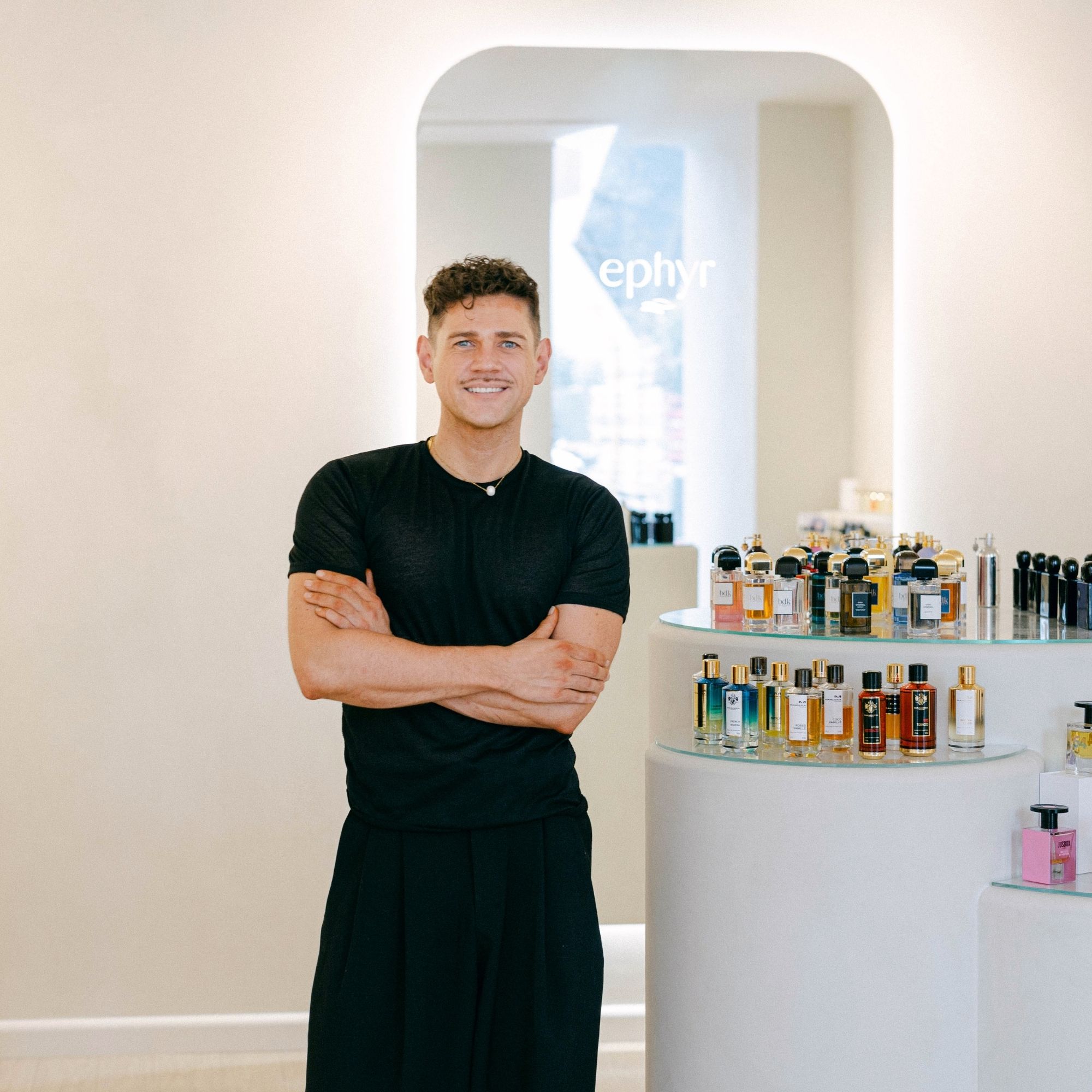
Article by
Dmitrii Savishin
Dmitrii Savishin is the founder of Maison Ephyr and Parfum Exquis, two Canadian destinations dedicated to the world of niche perfumery. With years of experience discovering exceptional fragrance houses from around the globe, Dmitrii shares expert insights on perfume trends, fragrance notes, luxury brands, and the art of choosing the perfect scent. His mission is to make niche perfumery more approachable while helping readers discover fragrances that leave a lasting impression.


