

Did you know that 19% of the population suffers from headaches triggered by fragranced products? It is a sharp, unwelcome interruption to what should be a refined experience. If you have ever felt that familiar throb after a single spritz, mastering how to avoid perfume headaches is about more than just comfort. It's about understanding the engineering behind the scent. You want the elegance of a high-end fragrance without the sensory tax that often comes with mass-market synthetics.
We agree that a perfume should be a masterpiece, not a migraine trigger. You shouldn't have to choose between smelling exceptional and feeling your best. This guide provides a professional roadmap to olfactory equilibrium. We will examine the molecular triggers found in lower-grade formulations and teach you application techniques that minimize irritation. From the precision of Amouage to the complexity of Xerjoff, you'll learn how to select niche quality that respects your biology while satisfying your aesthetic standards. It's time to transition from sensory overwhelm to disciplined, intentional scent selection.
Key Takeaways
- Understand the biological link between your olfactory nerve and brain to identify why specific molecular profiles trigger physical pain.
- Learn how to avoid perfume headaches by prioritizing the raw material purity found in niche houses over mass-market synthetic boosters.
- Master the craftsman's application protocol, using strategic distance and placement to ensure your scent remains a subtle aura.
- Identify "transparent" notes like citrus, tea, and light woods that provide a sophisticated profile without the risk of sensory saturation.
- Utilize 1ml samples and discovery sets as technical diagnostic tools to stress-test a fragrance's performance before you invest in a full bottle.
Understanding the Olfactory Trigger: Why Scents Cause Headaches
Scent is not an abstract concept. It is a physical collision of molecules against your biology. When this collision becomes aggressive, your body reacts with osmophobia. This is the technical term for a hypersensitivity to odors that triggers genuine physical pain. It is a biological safeguard. If you want to know how to avoid perfume headaches, you must first respect the threshold of your own nervous system. Understanding the nuances of perfume intolerance allows you to diagnose the issue rather than simply suffering through it.
Your olfactory nerve serves as a high-speed data cable to your brain. It does not have a filter. When you inhale an intense or poorly engineered aroma, it can stimulate the trigeminal nerve. This stimulation triggers a release of neuropeptides, causing the blood vessels in your head to dilate. This is the source of that rhythmic, pounding sensation. It is a mechanical response to molecular stress. It is also vital to distinguish between a true allergy and sensory overstimulation. A true allergy involves an immune response, often affecting the skin or respiratory tract. Sensory overstimulation is a nervous system crash caused by the sheer volume or "loudness" of specific chemical signals.
The Science of Sensory Overload
Visualize scent as a physical presence. It is a structural layer in the air you breathe. Your brain processes complex molecular structures like a computer rendering high-resolution graphics. If the molecules are jagged, synthetic, or too numerous, the system lags. This is the threshold where olfactory fatigue turns into olfactory pain. Fatigue is simply the brain tuning out a constant signal. Pain is the brain's way of demanding you exit the environment. It is an engineering failure of the atmosphere around you.
Common Culprits in the Fragrance Pyramid
Not all fragrance notes are created equal. Some are inherently more taxing on the human hardware. Heavy white florals, for instance, often contain high levels of indoles. In concentrated doses, these can feel thick and suffocating. Another primary offender is the use of aggressive synthetic musks. In mass-market production, these act as "fillers" to boost a scent's volume and longevity. They create a layer of molecular static that the brain struggles to filter. Finally, the role of high-percentage, low-quality alcohol cannot be ignored. It acts as a rapid delivery system, slamming these irritants into your system all at once. Learning how to avoid perfume headaches requires vetting these aggressive components before they ever reach your skin.
Molecular Architecture: Mass-Market Fillers vs. Artisanal Precision
The difference between a mass-market fragrance and a niche masterpiece is found in the blueprint of the molecules. Mass-market scents are often engineered for the "shelf shout." They must compete in high-traffic, sensory-heavy environments like shopping malls. To achieve this, chemists utilize aggressive synthetic boosters and high concentrations of low-cost fixatives. These elements ensure the scent remains static and loud for hours. For many users, this lack of nuance is the primary trigger for physical distress. Understanding these structural differences is a critical step in learning how to avoid perfume headaches.
Transparency in these formulations remains a challenge. Current FDA fragrance regulations allow brands to list "parfum" as a single ingredient, masking a complex cocktail of potentially hundreds of chemicals. Many of these hidden components are industrial-grade solvents or phthalates used to extend shelf life. A luxury niche perfume boutique serving Canada bypasses this mass-production logic. They prioritize houses that value ingredient purity over volume. By shifting toward artisanal precision, you replace chemical "noise" with a clear, intentional signal that your nervous system can process without alarm.
The Problem with 'Loud' Fragrances
Designer fragrances frequently rely on a "linear" structure. This means the scent smells exactly the same from the first spritz until it fades ten hours later. While this provides consistency, it also provides no relief to your olfactory receptors. Your brain is forced to process the same intense molecular signal without any variation or rest. This constant stimulation often leads to the blood vessel dilation discussed in the previous section. Cheap fixatives like Galaxolide or specific synthetic musks are notorious for lingering aggressively on fabric. They create a persistent, unyielding presence that eventually triggers a sensory crash.
The Niche Advantage: Refined Performance
Niche houses like Amouage and Xerjoff operate with a different set of engineering constraints. They utilize high-quality natural resins, rare extracts, and stable, high-end synthetic molecules that mimic nature with surgical accuracy. These scents are designed to "evolve." They move through a pyramid of top, heart, and base notes. This evolution allows your olfactory system to transition between different molecular weights and intensities. Niche quality is a balance of complexity and clarity where every ingredient serves a functional purpose rather than acting as a cheap filler. If you've struggled with designer scents, exploring the curated discovery sets at Maison Ephyr is an excellent way to test these refined formulations in a controlled, risk-free environment.
Strategic Application: How to Wear Fragrance Without Overload
Application is where theory meets reality. Most enthusiasts fail by treating perfume like a general body spray. If you want to master how to avoid perfume headaches, you must treat application as a surgical procedure. Precision is your primary objective. We call this the Master Craftsman’s Protocol. It prioritizes the controlled release of molecules over raw volume. By managing the geography of where the scent sits on your body, you dictate how your brain processes the incoming data. It is the difference between a gentle background melody and a deafening noise.
Distance is your greatest ally in achieving olfactory equilibrium. When you spray too close to the skin, you create a concentrated puddle of oils that evaporates in a harsh, uneven spike. Holding the bottle 15 to 20 centimeters away creates a fine, architectural mist. This ensures an even distribution of molecules across the surface area. This technical adjustment is vital because there are clear scientific reasons for perfume headaches, often rooted in the sudden, aggressive stimulation of the trigeminal nerve. A fine mist allows for a gradual introduction to the scent profile.
The Geometry of Scent Placement
Avoid the "triangle of pain." This is the area encompassing your neck, chest, and shoulders. Scent applied here sits directly beneath your nose, forcing your olfactory system to process a constant, high-intensity signal without respite. Instead, focus on distal pulse points. The wrists are standard, but the lower body is more effective for those with high sensitivity. Applying fragrance behind the knees or on the ankles allows the aroma to rise slowly. Your clothing acts as a natural filter, diffusing the molecules before they reach your primary sensors. This creates a subtle aura rather than a suffocating cloud.
Timing and Environment
Environment dictates your application strategy. Never apply a potent fragrance immediately before entering an enclosed space like a vehicle or a boardroom. Give the composition at least 30 minutes to settle. This allows the volatile top notes and the initial alcohol burst to dissipate. Skin hydration also influences this process. Well-hydrated skin creates a better "anchor" for the perfume, slowing down the molecular release and preventing the scent from becoming sharp or dry. Utilizing niche fragrance discovery sets is the most effective way to master these variables. A 1ml sample provides enough volume to test your personal application limit in various environments before you invest in a full-scale bottle.
Curating a Safe Scent Profile: Choosing Notes for Sensitivity
Building a fragrance wardrobe when you are prone to migraines isn't about deprivation. It's about data. You need to identify your personal "olfactory offenders" through a process of elimination. Think of it as refining a blueprint. You remove the unstable elements until the structure holds. One of the most effective strategies for how to avoid perfume headaches is pivoting toward "transparent" notes. Ingredients like green tea, bergamot, and light cedarwood provide a sophisticated profile without the dense molecular weight that triggers pain. Even complex houses are accessible if the engineering is precise. An Amouage fragrance guide can help you navigate high-quality resins that offer depth without the jagged edges of mass-market fillers. This leads to the "Second Skin" aesthetic. These are fragrances that whisper. They stay close to your biology and don't scream for attention from across the room.
Notes to Approach with Caution
Some ingredients are natural powerhouses that demand significant processing power from your brain. Heavy white florals like Tuberose and Jasmine contain indoles that can feel thick and suffocating. Dense Ouds and leathers are high-impact molecules. They linger in the air and on the skin with an intensity that can be taxing over long periods. Sharp aldehydes are another common culprit. While they mimic the "clean" smell of fresh laundry, they often act as a sharp irritant to the sinuses. Approach these profiles with caution. Use small doses to test your personal tolerance before committing to a full day of wear.
The Reliability of Niche Minimalism
Minimalism in niche perfumery is a reliability benchmark. Brands like Essential Parfums focus on clarity of expression. Take Bois Imperial as an example. It is a masterclass in minimalist engineering. It uses high-quality ingredients to create a presence without the clutter of unnecessary fixatives. This reduces the risk of chemical conflict. When you reduce the number of components, you reduce the variables that can cause a reaction. It is a cleaner signal for your olfactory system. This approach allows you to enjoy the art of perfumery without the sensory tax of traditional formulations.
Ready to build a collection that respects your senses? Explore our curated selection of minimalist discovery sets to find your next safe signature.

The Path to Discovery: Controlled Sampling with Maison Ephyr
Scent discovery is a discipline. It requires the patience of a craftsman and the precision of a technician. For those learning how to avoid perfume headaches, the 1ml sample is more than a convenience. It's a vital diagnostic tool. It allows you to isolate variables. You can test a specific molecular profile in the safety of your own environment before committing to a full-scale investment. Discovery sets are the most imaginative way to build a headache-free wardrobe. They offer a structured path through complex scent profiles, allowing you to identify your personal limits without the financial or physical risk of a full bottle.
Maison Ephyr provides a curated, elite fragrance education across Canada. We believe that luxury should never come at the cost of your well-being. By offering access to the Italian olfactory artistry of Xerjoff and other high-end houses, we allow you to experience peak performance without the commitment. This is the ultimate preventative strategy. You are no longer guessing. You are collecting data on how your nervous system responds to the highest quality raw materials in the world. It is an intentional, architectural approach to personal style.
The 48-Hour Test Protocol
A single spritz in a store is not a sufficient test. To truly understand how a fragrance interacts with your biology, you need a controlled protocol. We recommend a 48-hour testing window for every new sample. This ensures you experience the full evolution of the scent, from the volatile top notes to the deep dry down.
- Day One: Apply a single spray to the wrist in a well-ventilated room. Monitor your reaction over six hours.
- Day Two: Apply the scent in a different environment, such as your workspace or home office. Observe if the enclosed space changes your sensitivity.
- The Dry Down: Pay close attention to the final hours of wear. Some late-stage triggers, like specific synthetic musks, only emerge after the heart notes fade.
- Database Entry: Record your findings. Note the brand, the dominant notes, and any physical sensations.
Your Signature, Reimagined
The transition from scent-avoidant to scent-selective is a powerful shift. You don't have to live in a sterile, fragrance-free world. When you understand your molecular limits, you gain the confidence to wear bold, complex compositions. You are no longer at the mercy of poorly engineered mass-market fillers. Instead, you are a curator of your own atmosphere. You choose scents that harmonize with your biology rather than disrupting it. We invite you to explore our curated national collection and begin your journey toward olfactory equilibrium. Your signature scent is waiting. It's time to find it without the pain.
Achieving Olfactory Equilibrium
Mastering the art of scent is a technical pursuit that rewards the disciplined nose. You have learned that the architecture of a fragrance dictates its impact on your nervous system. By prioritizing raw material purity and utilizing the Master Craftsman’s Protocol for application, you now possess the blueprint for how to avoid perfume headaches. It is no longer about avoiding fragrance entirely. It's about selecting instruments that are individually tuned to your biology. Precision engineering in perfumery ensures that complexity never descends into sensory chaos.
Maison Ephyr stands as an official retailer for Amouage, Xerjoff, and Nishane. We provide the technical resources necessary for your journey. Our expertly curated 1ml sample program and discovery sets allow you to stress-test these elite formulations with zero risk. With fast national shipping across Canada, your path to a refined, headache-free signature is immediate. Build your safe scent wardrobe with our curated Discovery Sets at Maison Ephyr. You deserve a sensory experience that reflects your standards without compromising your comfort. Step into a world where quality speaks for itself.
Frequently Asked Questions
Can I wear perfume if I suffer from chronic migraines?
Yes, you can enjoy fragrance with chronic migraines if you adopt a scent-selective strategy. Focus on compositions with low molecular weight and transparent notes like citrus or light woods. Avoid high-intensity "loud" scents that overstimulate the nervous system. Precision in selection is the most effective way to maintain olfactory equilibrium without triggering a pain response.
What are the most common fragrance notes that trigger headaches?
Heavy white florals like tuberose and jasmine are frequent offenders due to their indolic intensity. Aggressive synthetic musks used as mass-market fillers also create a dense molecular cloud that is difficult for the brain to filter. Dense ouds and sharp aldehydes can further irritate the sinuses, leading to immediate physical distress and sensory crash.
How can I quickly remove a perfume that is giving me a headache?
Use an oil-based cleanser or unscented rubbing alcohol to break the molecular bond of the perfume oils. Since fragrance is lipophilic, standard soap and water often leave irritating residues behind on the skin. Apply a cold compress to your pulse points afterward. This helps constrict blood vessels and mitigates the pounding sensation of a brewing headache.
Is there a difference between 'natural' and 'synthetic' perfume headaches?
Both natural and synthetic ingredients can trigger reactions, but the underlying cause differs. Mass-market synthetics often rely on "loud" boosters that cause sensory overload. Natural ingredients contain complex allergens that can trigger a biological defense response. Learning how to avoid perfume headaches involves choosing niche quality where molecules are balanced with surgical precision regardless of their origin.
Why does my favorite perfume suddenly give me a headache?
Sudden sensitivity can be caused by hormonal shifts, increased stress, or a hidden reformulation of the scent. For women navigating these physiological changes, supporting the body with specialized wellness resources like Artemis Curated can help manage overall sensitivity. If a manufacturer changes a fixative or a solvent, the molecular signal changes entirely. Your brain may also develop "sensitization," where it begins to perceive a familiar, intense aroma as a physical threat to your well-being rather than a pleasant experience.
Does the price of a perfume affect whether it causes headaches?
Price often reflects the quality of the engineering and the purity of the raw materials used. Niche houses like Xerjoff or Nishane invest in refined molecules that provide a cleaner signal to the brain. Mass-market scents use cheaper, more aggressive chemicals to ensure the product "shouts" in crowded environments, which significantly increases the risk of pain.
What is the best way to test a new fragrance if I'm sensitive?
The 48-hour protocol is the master craftsman's standard for testing. Use a 1ml sample and apply it to a distal pulse point, such as the ankle or behind the knee. This allows you to monitor the dry down over two days in different environments. It is the safest method for understanding how to avoid perfume headaches before committing to a full-scale bottle.
Can hair mists or body creams be a safer alternative to EDPs?
Hair mists and body creams are excellent alternatives because they offer a more controlled molecular release. Hair mists typically contain less alcohol, reducing the initial sensory spike that irritates the olfactory nerve. Body creams anchor the scent in a lipid barrier, allowing the aroma to diffuse slowly. This prevents the sudden intensity that often triggers a migraine.
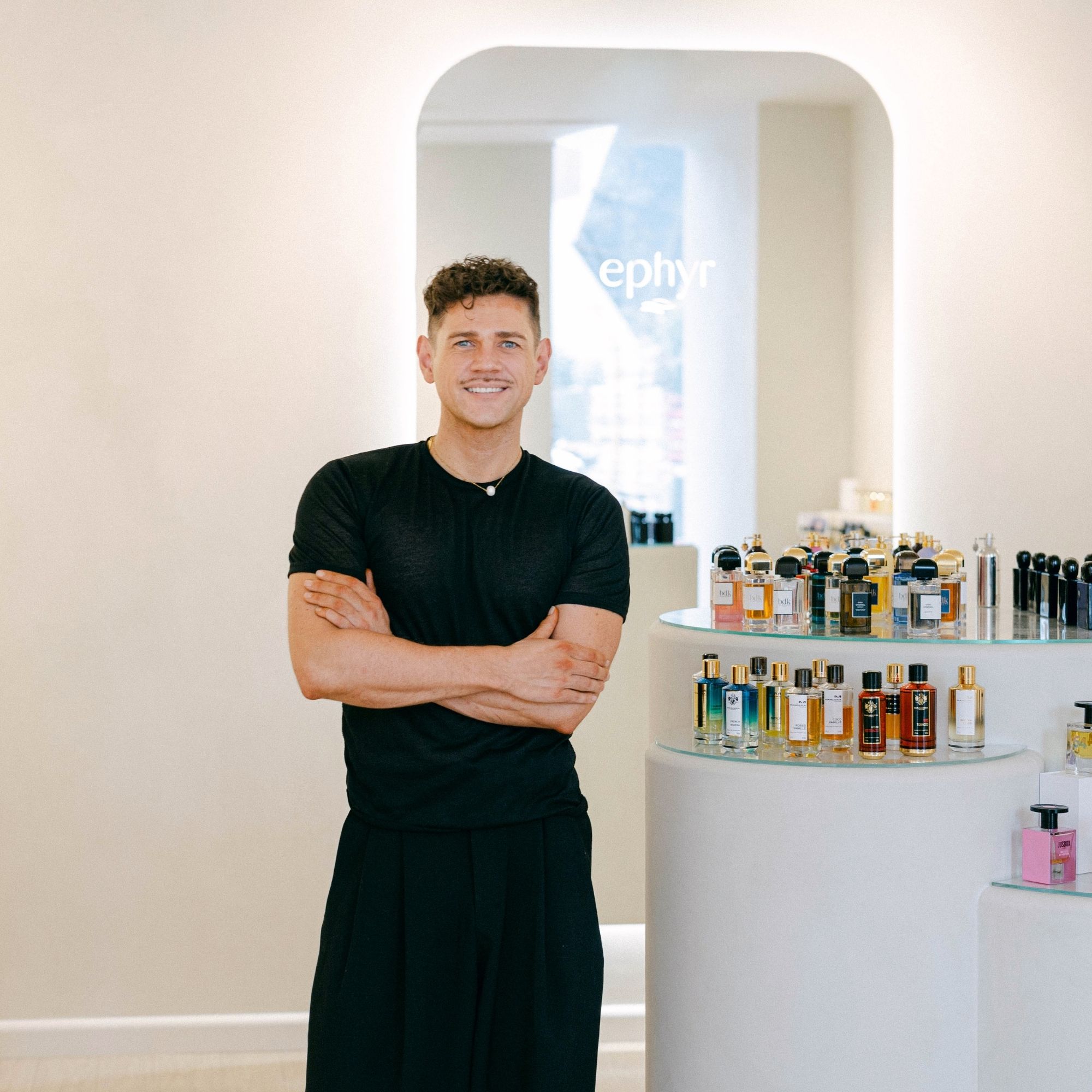
Article by
Dmitrii Savishin
Dmitrii Savishin is the founder of Maison Ephyr and Parfum Exquis, two Canadian destinations dedicated to the world of niche perfumery. With years of experience discovering exceptional fragrance houses from around the globe, Dmitrii shares expert insights on perfume trends, fragrance notes, luxury brands, and the art of choosing the perfect scent. His mission is to make niche perfumery more approachable while helping readers discover fragrances that leave a lasting impression.


