
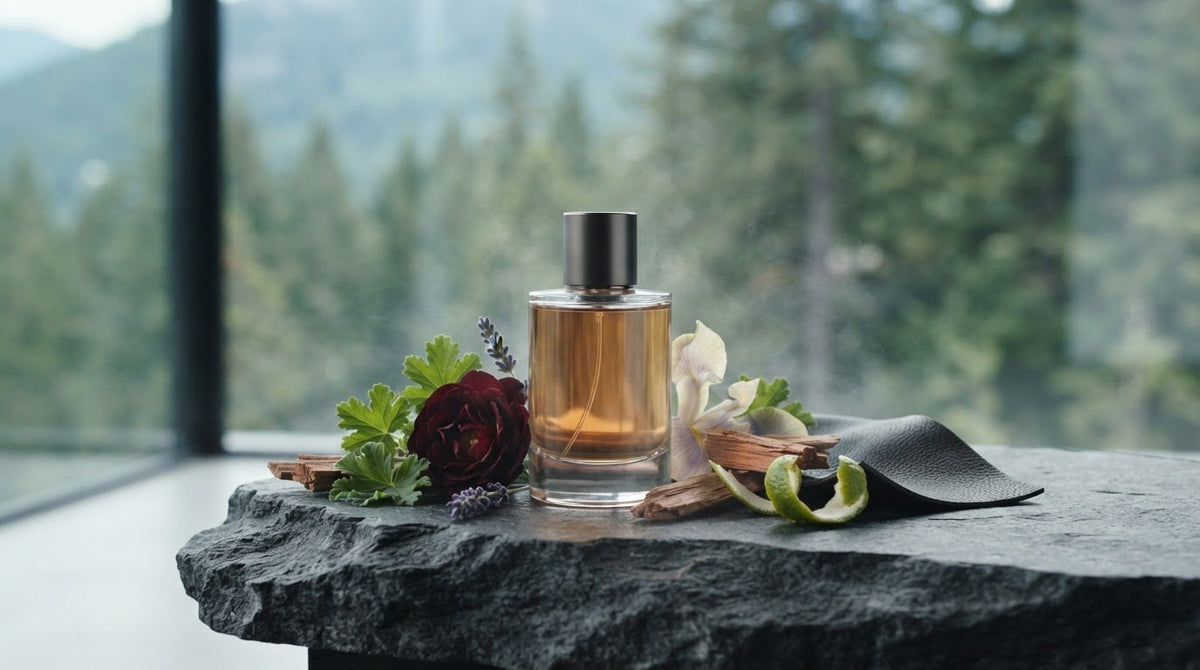
Flowers don’t make a fragrance less masculine; its surrounding notes shape its character. Modern masculine floral scents can feel crisp with citrus, dry with woods, or deepened by oud, leather, and amber. Their appeal lies in contrast: a floral note adds texture without making the whole fragrance smell like a bouquet.
If you usually reach for woody or aromatic scents, a prominent rose or jasmine accord might seem like a leap. That hesitation makes sense, but floral notes aren’t all alike. Lavender can feel familiar and composed; iris adds a smooth, powdery edge; geranium brings a fresh, green lift.
This guide explains how to identify the character of different floral notes, choose a scent that suits your taste, and apply it with a light hand. You’ll also see how florals pair with woods, oud, leather, amber, and citrus, and why an integrated blend can be an easy entry point. Think less “flower shop,” more carefully tuned composition: each note has a role, and the balance makes the scent your own.
Key Takeaways
- Choose floral notes by their character, from green and crisp to powdery, rich, or dark.
- Look beyond gender labels: the notes around a flower shape the fragrance’s overall style.
- Test a scent on skin and give it time to develop before deciding how it wears.
- Pairings with woods, oud, leather, amber, or citrus can shift a floral fragrance from fresh to deep.
- If you usually wear woody or aromatic scents, start with a blend where florals are woven into familiar notes.
1. Why Should Men Wear Floral Colognes?
Men can wear florals without making a fragrance feel traditionally feminine. In modern masculine floral scents, woods, spices, citrus, or vetiver often frame the floral note, adding structure and contrast. Rose can feel dark beside oud, while geranium brings a green edge to woods. The surrounding notes shape the composition; gender labels don’t determine who can wear it.
Floral notes have long featured in fragrances for men. Lavender has anchored aftershaves, fougères, and barbershop scents for decades, while geranium regularly appears in fougère compositions. These familiar profiles show how a flower can add freshness or aromatic depth without dominating the fragrance. For example, lavender can sit beside woods and herbs for a composed, recognizably masculine style.
Attitudes are shifting as fragrance categories become more flexible, including through the growth of unisex perfumes. Rose, jasmine, and tuberose are ingredients, not rules about who should wear a scent. Jasmine attars are worn by men and women in India, and rose is a favourite essence among men in Gulf countries. These traditions are a reminder that context and composition matter more than a gender label.
Tuberose is another flower anyone can wear. It doesn’t dictate a scent’s gender; the other notes and overall balance shape its character. Hedione offers a different example of floral flexibility. This lemony-fresh aroma material is used in floral accords and fragrances from other families, where it can support a bright, airy impression rather than a dense bouquet.
For spring and summer, consider fresh floral-aromatic profiles with citrus, geranium, or Hedione. For fall and winter, rose with oud, amber, or spice can feel darker and richer. Lavender with woods can bridge the seasons, shifting from crisp daytime wear to a more grounded evening style.
In Canada, fragrance prices depend on the brand, concentration, bottle size, and retailer. Niche-perfume boutiques and their online shops are places to explore; compare the note profile and format to find a suitable option.
For a lower-cost introduction, try a small sample before choosing a full bottle. A 1ml sample lets you test whether rose, iris, or lavender works with your skin and preferred style, without committing to a larger format.
Wear time and projection depend on the formula, concentration, skin, and application. Follow a scent from its opening through its heart and drydown for a more useful impression than judging it by the first spray alone.
For Canadian orders, shipping costs are calculated at checkout, and pickup is available at Maison Ephyr’s boutique. Most fragrances are also offered as one-millilitre samples, a practical way to try a scent before choosing a larger size.
2. What does a men's floral perfume smell like?
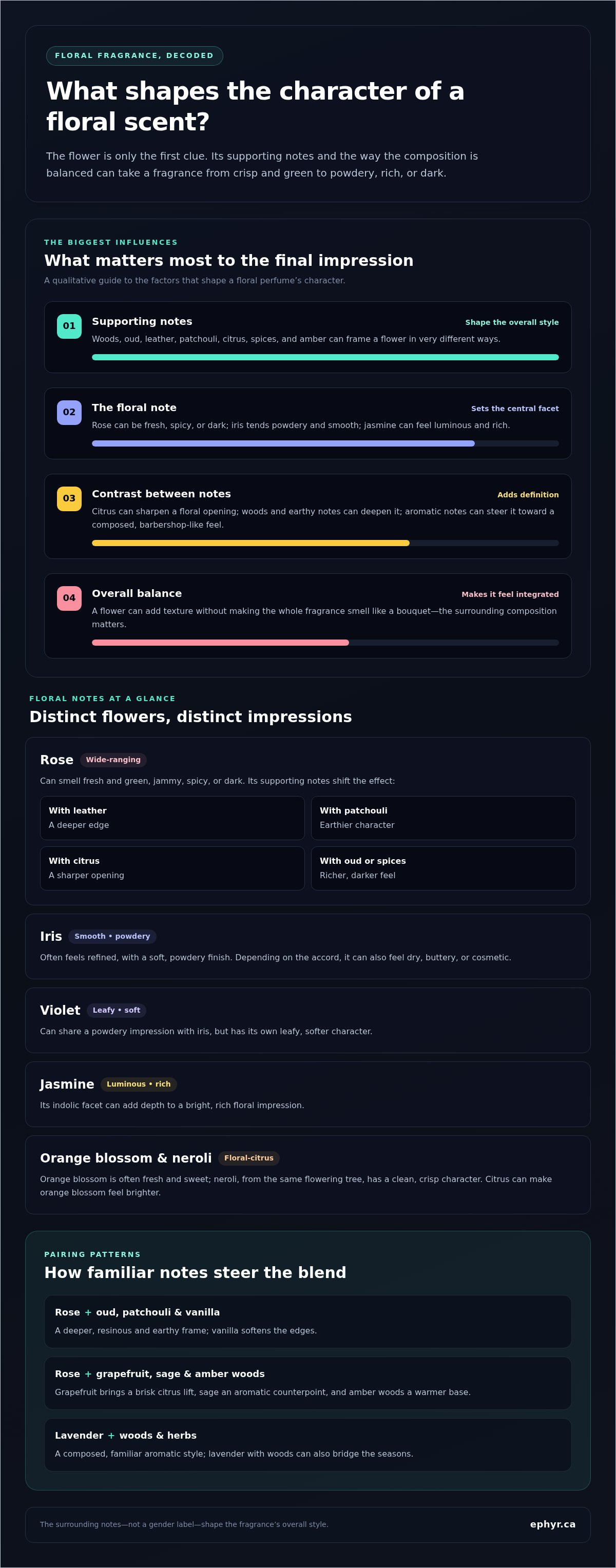
A floral perfume can feel crisp, powdery, lush, or shadowed, depending on the flower and its supporting notes. Rose, iris, jasmine, orange blossom, and violet each create a distinct effect. A flower’s name is only the first clue; the surrounding structure determines whether the fragrance feels bright, dry, or rich.
Rose has remarkable range. It can smell fresh and green, jammy, spicy, or dark. Paired with leather, it takes on a deeper edge; patchouli makes it earthier, while citrus can sharpen its opening. Lavender steers rose toward an aromatic, barbershop-like impression. With oud, patchouli, or spices, rose often becomes richer and more suited to evening wear.
Iris tends toward smooth, refined facets, with a soft, powdery finish. Depending on the accord, it can also feel dry, buttery, or cosmetic. Violet can share that powdery impression, but has a distinct character: it may feel leafy and soft rather than iris-like. These differences help you narrow your preference beyond simply asking for a “powdery” scent.
Jasmine can feel luminous and rich, with an indolic facet that adds depth. Orange blossom brings a floral-citrus profile, often fresh and sweet; neroli, from the same flowering tree, has a clean, crisp character. Paired with citrus, orange blossom can make a composition feel bright. Each note offers a different way into floral fragrances.
Aedes de Venustas offers an example built around rose, iris, and strawflower. This combination brings several floral ideas together rather than relying on one dominant impression. Consider the notes as separate facets: rose brings its varied character, iris contributes powdery refinement, and strawflower adds another floral dimension.
For a darker rose profile, consider its relationship with oud, patchouli, or spices. Noir de Noir places rose at the centre, framed by oud, patchouli, and vanilla. The contrast matters: resinous woods and earthy patchouli give rose a deeper frame, while vanilla softens the edges.
Another useful structure pairs rose with grapefruit, sage, and amber woods. Grapefruit gives the opening a brisk citrus lift; sage adds an aromatic counterpoint, and amber woods create a warmer base. This balance makes rose feel less like a standalone bouquet and more like one part of a layered fragrance.
For a practical shortlist, compare iris-led examples such as Homme Intense with rose-centred Noir de Noir, then consider violet as its own profile. These are composition examples, not a universal ranking. The best fit depends on whether you prefer powdery iris, dark rose, or a softer, leafy accent.
If you want to compare how different floral structures are composed, explore niche fragrance profiles and focus on the notes that shape each scent.
3. Choosing and applying floral cologne
Start with the flower, not a vague label like “floral.” Decide whether you want lavender’s aromatic familiarity, iris’s powdery finish, or rose’s varied character. Then read the supporting notes. Patchouli can make a floral perfume feel earthier, while citrus sharpens its opening. This simple filter turns a crowded shelf into a focused shortlist.
Test the fragrance on your skin before choosing a bottle. A scent develops through top, middle, and base notes, so its first impression won’t tell the whole story. Wear it for at least 30 minutes before assessing how it changes. Notice whether the opening stays bright, the floral heart feels balanced, and the drydown suits your taste.
Keep your test controlled. Apply one fragrance at a time, and avoid judging several colognes from paper strips alone. A blotter helps compare openings, but skin gives you a more personal impression. If you’re deciding between an eau de parfum and a parfum, compare the actual scents on skin; the label alone won’t tell you which composition you’ll prefer.
For everyday wear or work, choose a fresh floral-aromatic profile and apply it lightly. For a formal setting, an iris-led woody fragrance can feel composed and refined. For a special occasion, rose-oud or a richer floral structure offers more depth. Choose according to the setting and the impression you want, not a fixed rule about which fragrance belongs where.
Apply with restraint. Lightly spray your neck and wrists, then let the fragrance dry without rubbing your wrists together. Rubbing can disrupt how the scent settles on skin. Start with a measured application and give the composition time to develop before adding more. A close, clear impression is often more useful than an intense cloud.
In warm weather, try a light spray behind each knee when wearing shorts. The movement of walking can help the scent rise gently. Keep the application light, especially with a noticeable floral accord. In cooler weather or beneath longer clothing, the neck and wrists are straightforward starting points.
Use a brief wear test to make a practical decision. After 30 minutes, ask whether the floral note still feels comfortable and whether its supporting notes suit your day. If lavender feels too familiar, try a different flower; if rose feels too rich, look for a fresher, citrus-led balance. A clear preference helps you choose a fragrance you’ll actually reach for.
4. Floral notes blended with woods, oud, leather, amber and citrus
A floral fragrance changes character as its supporting notes shift. Rose with oud can feel dark and resinous, while iris with woods often reads dry and elegant. Orange blossom alongside citrus creates a brighter, cleaner effect. These pairings explain why flowers don’t automatically make a scent soft or sweet. The structure around each flower sets its direction.
Woods give florals a steadier frame. In Amouage Reflection Man, neroli, jasmine, orris, and ylang-ylang meet sandalwood, cedarwood, and vetiver. The contrast brings floral detail into a woody composition rather than letting one note define the whole scent. Iris with woods can create a particularly dry, polished impression for someone who prefers a restrained finish.
Oud and rose create a more dramatic pairing. Beside oud, rose can become dark and resinous, while patchouli or spices deepen the overall profile. This richer structure can suit an evening or a wedding, when a more pronounced fragrance feels at home. Think of the notes as counterweights: rose gives the composition its floral centre; oud and spice add depth.
Leather and amber shift the mood in another direction. Jasmine paired with either can feel rich and sensual, with the flower lending brightness against a deeper base. Rose can also work with leather or amber, though the effect depends on the surrounding notes. A fresh rose accord and a dark, spicy rose composition may share a flower, but not an atmosphere.
Citrus brings lift and clarity. Orange blossom combined with citrus can feel bright and clean, while geranium’s fresh, green, slightly minty profile sits comfortably beside citrus and woods. These blends offer a useful bridge if you usually choose fresh fragrances. The flower adds texture; citrus keeps the overall impression crisp.
Masculine floral scents sit alongside woody, citrus, and fresh styles rather than opposing them. A woody fragrance centres its dry or resinous base; a citrus scent highlights a brisk opening; a fresh scent emphasizes clean, airy facets. Floral compositions can combine all three, as in Reflection Man, where floral notes meet woods, or in blends where geranium joins citrus.
Several compositions show how distinctive rose can become. Amouage Lyric Man, Maison Francis Kurkdjian Lumiere Noire Pour Homme, and Cartier Déclaration d’Un Soir feature citrusy, metallic rose notes. These suggest a sharper, more modern interpretation than a lush, jammy effect. Pepper and other spices can add another crisp edge, while woods or amber anchor the floral character.
To find a pairing that fits, start with the base you already enjoy. If you favour vetiver or cedar, explore woody florals; if you prefer fresh citrus, try geranium or orange blossom. For evening wear, rose with oud, patchouli, or spices offers a deeper route. The flower is only one part of the composition.
5. Choosing an integrated floral scent
If you usually wear woody or aromatic fragrances, choose a floral composition that works within a familiar structure. Vetiver, leather, spices, woods, or musk can anchor the fragrance, while iris, rose, or jasmine adds contrast. The result feels like a considered variation on your usual style, not a complete change of direction.
Begin with the base-note family you already enjoy. A vetiver wearer might look for a dry, earthy frame around a floral heart. If you’re drawn to leather, try a composition where the flower softens its darker edge. If spices are your signature, seek a floral accord that lifts those warm notes rather than replacing them.
Then decide how prominent you want the flower to be. A subtle floral impression sits within the woods, musk, or spice; a more noticeable one leads the composition. Orange blossom with citrus can feel bright, while iris with woods creates a refined, powdery-dry effect. These profiles offer different levels of floral emphasis without relying on a single idea of masculinity.
For a 2026 shortlist, consider Amouage Reflection Man for a floral structure set against woods, or Amouage Lyric Man for a rose-led direction with citrusy, metallic facets. They illustrate two distinct approaches: an integrated floral-woody composition and a more recognizable rose profile. The best choice depends on whether you want the flower woven into the structure or clearly in focus.
Use a simple comparison method. First, name the base you prefer, such as cedar, vetiver, leather, or musk. Next, choose a floral direction, such as iris for a powdery finish or orange blossom for a brighter feel. Finally, wear each option separately and notice which feels most natural from its opening through its heart and drydown.
Consider the setting, too. A woody floral can feel composed for a workday, while a spice-and-rose blend may suit an evening. For daily wear, look for balance rather than sheer intensity. A fragrance that lets you notice both its familiar base and floral detail can become a personal signature without dominating the room.
Sampling helps turn that idea into a practical choice. A 1ml fragrance sample lets you wear a composition on skin before settling on a full bottle. Compare how the floral note sits beside the notes you already enjoy, then choose the result that feels like an evolution of your taste.
If you usually wear woody or aromatic fragrances, start with a scent that integrates florals into woods, vetiver, leather, spices, or musk. It preserves a familiar profile while adding floral contrast.
Maison Ephyr: Amouage Fragrances
Maison Ephyr brings together niche fragrance houses for anyone refining their taste in floral compositions. Explore Amouage Fragrances alongside Xerjoff Fragrances, Nishane Fragrances, and Casamorati to compare different approaches to florals, woods, and supporting notes.
If you’re still deciding whether a floral note should lead or sit quietly within a familiar woody structure, sampling can help make that distinction clearer on your skin. Maison Ephyr offers 1ml fragrance samples, a practical way to experience a scent’s development before choosing a full-size bottle.
Explore Maison Ephyr’s fragrances and one-millilitre samples at ephyr.ca.
Choose a Floral Signature That Feels Like You
Let your next fragrance choice begin with curiosity, not a category label. Pick a floral facet that holds your attention, then notice how it changes the character you already enjoy. The goal isn’t to wear a flower because it feels unexpected. It’s to find a composition that feels naturally yours, whether that means a quiet accent or a more distinctive presence.
That’s the appeal of modern masculine floral scents: they leave room for personal interpretation. One wearer may gravitate toward a crisp, green impression; another may prefer a darker, more textured floral. Give yourself permission to follow the detail that stays with you after the first impression fades. A fragrance becomes a signature through that connection, not through a label.
Maison Ephyr offers a curated setting for exploring niche fragrances and refining what you’re drawn to. Contact Maison Ephyr to continue your search. Trust your nose, take your time, and enjoy finding a floral composition that feels distinctly your own.
Frequently Asked Questions
Why Should Men Wear Floral Colognes?
Men can wear floral colognes to add character, nuance, or a different kind of freshness to their personal style. Treat a fragrance like a detail in an outfit: it can complement the mood without defining the wearer. A floral scent might feel composed for a client meeting or more expressive at dinner, depending on its structure and how lightly it’s applied.
What does a men's floral perfume smell like?
A men’s floral perfume can smell airy, green, powdery, spicy, or richly textured, rather than like a literal bouquet. Perfumers combine materials to create a flower’s impression, then shape it with other accords. First identify the overall effect: does the fragrance feel crisp, soft, or dark? That broad impression can help you narrow your choices before focusing on individual notes.
Which floral notes are most common in modern masculine perfumes?
Lavender, geranium, jasmine, and iris are common floral notes in fragrances for men. Rose, violet, and orange blossom also appear in masculine compositions. Consider the role you want a note to play: lavender and geranium can support an aromatic profile, while jasmine or iris can become a more noticeable focal point. This distinction helps you read a fragrance description more precisely.
What do modern masculine floral fragrances cost in Canada, and where can they be bought?
In Canada, prices vary by brand, concentration, bottle size, and retailer. Explore niche perfume boutiques and their online shops, comparing note profiles and formats. A small sample can be a lower-cost way to test a scent before choosing a bottle.
How long do popular men’s floral fragrances last, and how strong is their projection?
Wear time and projection depend on the formula, concentration, skin, and application. Follow the fragrance from its opening through its heart and drydown; wear it for at least 30 minutes before assessing how it develops.
Article by
Dmitrii Savishin
Dmitrii Savishin is the founder of Maison Ephyr and Parfum Exquis, two Canadian destinations dedicated to the world of niche perfumery. With years of experience discovering exceptional fragrance houses from around the globe, Dmitrii shares expert insights on perfume trends, fragrance notes, luxury brands, and the art of choosing the perfect scent. His mission is to make niche perfumery more approachable while helping readers discover fragrances that leave a lasting impression.


