
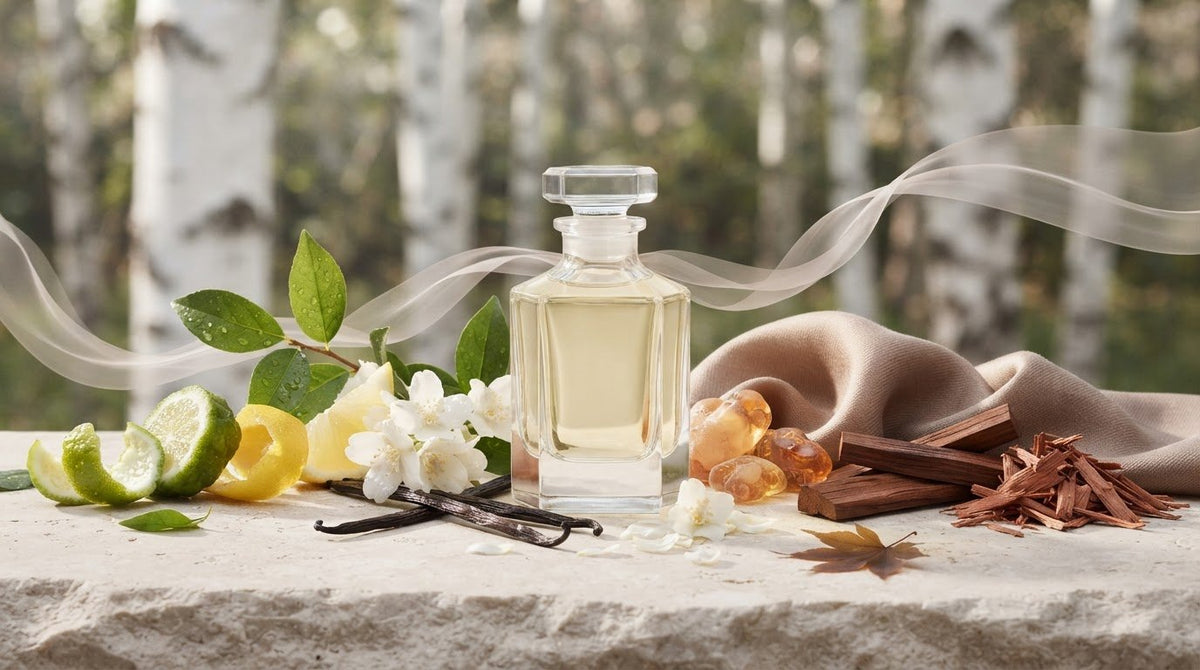
The most attractive fragrance isn’t always built around the sweetest note. When considering what fragrance notes are most attractive, vanilla, jasmine, musk, and amber are often appealing, but their effect depends on how they’re paired and how the scent develops on your skin. No single note suits everyone.
A fragrance can feel inviting without being sugary, or warm without becoming heavy. Bright citrus can sharpen soft florals, while woods and musk can give sweetness a quieter, more grounded finish. The balance between notes often matters as much as the notes themselves.
Here, you’ll discover which scent families tend to draw people in, how contrasting and complementary notes create balance, and why memory and personal associations shape attraction. The result is a more considered way to explore fragrance: not by chasing a universally “best” scent, but by noticing what feels distinctive and harmonious to you.
Key Takeaways
- There’s no single universally attractive scent; personal preference and the occasion both shape what feels right.
- Vanilla, jasmine, musk, and amber each bring a distinct character, and their effect changes with the notes around them.
- Notice how contrasting notes add definition while complementary notes create a smoother, more unified scent.
- Memories and associations can influence how you experience a fragrance, so pay attention to the feelings a scent brings up for you.
- Explore fragrance samples to experience how a scent develops on your skin before choosing a full bottle.
What Is the Most Attractive Scent in the World?
No single scent appeals to everyone. Personal taste, skin chemistry, scent memories, and occasion all shape what feels attractive.
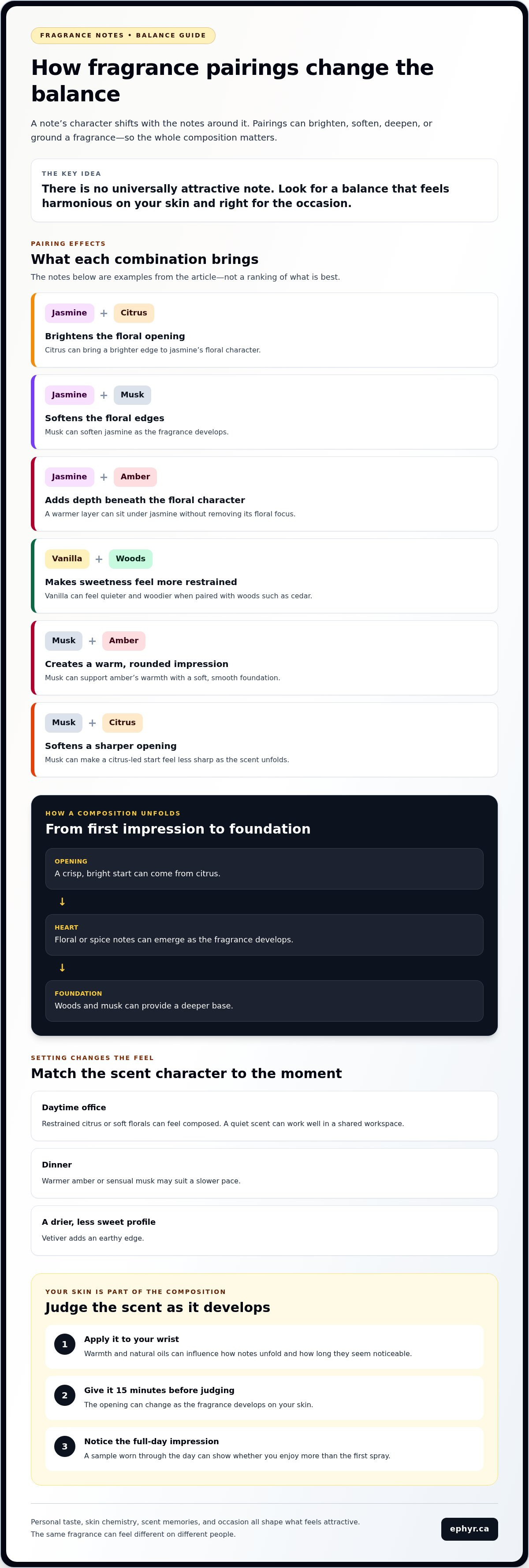
Match a fragrance’s character to the setting. For a daytime office, restrained citrus or soft florals can feel composed. For dinner, warmer amber or sensual musk may suit the slower pace. Vetiver adds an earthy edge when you want a drier, less sweet profile.
Consider how close others will be. A quiet scent can work well in a shared workspace, while an evening outdoors may suit a more noticeable composition. Apply perfume to a wrist, then give it 15 minutes before judging. The opening can change as the fragrance develops on your skin.
Scent Memories and Personal Associations
Scent memories connect aromas with experiences, people, and places. Jasmine may recall a garden, while citrus might bring back a familiar kitchen. Those associations can make the same perfume comforting to one person and distracting to another. Notice the memory that surfaces, then consider whether it fits the mood or occasion.
Musk and Vetiver Character
Musk often creates a soft, skin-like impression, while vetiver brings an earthy, root-like character. Together, they can ground a fragrance without making it overtly sweet. Musk alone may feel intimate and understated; vetiver can seem crisp, dry, or green. Compare each on skin to see which character feels more like your style.
Studies and Skin Chemistry
A 2017 scent study presented almost 400 participants with 66 odours at two different concentrations. That design shows how researchers can compare responses across different smells and strengths; it doesn’t establish one universally attractive perfume. On skin, warmth and natural oils can influence how fragrance notes unfold and how long they seem noticeable. Test the same scent on your skin, not only on paper.
Skin chemistry matters because perfume develops with your skin’s warmth and surface oils. The same vanilla, musk, or vetiver composition can seem softer or sharper on different people. Try a sample on your wrist and notice how its character changes through the day. That gives you a better impression than judging the first spray alone.
To assess a fragrance for an occasion, compare its opening with its later impression. Bright citrus may settle into woods; a floral heart may soften with musk. Wear the scent through a full day before deciding whether it suits your routine. This helps distinguish an appealing first impression from a fragrance you genuinely enjoy wearing.
Vanilla, jasmine, musk, and amber as appealing fragrance notes
Vanilla, jasmine, musk, and amber each bring a distinct character to perfume. Their appeal depends on the composition, intensity, and setting.
Floral, woody, citrus, and gourmand notes can all appeal; none leads for everyone. Jasmine is floral, vetiver earthy, bergamot bright, and vanilla gourmand.
Across Canada, familiar profiles such as vanilla, jasmine, musk, and amber offer a range from soft floral to warm and resinous.
What feels overwhelming depends on the wearer and setting. Dense vanilla, assertive musk, or sharp citrus can seem too prominent in a close office or crowded room.
Musk as a Base Note
Musk is a base note that can give a fragrance a soft, lingering foundation. It can smooth brighter or sweeter notes as the perfume develops. Paired with amber, musk often supports a warm, rounded impression; paired with citrus, it can soften a sharper opening. The effect depends on the full composition, not musk alone.
Appeal Across Fragrance Families
Fragrance families describe broad scent characters, from jasmine-led florals to vetiver woods, bergamot citrus, and vanilla gourmands. These distinctions help you compare the effect you want. Citrus can feel direct, while creamy vanilla may feel cosy. Woods bring a drier profile; florals can add a softer or more expressive edge.
Vanilla can make a composition feel creamy, warm, or playful. In a gourmand perfume, it may suggest dessert; with woods, it can feel more restrained. Compare vanilla on its own with a version paired with cedar. The contrast can reveal whether you prefer its sweetness or its quieter, woodier side.
Jasmine can feel luminous and floral, but its effect changes with surrounding notes. Citrus may brighten its opening, while musk can soften its edges. Compare a jasmine-citrus scent with one built around jasmine and amber. Notice which balance feels right for your everyday routine.
Amber usually describes a warm accord rather than one single scent profile. Paired with musk, it can create a smooth, enveloping base; with jasmine, it can add depth beneath the floral character. Sample both combinations on skin. Their development can help you identify whether you prefer warmth, softness, or a clearer floral focus.
To compare these profiles before choosing a bottle, explore fragrance samples and note which pairing feels balanced on your skin.
Attractive note pairings and fragrance balance
A pairing feels balanced when its notes support, contrast with, or soften one another. Star jasmine, orange blossom, pear, cedar, and musk, for example, move from floral brightness toward fruit, wood, and softness. Each note contributes a different texture, creating more dimension than a single-note impression.
Notice how a composition changes as its different facets emerge. A crisp opening can lead into floral or spice notes, while woods and musk provide a deeper foundation. This progression gives a fragrance structure. If you’re drawn to bright openings, try citrus paired with woods; if you like warmth, consider spice with creamy notes.
Several combinations show how balance can work in practice:
- Floral and fruit: star jasmine and honeyed orange blossom meet pear, Atlas cedar, and musk.
- Wood and spice: New Caledonian sandalwood and soft musk sit with nutmeg, cardamom, and orris.
- Sweet and deep: hazelnut, chai spice, and plum meet black tea, Damask rose, labdanum, vanilla, sandalwood, and musk.
These examples show how contrast works. Pear can brighten white florals, while cedar adds a drier edge. Cardamom and nutmeg give sandalwood a spiced contour, rounded by soft musk. Hazelnut and plum suggest sweetness, while black tea and labdanum create a darker counterpoint. Balance comes from the relationships between notes, not simply their number.
To assess a pairing, identify the note you notice first, then consider what supports it. If vanilla feels too sweet alone, sandalwood or black tea can provide contrast. If jasmine feels too airy, musk or amber can add warmth. These comparisons help you recognize combinations that feel composed rather than crowded.
Strength matters, too. Prominent spice can dominate delicate florals, while light citrus may disappear beside dense woods. The proportions and character of each material shape the overall effect. Notice whether one note leads naturally into another or competes for attention. A coherent blend gives the fragrance a clear direction.
Pairings also shape a scent’s mood. Jasmine with pear can feel polished and luminous; sandalwood with cardamom may seem warm and measured. Vanilla with plum and tea creates a richer, more layered impression. These are comparisons, not fixed rules. Your preference depends on which contrast feels inviting and which becomes distracting.
For a practical comparison, smell a fragrance on a paper strip, then revisit it on skin. Focus on the main pairing rather than trying to name every ingredient. A note that seems sharp at first may soften alongside musk or woods. Tracking that change helps you understand how the composition achieves balance.
Emotional associations and fragrance appeal
A fragrance can appeal because of the mood or memory it brings forward. Citrus may recall peeling an orange, while rose might bring a garden or bouquet to mind. Those associations differ between people. A familiar note can comfort one wearer and seem unremarkable to another, shaping attraction beyond the ingredient list.
Personal history can give a scent its emotional charge. Someone who remembers cedar from a family cabin may find a cedar fragrance reassuring. Another person may connect the same woody note with a pencil case or workshop. The note hasn’t changed, but memory colours its meaning. That response can matter as much as whether the scent is floral, fresh, or warm.
Consider the setting you associate with a scent, too. Light citrus might feel energizing during a morning commute, matching the day’s pace. Soft florals could bring to mind a spring occasion or a favourite fabric. These associations influence whether a fragrance feels natural to wear and help explain why the same scent can feel right in one moment and misplaced in another.
Fragrance can become part of how someone presents themselves. A crisp, green scent may suit a person who prefers a pared-back style; resinous amber may feel more expressive. Neither choice has a fixed personality. Your associations, clothing, and plans all help shape the impression. A fragrance that feels like a natural extension of your style often earns repeat wear.
Use a small scent journal to separate memory from composition. After trying a fragrance, note your first association, such as fresh laundry, a garden, or a rainy walk. Then record the note you noticed and the setting. Comparing entries can show whether you enjoy the fragrance itself or mainly the memory it evokes.
When choosing a new perfume, emotional appeal is useful evidence, not a strict rule. Notice whether a scent invites curiosity, calm, or confidence, then consider whether that feeling fits your routine. A fragrance doesn’t need to match a popular profile to feel natural. Its appeal may come from the particular memory, mood, or self-image it helps you carry.
What do studies say about attractive fragrance notes and scent preferences?
A 2017 scent study presented almost 400 participants with 66 odours at two different concentrations. This provides a useful starting point for understanding scent preferences. It also sets clear limits: the study design describes how people encountered odours, not a universal ranking of perfumes or fragrance notes.
Concentration matters because the same scent can register differently at different strengths. A light impression of vanilla may seem soft, while a stronger one feels rich or sweet. The study’s two concentrations allowed researchers to compare responses under different conditions. This distinction matters when judging perfume, where strength and surrounding notes shape the overall impression.
The 66 odours also represent a range of individual smells, not necessarily finished fragrances. A perfume combines materials into a composition. For example, jasmine paired with citrus creates a different experience from jasmine with musk. A response to one odour can’t automatically predict how someone will respond to either complete blend.
Study design helps define what a result can reasonably tell you. Researchers can compare reactions across participants and scent strengths. But a preference recorded in a study setting doesn’t capture every influence in daily life. Mood, surroundings, and familiarity with a scent can all affect how someone experiences it.
Use research as context, then assess your own response with a consistent approach:
- Choose one fragrance: Keep the scent constant while you form an initial impression.
- Notice its strength: Consider whether the scent feels subtle or prominent in your setting.
- Return to it later: Compare your first impression with how the fragrance develops on skin.
- Record a few words: Note the character you notice, such as floral, woody, or sweet.
This approach separates a perfume’s profile from the conditions around it. A bright citrus scent, for instance, might feel crisp outdoors yet more intense in a small room. The fragrance hasn’t changed, but the setting affects your impression. Compare like with like before deciding which style you prefer.
Research can help explain why scent preferences deserve careful interpretation. The 2017 study’s participant group, odour set, and two concentrations describe a specific way of testing responses. They don’t establish that vanilla, jasmine, or musk appeals most to every person. Instead, they encourage a more precise question: which composition and intensity suit your own preferences?
Apply that thinking as you explore new perfumes. Compare one scent at a time, note its character, and consider the context where you’d wear it. To put that approach into practice, explore fragrance choices with attention to their individual scent profiles.
Maison Ephyr: Xerjoff Fragrances
Maison Ephyr offers Xerjoff Fragrances for exploring distinctive fragrance compositions. If you’re comparing notes and want to experience a scent on your skin, Fragrance Samples (1ml) offer a practical way to consider a fragrance before choosing a full bottle.
Explore Nishane Fragrances and Casamorati, comparing each scent’s character and development rather than relying only on a note list. This helps when narrowing down profiles for your taste, routine, or a particular occasion. A sample gives you time to experience the composition and decide how it feels to wear.
For a closer look at Xerjoff Fragrances and related options, explore Maison Ephyr’s selection.
Choose a Scent That Feels Like Yours
Let your next fragrance choice be an experiment in personal style. Rather than aiming for a scent that appeals to everyone, notice which compositions feel right for how you want to move through the day. Ask yourself what fragrance notes are most attractive to you, then treat the answer as a starting point, not a rule. Preferences can shift with seasons, settings, and new memories.
Keep the process simple: choose a profile you’re curious about, wear it in a familiar setting, and note what you’d like to explore next. Maison Ephyr offers a curated selection of luxury perfumes, giving you distinct directions to consider as you refine your preferences.
Ready to explore your next scent? Contact Maison Ephyr about fragrance, and take the next step toward a fragrance that feels naturally your own.
Frequently Asked Questions
What makes a perfume truly beautiful?
A beautiful perfume feels coherent from its opening through its dry-down. Its notes needn’t be rare or complex; they need to work together in a way you enjoy. A green opening, for example, can lead into a soft floral heart, then settle into woods. Notice whether each stage feels connected and whether you still enjoy the scent later.
Which Perfume Notes Are Most Attractive?
Vanilla, jasmine, musk, and amber are appealing starting points, but no note suits everyone. If you’re deciding what fragrance notes are most attractive to you, compare scents where one note changes while the others stay similar. This makes it easier to notice what draws you in. Vanilla, for instance, can feel creamy beside woods or sweeter with fruit.
Which fragrance families feel the most elegant?
Floral, woody, and chypre-style compositions can all feel elegant, depending on balance and setting. A rose scent with restrained woods may suit a formal dinner, while iris with musk can feel polished at work. Elegance isn’t limited to one family. Look for a profile that feels composed rather than overpowering and suits the atmosphere you want.
Which fragrance notes do people find most attractive in perfumes?
Preferences vary, but citrus, jasmine, and sandalwood offer distinct profiles to explore. Rather than asking what fragrance notes are most attractive in general, consider which composition feels inviting to you. Citrus can give a perfume a bright impression, jasmine adds a floral character, and sandalwood brings a woody facet. The pairing can matter as much as the individual notes.
Which fragrance notes are considered attractive in perfumes for men?
Perfumes marketed for men often feature woods, citrus, vetiver, aromatic herbs, or musk. These are style conventions, not rules about who can wear a note. Citrus with woods may feel crisp, while vetiver with amber can feel warmer. Choose according to the impression you want, whether understated for daytime or more distinctive for an evening out.
Which fragrance notes are considered attractive in perfumes for women?
Perfumes marketed for women commonly include florals, vanilla, fruits, musk, and woods, but these categories don’t define who should wear them. Jasmine with citrus can feel bright, while vanilla with sandalwood may seem softer and warmer. Try notes across different fragrance labels. The most appealing choice is the one that suits your preferences and feels comfortable in your routine.
Do fragrance preferences vary by age, culture, or personal taste?
Yes, preferences can vary with personal experience, cultural context, and changing taste. A scent associated with a familiar food, celebration, or place may feel inviting to one person and unfamiliar to another. Preferences can also shift as your routine changes. If an old favourite feels different now, compare it with a new profile rather than relying on past impressions.
Which perfume notes are most attractive for dates or romantic occasions?
For a date, choose a fragrance that feels comfortable at close range and suits the setting. Soft musk, gentle florals, or restrained vanilla can make an intimate impression without dominating a quiet dinner. For an outdoor evening, brighter citrus or woods may feel more at home. Try the fragrance beforehand so it feels familiar when you wear it.

Article by
Dmitrii Savishin
Dmitrii Savishin is the founder of Maison Ephyr and Parfum Exquis, two Canadian destinations dedicated to the world of niche perfumery. With years of experience discovering exceptional fragrance houses from around the globe, Dmitrii shares expert insights on perfume trends, fragrance notes, luxury brands, and the art of choosing the perfect scent. His mission is to make niche perfumery more approachable while helping readers discover fragrances that leave a lasting impression.


